No Kiosk at the Trailhead: Buy the Permit First
Arriving at a Virginia trailhead only to discover there’s no permit kiosk can turn a planned ride into a frustrating parking-lot scramble. For areas such as Peters Mill Run and Taskers Gap, sort out the permit before you leave home. This guide explains what to check, where to look for purchase options, and how to avoid relying on a trailhead machine that may not exist.
Why you should buy your permit before reaching the trailhead
A trailhead kiosk may not be available
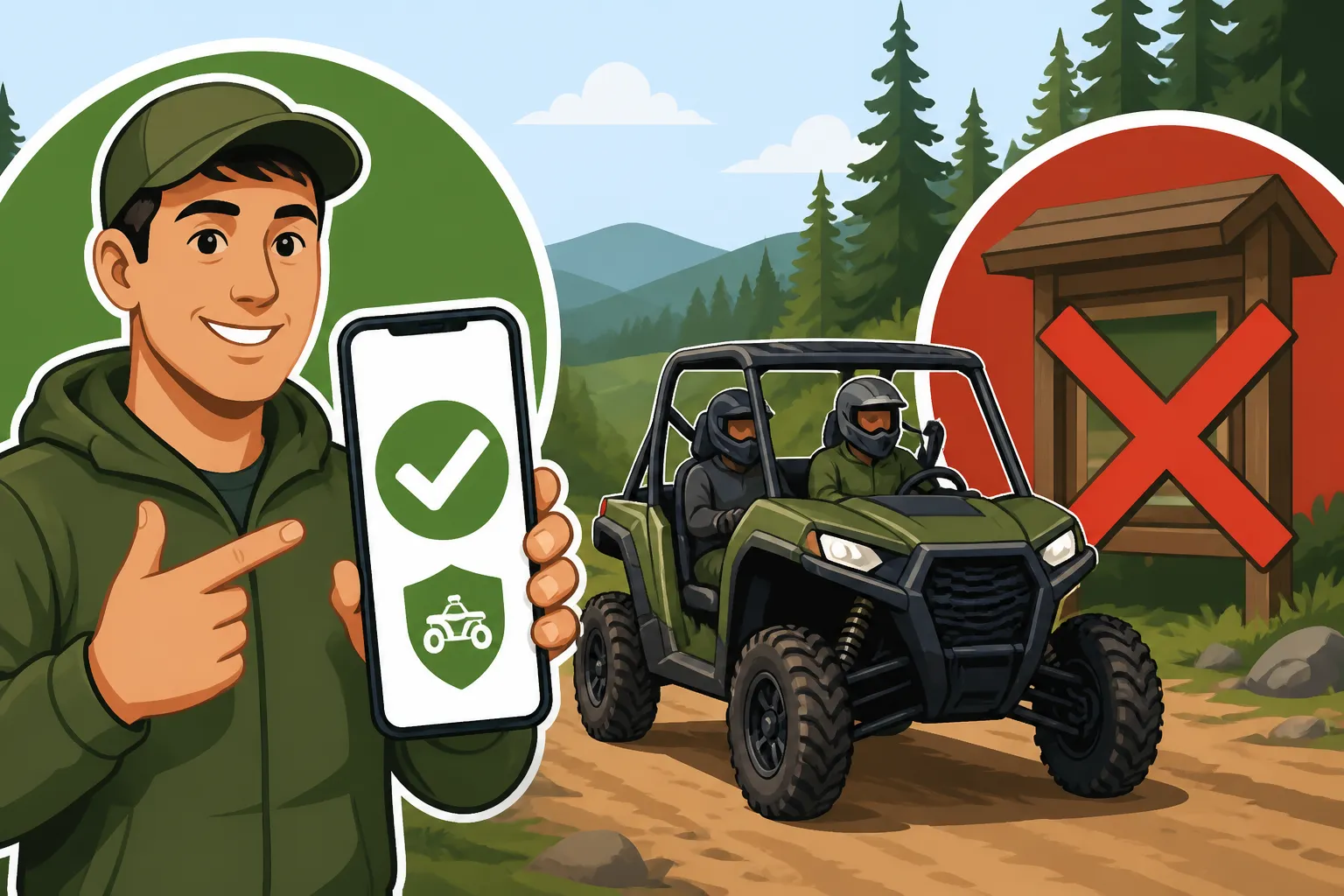
Some riding areas have a staffed entrance, an on-site vendor, or a machine where visitors can complete a purchase. Others do not. At Virginia’s National Forest OHV areas, you should not assume you can buy a permit once your trailer is parked and your machine is unloaded. Peters Mill Run and Taskers Gap are examples where arriving without a permit can leave you with no convenient way to start riding.
That’s an especially aggravating surprise if you’ve driven from Roanoke, Winchester, or farther away with a trailer in tow. The trailhead may have limited cell reception, and there may be no staffed office or reliable place to purchase a permit nearby. A phone that worked perfectly in town may not be much help once you’re at the forest entrance.
Treat “no kiosk” as a planning issue, not a small inconvenience to solve on arrival. Check the permit purchase options in advance, complete the transaction before you head into a signal dead zone, and keep a record of the confirmation. For a closer look at advance purchase options, see [Where to Buy a Forest Permit Before You Leave Home].
A forest permit is not the same as a Spearhead permit
Virginia has more than one kind of off-highway riding area, and permits are not automatically interchangeable. National Forest OHV routes and the Spearhead trail systems are separate networks with their own access rules. A permit that applies to one network does not necessarily let you ride the other.
This distinction matters when you’re planning a multi-day trip around Southwest Virginia. You might stay near a coalfield trail town and ride a Spearhead system one day, then travel to a National Forest riding area later in the trip. Don’t assume one purchase covers both destinations simply because both involve off-road riding in Virginia. Review [Why One Permit Does Not Cover Both Networks] before building your itinerary around a single permit.
The same care applies when crossing state lines. A permit from a neighboring riding system does not automatically substitute for a Virginia permit. If your trip includes West Virginia or Kentucky, check each destination’s requirements separately. [Virginia Has No Permit Reciprocity] explains why a permit from another state should not be treated as a Virginia access pass.
Your riding plan can fall apart even when the machine is ready
A permit is easy to overlook beside the more visible parts of a ride: loading the ATV, checking tires, packing tools, and securing the trailer. But the permit is an access requirement, not optional paperwork to tidy up later. If you arrive without one, the practical result may be a delayed start, a change of plans, or no ride at all.
Think of the permit as part of your pre-trip checklist, alongside checking the trail’s status and confirming that your machine meets the area’s requirements. If you’re hauling a side-by-side, pay special attention to system-specific rules; not every route accepts every vehicle type. For an overview of what to check at Peters Mill Run and Taskers Gap, see [Virginia Forest Equipment Requirements].
How to plan a permit purchase before you leave
Check the riding area’s own purchase instructions
Start with the official information for the specific riding area, rather than relying on an old forum post, a social media comment, or a friend’s memory. Purchase options can vary, and an outlet that once sold permits may not be available when you travel. The Forest Service district responsible for the area is a useful place to confirm the applicable rules and purchase methods.
For Peters Mill Run and Taskers Gap, identify the relevant National Forest information before packing. Check whether permits can be purchased online, by mail, or at a ranger district office or other authorized seller. If you plan to buy in person, verify that the location is open and that it handles the permit you need. A business being near Edinburg does not automatically mean it sells the correct permit or is open when you arrive.
If you’re deciding between purchase methods, [Virginia Forest Permit Purchase Options] provides a useful starting point. The important point is to confirm the current instructions for your destination before setting out, especially if you’re traveling on a weekend or holiday when offices and local vendors may have different hours.
Complete the purchase while you still have reliable internet
If an online purchase option is available, take care of it at home or somewhere with dependable service. Don’t wait until you reach a forest road and hope that a web page loads. A spotty connection can interrupt a payment, prevent a confirmation from appearing, or make it difficult to retrieve a permit record later.
Once the purchase is complete, save the confirmation in more than one convenient way. Keep the email or digital receipt accessible on your phone, and consider saving a screenshot or downloading the document if that option is offered. A paper copy can also be useful as a backup, particularly if your phone battery is low or you expect to be out of service for much of the day.
If online purchase is not available or doesn’t suit your plans, confirm another authorized method before traveling. [Virginia Forest Permit Mail Orders] covers the kind of detail worth checking when you plan to order by mail, including giving the order enough time to arrive before your trip. Don’t assume a mailed permit will reach you just because you send the order shortly before departure.
Check the permit duration against your itinerary
A permit’s duration and validity rules can affect how you plan your ride. A day permit, a multi-day option, and an annual option are not necessarily interchangeable for every visitor or schedule. Read the terms carefully so you know what dates the permit covers and whether the permitted period matches your actual riding plans.
For example, a rider leaving Roanoke for a single outing might need something different from a family spending several days near Edinburg. A permit that doesn’t cover your entire stay could require another purchase or a change in plans. Avoid guessing based on the words “three-day” or “annual”; make sure you understand how the specific permit period is counted and when it begins.
Compare the options and rules in [Virginia Forest Permit Cost] and [Virginia Forest Permits Bought Before Arrival]. The goal is not simply to buy something before the trip. It’s to make sure you have the right permit, for the right area, covering the dates you expect to ride.
| Before leaving home | What to confirm | Why it matters |
|---|---|---|
| Riding area | The exact trail system and land manager | Different networks may require different permits |
| Purchase method | Online, mail, ranger district office, or authorized vendor | A kiosk may not be available at the trailhead |
| Permit period | Start date, duration, and covered riding days | Your permit must match your itinerary |
| Proof of purchase | Confirmation, receipt, or permit record | You may need to show that you purchased the permit |
| Trail status | Closures, seasonal limits, and access notices | A valid permit does not override a closure |
| Machine requirements | Vehicle type, equipment, and operator rules | A permit alone does not make an ineligible machine acceptable |
What to keep with you on ride day
Save proof in a way that works without cell service
Do not plan to retrieve your permit for the first time at the trailhead. Before leaving home, open the confirmation or permit record on your phone and make sure you know where it is. If the purchase system provides a digital permit, follow its instructions for storing or displaying it.
Cell coverage can be inconsistent in forest and mountain areas. Even if you bought a permit successfully, you could have trouble opening an email or logging in at the trailhead. Take a screenshot or download the confirmation where possible. If the permit instructions call for a particular display method, follow those instructions rather than assuming any receipt or screenshot will be accepted.
A paper backup can be reassuring on a long drive, especially when several riders are traveling together and each person may have separate purchase details. Keep it somewhere dry and easy to reach. If you’re riding with a group, make sure everyone knows who has the permit information and how to access it before the group separates on the trail.
Don’t confuse a map with a permit
A navigation app can help you understand where you’re going, but a map is not proof of trail access or permit purchase. Apps such as onX Offroad may be useful for trip planning and orientation, but they do not replace the land manager’s permit instructions, official closure notices, or posted restrictions.
Before you ride, use a map to help plan the route and identify the trailhead, then check the official information for the area separately. If you use onX Offroad to keep track of your route, download the map or relevant information before heading into a low-service area. Do not assume that a line shown on a map is open to your machine or that it is covered by your permit.
This distinction is particularly important around trail connections, forest roads, and routes that lead toward private property. A route may look continuous on a screen but still cross a boundary, have a restriction, or be closed. Keep the permit confirmation and official riding-area rules separate from your navigation tools, and use each for its proper purpose.
Bring what the rules require, not just what is convenient
A permit does not replace the other requirements for riding on National Forest land. Check the area’s vehicle, operator, equipment, and sound rules before leaving. Some requirements may apply even when you have paid for access, and the conditions can differ from those at a private off-road park or another state’s trail system.
Make sure the machine you’re bringing is eligible for the route you intend to use. Check any requirements concerning brakes, lights, mufflers, spark arresters, tires, width, or operator qualifications that apply to your destination. [Virginia Forest License Requirements] and [Peters Mill Run Requires a Valid Driver's License] are useful reminders that access can involve more than holding a permit.
It’s also worth checking for seasonal closures and temporary conditions. A permit does not guarantee that every route is open on the day you visit. Weather, maintenance, or seasonal restrictions can affect access. Verify the trail status shortly before departure, then follow signs and posted instructions once you arrive.
A practical checklist for avoiding a trailhead permit problem
The day before you go
Confirm the exact riding area and the land manager responsible for it. If your plan is Peters Mill Run or Taskers Gap, make sure you’re checking National Forest permit information rather than instructions for Spearhead or a private park. This quick distinction can prevent buying the wrong permit or relying on a pass that doesn’t apply.
Next, confirm the purchase method and complete the transaction early enough to handle a problem. Check the permit period against your ride dates, save the confirmation, and review the relevant equipment and operator rules. If you ordered by mail, make sure the permit has arrived and that you have it with your trip documents.
Finally, check the trail status and forecast. A permit is not a promise that conditions will be suitable or every route will be open. If your usual plan is affected by a closure, decide on a legal alternative before you tow the machine to the trailhead.
Before you pull out of the driveway
Use this short checklist:
- Confirm the trail system and the permit it requires.
- Verify that your permit covers your planned riding dates.
- Save the receipt or confirmation offline, and carry a backup if practical.
- Check whether the trailhead has a kiosk or staffed service; do not assume it does.
- Review trail closures, seasonal rules, and vehicle restrictions.
- Make sure everyone in the group knows where the permit information is.
- Download any maps or route details you need before entering an area with weak service.
If you’re using onX Offroad, prepare the relevant map information before you lose reception, but still check the official trail information independently. That small bit of preparation can make a big difference when you’re coordinating a group, towing a machine, and trying to reach a specific trailhead without wasting the day.
If you discover a problem after arriving
If you reach the area and realize you have the wrong permit or no proof of purchase, don’t ride first and sort it out later. Look for posted instructions and contact the appropriate land manager or authorized permit outlet if you can. If you cannot confirm that you have the required access, postpone the ride or choose a location whose rules you can meet.
Avoid treating a nearby store, a different trail system’s permit, or an old receipt as a substitute unless the official instructions say it is accepted. A group can lose time waiting while someone searches for a purchase option, but riding without confirming access can create a bigger problem than a delayed start.
For a smooth trip, the simplest approach is to handle the permit before the drive, keep proof available offline, and verify the trail conditions again before unloading. When there is no kiosk at the trailhead, preparation is what turns the permit from a last-minute obstacle into one less thing to worry about.
Disclaimer
This article is for general informational purposes only and does not constitute professional advice. Laws, prices and regulations vary by location and change over time. Consult a qualified professional for guidance on your specific situation.