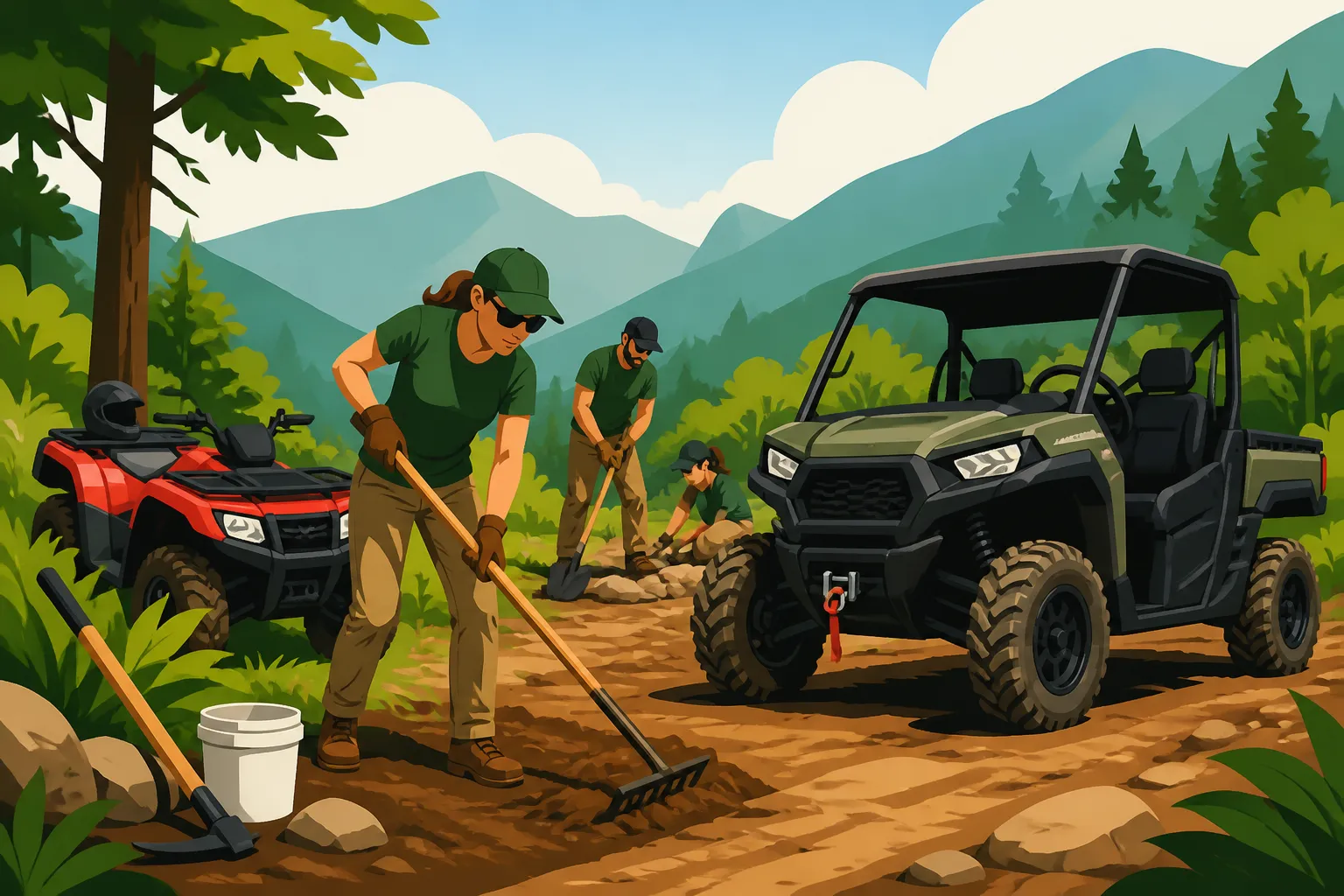
Virginia Trail Volunteer Days
A volunteer trail day can sound straightforward until you’re unsure where to meet, what tools to bring, or whether the work site is actually open to riders. In Virginia, trail work may be organized by a club, park, trail authority, or public-land manager. This guide explains how to find a legitimate workday, prepare sensibly, and help without disrupting riding access.
How Virginia ATV trail volunteer days are organized
Start with the trail manager, not just the trail name
Virginia’s riding areas do not all share one owner or management system. A trail network may be overseen by a regional authority, a private park, a club, or a public-land agency. That matters because the group maintaining a trail—and the person who can approve work there—may not be the same organization that promotes the riding area.
Start by identifying the manager of the specific trail system where you want to volunteer. Then look for announcements from that manager or an associated local club. A post shared by a rider can be a useful lead, but confirm the date, meeting place, and work details with the organizer before making a long drive.
That extra step can save a frustrating morning. Imagine hauling a quad toward the coalfields after seeing a general call for trail help, only to learn the gathering is for a different system or that the work is limited to a section closed to the public. Confirming directly helps you avoid showing up at the wrong trailhead or entering a work zone without permission.
Find the right group for the system
Local riding clubs can be a good place to hear about workdays, especially when members regularly maintain or support a nearby riding area. Ask whether the club is organizing the work, partnering with the trail manager, or simply passing along an announcement. The distinction helps you understand who will be directing volunteers and where your help is authorized.
If you are new to the area, [Virginia ATV Clubs Worth Joining] can help you think about the role clubs play in local riding communities. You can also ask a club representative which organization manages the trail you have in mind and where official notices are posted. A club’s recommendation is useful, but the trail manager’s instructions should guide what you do on site.
For a network such as the Spearhead system, check with the appropriate system or regional contact rather than assuming a general ATV group controls every work site. [Spearhead Trails in Virginia Explained] offers useful context about that system. For public-land riding, confirm requirements and access separately; a trail volunteer gathering does not automatically replace any permit or operating rules that apply to the area.
Confirm the workday is real and still happening
A trail-day announcement should tell you who is organizing it, where volunteers should meet, what kind of work is planned, and whom to contact with questions. If those basics are missing, ask before you go. Also check again close to the event, because weather, trail conditions, staffing, or land-management decisions can change plans.
Do not treat a trailhead parking area as an invitation to begin work on your own. Moving a fallen branch, reshaping a rut, cutting vegetation, or placing a marker may seem helpful, but trail work can affect drainage, safety, habitat, and permitted access. Wait for direction from the organizer, especially when the work involves powered tools, heavy equipment, signs, or changes to a route.
What to expect at a volunteer workday
Common tasks and why small details matter
Trail work can range from picking up litter to clearing drainage, improving a worn section, removing fallen limbs, or helping with a cleanup. The exact task depends on the site, recent conditions, available tools, and the organizer’s plan. A workday might focus on one short section rather than the entire network, so be prepared for a practical assignment rather than a full-system project.
Drainage work is a good example of why volunteers need direction. A puddle or muddy rut may look like a simple nuisance, but water flowing across or along a trail can make the damage worse. The right repair depends on the location and the manager’s standards. Don’t dig, divert water, or add material unless the work leader has shown you where and how to do it.
Some tasks may be more suitable for people with particular experience or equipment. If you have not used a tool before, say so. Organizers can often assign a safer job, pair you with an experienced volunteer, or explain what to watch for. A willing beginner who follows instructions is generally more useful than an overconfident volunteer who changes the plan.
Safety, tools, and personal gear
Ask the organizer what to bring instead of assuming every volunteer needs the same kit. A cleanup may call for gloves and sturdy footwear, while a maintenance task may require specific hand tools or protective gear. Some groups provide equipment; others may ask volunteers to bring certain items. Never bring or operate a chainsaw, brush cutter, or other powered tool unless the organizer has approved it and you are qualified to use it.
For a typical day, consider packing water, food, weather-appropriate layers, sturdy boots, work gloves, eye protection if requested, and a small personal first-aid kit. Mountain weather can shift, and a sunny parking lot does not tell you what conditions will feel like on a shaded trail. If the work site is remote, ask about restroom access, cell service, and whether there will be a designated first-aid lead.
Before starting, listen for a safety briefing. Make sure you know the work area boundaries, where tools should be placed, how to communicate with the group, and what to do if someone gets hurt. If you arrive late, check in rather than walking into the work zone. These small habits reduce confusion for everyone.
Leave your ATV or UTV parked unless asked otherwise
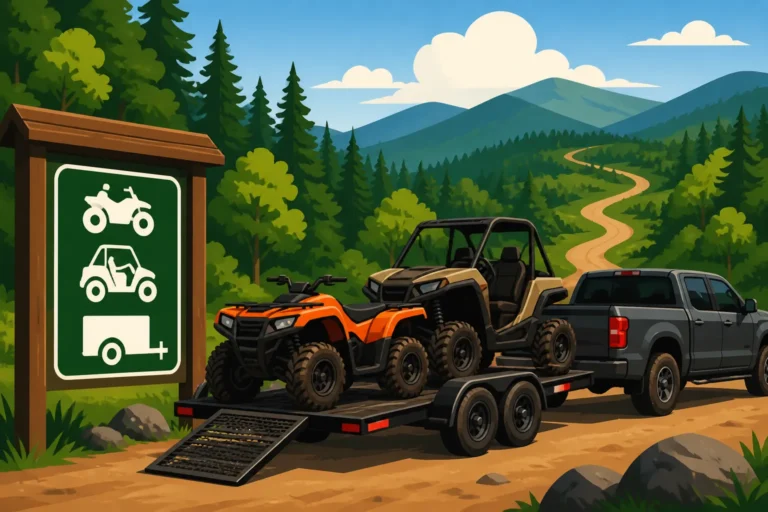
A volunteer day is not automatically a riding event. The trail may be closed to ordinary traffic, the work may be taking place on a sensitive section, or the organizer may need the area clear for crews and equipment. Ask whether machines are allowed at the meeting place and whether any vehicle use is specifically part of the approved work plan.
If you are told to use a machine, follow the route and instructions given by the organizer. Do not assume that a permit, membership, or past experience authorizes you to ride anywhere on the network. Rules can differ by system and by the particular section being worked on. [Virginia Trail Closures and Seasons] is a useful reminder to check access conditions before planning a trip around a trail area.
When the workday ends, avoid turning a maintenance visit into an unscheduled ride. Confirm whether the trail is open to regular use before unloading or heading out. If you are uncertain about permissions, keep the machine on the trailer and ask.
How to prepare and contribute well
Ask clear questions before you leave home
A short message to the organizer can prevent a lot of uncertainty. Ask for the exact meeting location, arrival time, expected end time, recommended clothing, tools to bring, and whether registration or a waiver is required. Find out whether the group will provide water or whether you should bring your own, and whether the work is suitable for first-time volunteers.
If you plan to bring a friend or a teenager, ask whether additional participants are welcome and whether a parent or guardian needs to stay. Do not assume that a public invitation means every task is appropriate for every age or ability. Organizers may have limits because of tool use, terrain, insurance, or the work site itself.
It can also help to ask what happens if the weather turns. A rain shower may not cancel a workday, but heavy rain can make steep or muddy access roads unsafe and can change what work is appropriate. Check for a final update before driving, particularly if you are coming from outside the area.
Plan the drive and check conditions
Virginia trail areas can involve winding roads, remote parking, and stretches with limited cell reception. Give yourself enough time to arrive without rushing, and make sure you understand whether the meeting point is at a trailhead, business, campground, or another landmark. If you are hauling a machine, verify that the parking area can accommodate your trailer before setting out.
A mapping app such as onX Offroad can help you review a route and orient yourself to nearby roads or trail areas, but treat it as a planning aid—not permission to enter a closed trail or work site. Confirm the meeting location and access instructions with the organizer. Keep a written address or saved directions available in case cell service drops. [Virginia Trail Conditions Before You Haul] is also worth reviewing when your plans involve a long drive to a riding area.
During travel, be considerate of local roads and communities. Avoid blocking access roads, private driveways, or trail entrances while waiting for the group. If you arrive early, park only where the organizer or site manager has directed, and do not ride around to look for the crew.
Be a dependable teammate
Show up ready to check in, listen, and take on the job assigned. If you need to leave early, let the work lead know before the group spreads out. If you notice another problem on the trail, report it instead of quietly attempting an unapproved fix. A clear report—including the location and a simple description—helps the manager decide what should happen next.
Respect the pace of the crew. Some volunteers may know the system well; others may be learning basic trail-maintenance practices. Ask questions when you need clarification, and avoid criticizing a section or previous repair without understanding the conditions and constraints behind it. Useful feedback is specific, courteous, and shared with the person responsible for the work.
The best volunteer days are not always the ones that cover the most ground. A careful cleanup, a well-maintained drainage feature, or a few hours supporting an experienced crew can make a real difference. Following the work plan also helps preserve the trail for other visitors and reduces the chance of unintended damage. [Virginia Trail Etiquette Locals Expect] provides additional context for being a considerate trail user.
| Before you go | What to confirm | Why it matters |
|---|---|---|
| Organizer and trail system | Who is leading the work and who manages the site | Ensures the work is authorized |
| Meeting details | Exact location, arrival time, and contact method | Helps avoid a missed or confusing meetup |
| Work assignment | Planned tasks and expected skill level | Lets you bring suitable gear and ask for help |
| Tools and safety | What to bring, what is supplied, and required protection | Prevents unsafe tool use and unnecessary packing |
| Access and riding | Whether machines may be brought or used | A workday may not be open for recreational riding |
| Weather and conditions | Whether the event is still on and how access may change | Helps avoid an unnecessary or unsafe trip |
Keep volunteering connected to responsible riding
Treat workday access differently from public riding access
Being invited to help does not mean every route is open to you before or after the event. A crew may have permission to work in a particular area under conditions that do not apply to ordinary visitors. Follow the organizer’s access instructions and keep any work-related authorization separate from your usual trail plans.
If you are volunteering at a private riding park, ask the park directly about its rules for volunteers, waivers, and access. [Virginia Private Off-Road Parks] can help you understand why private areas may set their own operating requirements. For public-land routes, check the managing agency’s current guidance and any permit obligations that apply to riding, even if you have already volunteered nearby.
Do not post detailed directions to a closed work site or share photos that could encourage others to enter a restricted area. If an organizer asks volunteers not to disclose a location or work detail, respect that request. The aim is to support a well-managed trail, not to create unexpected traffic or draw riders into a place they are not authorized to use.
Keep the trail in good shape after the event
Once the section is open to riders, stay on the marked route and avoid widening it to bypass mud or obstacles. Riding around a wet patch can turn a narrow trail into a broad scar, and repeated detours often create more maintenance work. Follow posted closures, observe local speed and safety rules, and give other trail users room.
Good trail etiquette also includes packing out litter, keeping noise considerate, and reporting hazards through the proper channel. [Virginia Trail Etiquette Locals Expect] is a helpful companion for thinking through those day-to-day choices. If you notice a new washout or fallen tree, share the location with the trail manager rather than assuming a volunteer crew will discover it immediately.
An app such as onX Offroad may help you keep your own ride planning organized, but use official trail communications to confirm closures and access. A map can show where you are; it cannot replace the manager’s decision about whether a route is open. That distinction matters most after storms, during maintenance, and when a work crew is still on site.
Make volunteering a repeatable habit
If your first volunteer day goes well, ask the organizer how to hear about future opportunities. You might join a local club, sign up for updates, or simply check the trail manager’s announcements before the next season. You do not need to be an expert mechanic or experienced trail builder to be helpful; reliability, patience, and respect for instructions are valuable contributions.
Consider keeping a small note on your phone with the organizer’s contact details, the system’s official information page, and any questions you want to ask before the next event. If you use onX Offroad or another navigation tool, save general planning information for your own reference, while relying on the manager for official access details.
Most of all, think of a volunteer day as a chance to care for a place you enjoy—not as a shortcut to special riding access. When volunteers follow the plan and managers know who is working where, the result is safer, more sustainable trail maintenance and a better experience for riders who come afterward.
Disclaimer
This article is for general informational purposes only and does not constitute professional advice. Laws, prices and regulations vary by location and change over time. Consult a qualified professional for guidance on your specific situation.