Two Counties Named in the Code
It can be incredibly frustrating to own an ATV or UTV in Virginia and feel like your riding opportunities are limited to private land or designated trail systems, especially when you hear whispers about certain areas having different rules. Many riders wonder if they'll ever be able to use a county road to connect from one trail to another, or even just to get to a gas station. This guide will deep-dive into the very specific, and often misunderstood, exceptions that state law carves out for off-road vehicles on public roads, particularly focusing on the two counties explicitly named in the Virginia code that offer unique road access.
The General Ban on Virginia Roads and Why It's Frustrating
Let's just get this out of the way upfront: for the vast majority of Virginia, riding an ATV or UTV on a public road or highway is illegal. Period. This isn't just a suggestion; it's written into the state code, and the penalties for violating it can be significant. We've all seen those pictures and videos from other states where off-road vehicles are buzzing down main streets, and it can be disheartening to know that's generally not the case here in the Old Dominion. This blanket prohibition often leads to confusion and exasperation for riders who just want to move their machine safely from one location to another without having to load it onto a trailer every single time. It feels like a hurdle, a barrier to fully enjoying your machine.
Understanding Virginia's Core ATV Road Rules
Virginia law is pretty clear on the definition of an all-terrain vehicle and how it's treated on public thoroughfares. An ATV, by legal definition, is generally designed for off-road use, not for navigating paved streets or sharing space with cars and trucks. The primary reason for this restriction comes down to safety and vehicle design. ATVs and UTVs lack many of the safety features, like turn signals, mirrors, and specific lighting, that are mandated for on-road vehicles. They also handle very differently on asphalt compared to dirt. This is why you'll find the rule stating that [Virginia Bans ATVs on Public Highways].
This general prohibition applies to almost all public roads, including state highways, county roads, and city streets. It's a fundamental aspect of off-road vehicle law in Virginia. Riders caught violating this can face fines and even have their machines impounded, which is a headache nobody wants. Even a quick jaunt down a deserted rural road can land you in hot water if you're not aware of the specific exceptions.
The Rationale Behind the Statewide Restrictions
The core reasoning for these statewide restrictions is multi-faceted. First and foremost is public safety. ATVs and UTVs, with their high center of gravity, knobby tires, and often exposed riders, are simply not built for the speeds, traffic, and surfaces of public roads. Collisions between off-road vehicles and cars can be catastrophic, and these laws aim to prevent such incidents. There's also the issue of wear and tear on roads not designed for certain types of tires, and the potential for noise complaints in residential areas.
Another significant factor is the distinction between off-road vehicles and on-road vehicles for registration and titling purposes. While Virginia titles ATVs, it never registers them for road use, nor does it issue license plates. This lack of official road registration directly ties into the prohibition. Without the proper licensing and safety equipment, allowing these vehicles on public roads would create a regulatory nightmare and a significant safety hazard. It's a way for the state to clearly delineate where these machines belong – which is generally off the beaten path.
Unpacking the Exceptions: Buchanan and Tazewell Counties
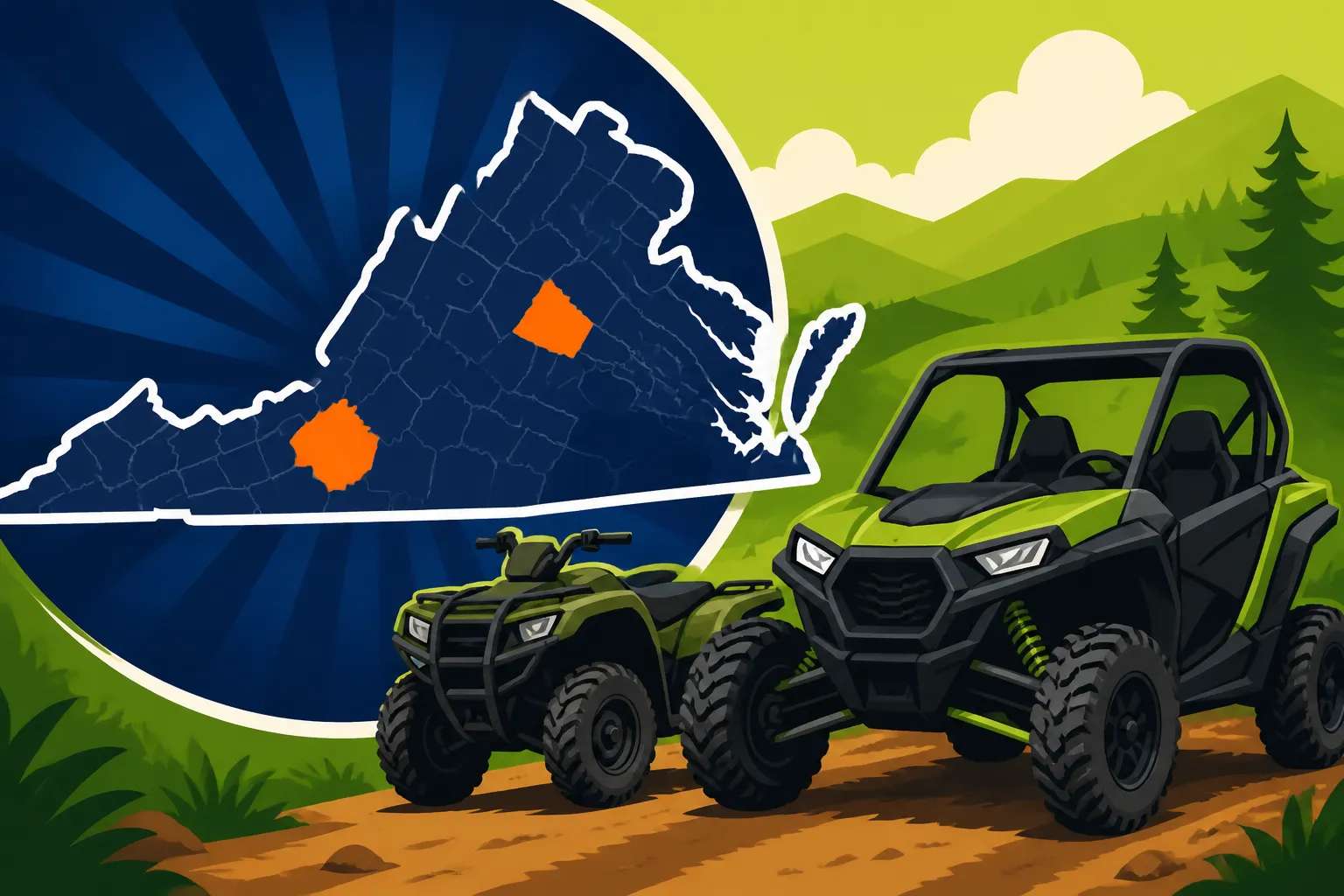
Now, let's get to the good news for some riders, specifically those in or visiting the far southwestern part of the state. Virginia state law does indeed make a very specific exception for two counties: Buchanan and Tazewell. These counties, nestled in the heart of Virginia's Appalachian Mountains and coalfields, have unique provisions that allow for limited ATV and UTV use on certain designated public highways and roads. This is a game-changer for riders in these areas, as it allows for much greater connectivity between trail systems and local businesses. However, it's crucial to understand that "limited" is the key word here; it's not a free-for-all.
What Makes Buchanan County Different for ATV Riders
In Buchanan County, the Board of Supervisors has the authority to designate specific secondary highways or portions thereof for ATV and UTV use. This isn't a county-wide open invitation; it's about carefully selected routes that primarily serve to connect trail systems or provide access to amenities like gas stations, restaurants, or lodging that cater to off-road enthusiasts. The intent is to bolster outdoor tourism and support local economies in the coalfield region. The law acknowledges the prevalence of these machines in daily life and recreation in these specific areas.
These designated routes are typically clearly marked, and riders must adhere to strict conditions. For instance, there's often a [Virginia's 25 mph Coalfield Road Limit] that must be observed, and riding is generally restricted to daylight hours. The specific routes are determined and approved by the local authorities, often in conjunction with local trail organizations and community input, to ensure safety and minimize disruption to residents. This means if you're riding a SuperATV-equipped machine, you can potentially travel from one trail section to another without having to trailer your rig.
Tazewell County's Unique ATV and UTV Road Access
Much like its neighbor, Tazewell County also possesses the legal framework to designate certain public highways for ATV and UTV use. This provision similarly aims to integrate off-road recreation with local commerce, allowing riders to access essential services and connect to the sprawling trail networks like the Spearhead Trails. It’s part of a broader effort to create an inviting environment for off-road tourism, leveraging the natural beauty and rugged terrain of the region. This is particularly appealing for those looking to explore the beautiful Appalachian landscape without the constant need for a truck and trailer.
The process for designating these routes and the rules for their use mirror those in Buchanan County. The Tazewell County Board of Supervisors must officially open these routes, and they are typically signed to guide riders. Riders need to be extremely vigilant for these signs, as venturing off a designated route, even by a short distance, can quickly lead to an infraction. The idea is to create a seamless, yet controlled, experience for riders who are exploring the extensive trail systems. [Virginia Road Access in the Coalfields] is truly a unique aspect of these two counties.
Conditions and Limitations within These Special Routes
Even within Buchanan and Tazewell counties, riding an ATV or UTV on a designated road comes with a specific set of rules and limitations that are designed to ensure safety and order. These aren't simply "open" roads; they are specific routes that have been legally carved out for this purpose, and they're often subject to very particular operational requirements.
First, as mentioned, there's typically a speed limit, often set at 25 mph, which is significantly lower than typical road speeds. Riders must also operate their machines only during daylight hours, meaning no nighttime riding on these public roads. [Virginia Daylight Hours on a Road Trail] is a critical rule to remember. Furthermore, every rider and passenger must wear a helmet, regardless of age. This aligns with Virginia's statewide helmet law, which applies to all ATV and UTV riders, even on private property. The machines themselves must be equipped with working brakes, headlights, and taillights, even if they're only going to be used during the day. This is just good common sense for safety when interacting with any other traffic.
It's also important to understand that these special road access points are explicitly for the purpose of connecting trails or accessing necessary services. They are not intended for joyriding up and down the main street. Riders should have a clear purpose for being on the road. ATV clubs often play a significant role in getting these routes approved and in placing the necessary signage, so respecting those efforts by following the rules is paramount. For example, if you've got a SuperATV winch on your machine, it's great for trails, but you won't be needing it on the designated road sections, so focusing on road-appropriate driving is key.
Here's a quick summary table of the unique provisions in these two counties:
| Feature | Buchanan County Designated Routes | Tazewell County Designated Routes |
|---|---|---|
| Authority | Board of Supervisors | Board of Supervisors |
| Purpose | Connect trails, access amenities | Connect trails, access amenities |
| Speed Limit | Often 25 mph | Often 25 mph |
| Operating Hours | Daylight hours only | Daylight hours only |
| Helmet Rule | Required for all riders/passengers | Required for all riders/passengers |
| Machine Equip. | Brakes, headlights, taillights, spark arrester | Brakes, headlights, taillights, spark arrester |
| Designation | Specific secondary roads | Specific secondary roads |
| Enforcement | State Police, local Sheriff's Office | State Police, local Sheriff's Office |
Navigating the Special Road Networks
So, you're planning a trip to Buchanan or Tazewell County and want to take advantage of these unique road access opportunities. That's fantastic! But before you hit the blacktop, it's essential to know how to properly identify these routes, what gear you absolutely need, and what the local atmosphere and expectations are. It's about being prepared and respectful of the local laws and communities.
Identifying Approved Routes and Signage
One of the biggest challenges for riders in these special counties is knowing exactly where they can legally ride on the road. It's not intuitive, and you can't assume every road is fair game. The responsibility falls on the rider to know the designated routes. These routes are typically marked with specific signage, often designed and placed by local ATV clubs or the county itself. These signs indicate that ATV and UTV travel is permitted, often with a speed limit or other conditions. You might see signs similar to typical road signs, but with an ATV or UTV symbol.
Before you even load up your rig, it’s a good idea to check with the local county administration or the Spearhead Trails organization, which often works closely with these counties to facilitate trail access. They can provide maps or specific information about which roads are designated. Don't rely on old maps or hearsay; always get the most current information. [Virginia Named Routes Open to ATVs] are usually clearly delineated, and sticking to them ensures a legal and enjoyable ride.
Essential Gear and Rules for Riding on Designated County Roads
While your machine might be fully capable on the trails, adding a few specific items or ensuring certain features are in top shape is crucial for road sections. First, ensure your headlights and taillights are fully functional, even for daylight riding, as they increase your visibility to other vehicles. Second, while not legally required on ATVs, having a horn can be a lifesaver in unexpected situations. Third, consider adding a flag to your machine, especially if you're riding a smaller ATV, to make yourself more visible to larger vehicles.
Beyond physical gear, remember the fundamental rules: always wear a helmet (it's the law in Virginia, always!), and ensure all passengers are on seats designed for them. Don't overload your machine or carry passengers in an unsafe manner. Keep your speed to the posted limit (often 25 mph), and drive predictably, signaling your turns if your machine has that capability. Be especially mindful of slow-moving farm equipment or larger trucks, which are common in these rural areas. If you're running a wider side-by-side, consider [Virginia Lighting Rules on a Machine] to ensure you're as visible as possible on the pavement.
What to Expect When Riding in Buchanan and Tazewell
Riding in these specific coalfield counties offers a truly unique experience. You'll likely encounter a mix of locals using their machines for everyday tasks, as well as tourists exploring the trail systems. The communities in these areas are generally very welcoming to ATV and UTV riders, understanding the economic benefit these activities bring. However, that welcoming attitude comes with the expectation that riders will be respectful, follow the rules, and contribute positively to the local environment.
You might find small businesses, like gas stations and restaurants, catering specifically to off-roaders, with designated parking areas for trucks and trailers, and even wash stations. Local law enforcement is generally knowledgeable about the specific ATV rules in their jurisdiction but will enforce violations. Expect to see other vehicles, including cars and coal trucks, on these roads, so defensive driving is crucial. It’s not a private trail, but a shared public space with unique permissions. Always carry proof of ownership and your trail permit (if applicable for the trails you're connecting to), as officers may request them. [What an Officer Can Ask For at a Trailhead] usually includes these documents.
Beyond the Exceptions: Other Limited Road Access Scenarios
While Buchanan and Tazewell counties offer the most expansive road access for ATVs and UTVs, there are a few other very limited scenarios where these machines might legally operate on or across a public road in Virginia. These are not "street legal" pathways, but rather narrow exceptions for specific purposes, and it's vital not to conflate them with general road use.
Agricultural and Emergency Vehicle Exceptions
Virginia law provides specific exemptions for certain types of vehicles, including ATVs and UTVs, when used for agricultural purposes or by emergency personnel. For farmers, a utility vehicle might be driven on a public highway for short distances between fields or to access adjacent property, provided it is being used for bona fide farm work. This isn't for recreational riding; it's strictly for farm-related tasks. Such machines must still operate safely, often at low speeds, and are expected to pull over for faster-moving traffic. It’s about practicality for essential work, not personal recreation.
Similarly, emergency responders, such as fire departments, rescue squads, and law enforcement, are often authorized to use ATVs and UTVs on public roads when responding to an emergency or during official duties. These machines can be invaluable for reaching remote areas, navigating difficult terrain, or assisting during search and rescue operations. These are specific [Virginia Emergency Responder Exceptions] and do not apply to the general public. These vehicles are usually clearly marked and operated by trained personnel under specific protocols.
Crossing Public Highways Safely and Legally
Even where ATVs and UTVs are generally prohibited on roads, Virginia law does allow for crossings of certain public highways under very specific conditions. This isn't about riding down the road, but rather getting across it. The rule dictates that an ATV or UTV may cross a public highway by the most direct route, provided the crossing is made at an angle of approximately 90 degrees to the highway. This is intended for situations where a trail might continue on the other side of a road, or a private property needs to be accessed by traversing a road.
Before making such a crossing, the operator must bring the machine to a complete stop, yield to all traffic on the highway, and proceed only when it is safe to do so. This is a very brief maneuver, not an extended ride. Think of it as crossing a busy street on foot – you stop, look both ways, and then cross directly. It's a pragmatic exception to prevent riders from having to find an alternative route that might be miles out of the way, but it must be executed with extreme caution. Always remember the principle of [Virginia Crossings by the Most Direct Route] to minimize your time on the pavement.
Common Misconceptions and Legal Pitfalls
Despite the relatively clear language in Virginia law, there are many lingering misconceptions and potential pitfalls that ATV and UTV riders can fall into. Understanding these can save you a lot of grief, from costly fines to serious accidents. It’s always better to be over-informed than under-informed when it comes to riding laws.
The Difference Between Legal Access and Trespassing
One of the most critical distinctions for any off-road rider in Virginia is the difference between having legal access to a road or trail and trespassing on private property. Just because you see a trail or an old logging road doesn't mean you have permission to ride on it. This is a common mistake that can lead to friction with landowners and even legal trouble. Virginia law takes trespassing seriously, and landowners have the right to protect their property. Even if a trail appears to be public, if it crosses private land, you need permission.
Similarly, the special road access in Buchanan and Tazewell counties does not give you carte blanche to ride anywhere you please. Those permissions are for designated public roads only. Riding on an undesignated private road, an old rail bed, or even a field without explicit permission is trespassing. Always seek [Virginia Written Consent on Private Land] before riding anywhere other than a clearly marked public trail or a road explicitly opened by the county. Ignorance of property lines or permissions is not a valid defense.
Why Out-of-State Plate Schemes Are Risky
You might have heard about schemes that promise to make your ATV or UTV "street legal" by registering it in another state, such as Montana or South Dakota, and getting an out-of-state license plate. The idea is that if it's legal in another state, it should be legal in Virginia under reciprocity laws. However, [Why Out-of-State Plate Schemes Are Risky] is a topic that needs serious consideration, and it's generally a path fraught with legal peril in Virginia.
Virginia law enforcement typically interprets these schemes as an attempt to circumvent state vehicle registration and safety requirements. Even if your machine has an out-of-state plate, if it doesn't meet Virginia's standards for street-legal operation (which ATVs and UTVs generally do not), you can still be cited for illegal operation on public roads. These machines are fundamentally designed for off-road use, and adding a license plate from another state doesn't change their classification or make them compliant with Virginia's very specific road-use laws. It's an expensive gamble that rarely pays off in the Commonwealth.
The Importance of Local Ordinances
While state law provides the overarching framework for ATV and UTV use, local ordinances can add another layer of regulation that riders must be aware of. Even within counties that have broader allowances, individual towns or cities might have their own specific rules. For instance, while Buchanan County might open certain secondary roads, a town within Buchanan County could have an ordinance prohibiting ATVs on its specific municipal streets.
This means that even when riding in a "friendly" county, it's crucial to pay attention to any signs indicating a change in jurisdiction, such as entering a town or a different district. Local authorities have the power to create and enforce these ordinances, and they can vary significantly from one municipality to another. Always be on the lookout for signage, and if you're planning to ride within the limits of a specific town, it’s always a good idea to check with their local police department or municipal office beforehand. This vigilance helps avoid [Virginia Penalties for Illegal Riding] that can stack up quickly.
Disclaimer
This article is for general informational purposes only and does not constitute professional advice. Laws, prices and regulations vary by location and change over time. Consult a qualified professional for guidance on your specific situation.