Virginia Buchanan and Tazewell County Road Access
It's incredibly frustrating when you want to enjoy your ATV or UTV and navigate from one fantastic trail system to another, only to find yourself tangled in a web of state laws and local ordinances. Many riders dream of the freedom of linking trails via short road sections, but in Virginia, the rules can be a real head-scratcher. This guide aims to cut through that confusion, specifically focusing on the unique road access opportunities available for off-road vehicles in Buchanan and Tazewell counties, helping you understand exactly where you can ride and the critical conditions you must meet to stay legal and safe.
The General Rule: Virginia's Broad Ban on ATV/UTV Road Use
Let's start with the hard truth that many riders initially struggle with: Virginia, like many states, has a blanket ban on riding ATVs and UTVs on public highways. You see, these machines are primarily designed for off-road use, not for sharing asphalt with cars, trucks, and motorcycles. The state's primary concern is safety, as ATVs and UTVs often lack many of the safety features, such as turn signals, side mirrors, and robust braking systems, that are standard on street-legal vehicles. This can feel like a real bummer when you're just trying to get from your cabin to a trailhead a mile down the road, but the law is quite clear for the vast majority of the Commonwealth.
Why Most Public Roads Are Off-Limits
The rationale behind keeping ATVs and UTVs off most public roads stems from several key factors. First and foremost is visibility. The low profile of many ATVs, especially compared to the tall vehicles common on highways, makes them hard for other drivers to spot. Speed is another issue; while some larger UTVs can reach highway speeds, many ATVs are not designed for sustained high-speed travel, which can create dangerous speed differentials with other traffic. Then there's the handling characteristic: off-road tires, designed for grip in mud and over rocks, behave very differently on pavement, potentially leading to instability, especially in emergency braking or sharp turns. It's a combination of these safety concerns that leads to the widespread prohibition. You just can't casually take your quad down a state road in most parts of Virginia. [Virginia Bans ATVs on Public Highways] is a tough pill for many to swallow, but it's a fundamental starting point for understanding the regulations.
Consider a scenario where you've just unloaded your machine at a friend's house in a quiet, rural county that doesn't have special provisions. You might think, "It's just a mile to the county road that leads to the hunting lease; surely no one will mind." But even on seemingly deserted back roads, the law is the law. An unexpected encounter with local law enforcement could lead to a citation because, outside of very specific exceptions, your off-road machine isn't considered a road-worthy vehicle in the eyes of the state. This can be a rude awakening for riders who are used to more relaxed rules in other states or who might mistakenly believe "rural" means "anything goes."
The Core Statute: Code of Virginia 46.2-915.1 Explained
The legal foundation for Virginia's ATV and UTV road rules is found in the Code of Virginia, specifically section 46.2-915.1. This statute lays out the general prohibition and then carves out a few very precise exceptions. It clearly states that ATVs and UTVs are generally not permitted on any public highway, street, or public land owned or controlled by the Commonwealth. This isn't some obscure regulation; it's a core piece of traffic law that every off-road rider in Virginia needs to be aware of. The exceptions are what we'll dive into, as they are the glimmer of hope for riders in certain areas.
It's critical to understand that this code doesn't just prohibit riding; it also defines what constitutes an "all-terrain vehicle" and a "utility vehicle," which is important because different states and even different parts of Virginia might have slightly varied interpretations. The state's definitions are key to knowing whether your specific machine falls under these rules. For instance, while you might call your vehicle a side-by-side or a UTV, the Virginia code often lumps them into the same regulatory framework as ATVs when it comes to road use, especially for the purpose of the general ban. This means that if your machine meets the [Virginia ATV and Utility Vehicle Definitions], you're subject to these rules. This foundational understanding prevents common misunderstandings and helps you appreciate why certain counties have gone to such lengths to create specific, lawful riding areas.
Consequences of Illegal Road Riding
Riding an ATV or UTV on a prohibited public road in Virginia isn't just a minor infraction; it can carry significant penalties. The law isn't designed to be a gentle reminder; it's there to deter dangerous behavior and ensure public safety. If you're caught operating your off-road vehicle illegally on a highway, you could face a civil penalty, not a criminal one, but that doesn't make it any less costly. The fine can be substantial, and depending on the specifics of the situation, your machine could even be impounded. [Virginia's Civil Penalty for Illegal Riding] is something no rider wants to face.
Imagine you're cited for riding illegally: not only do you have the fine, but there might also be court costs. If your vehicle is impounded, you'll incur towing fees, storage fees, and the hassle of recovering it, which can quickly add up to hundreds, if not thousands, of dollars. Furthermore, an accident on a public road where your ATV or UTV is illegally operated could have severe insurance implications. Your standard off-road policy might not cover incidents that occur outside of legal riding areas, leaving you personally liable for damages and injuries. This is why understanding and strictly adhering to the rules, especially in areas with specific allowances like Buchanan and Tazewell, is paramount. You don't want a fun ride to turn into a financial nightmare or, worse, a serious injury.
Exceptions to the Rule: The Buchanan and Tazewell County Specifics
Now, for the good news for riders in Virginia's coalfields! While the general rule prohibits ATVs and UTVs on public roads, the Code of Virginia 46.2-915.1 actually contains specific provisions that grant limited road access in certain parts of the state. Buchanan and Tazewell counties are two prime examples, having worked hard to establish designated routes that connect their renowned off-road trail systems. This isn't a free-for-all; it's a carefully crafted exception designed to support outdoor recreation and local economies in these particular regions.
How These Counties Earned Their Unique Status
The allowance for road access in Buchanan and Tazewell counties didn't happen overnight or by accident. It was the result of significant lobbying efforts by local communities, tourism groups, and off-road enthusiasts who recognized the potential for ATV and UTV tourism to revitalize the regional economy. These counties, nestled in the Appalachian Mountains, are home to vast expanses of rugged terrain, perfect for off-road riding, and feature extensive trail systems. The challenge, however, was often how to get from one section of a trail to another, or from a trailhead to local amenities like gas stations, restaurants, or lodging, without breaking the law.
Local leaders and proponents argued that allowing limited, designated road access would not only enhance the rider experience but also drive economic development by encouraging visitors to stay, spend money, and enjoy what the region has to offer. This advocacy eventually led to the inclusion of special clauses in the state code that empower the Boards of Supervisors in these specific counties to designate certain highways or portions thereof for ATV and UTV use. It’s a testament to the power of community organization and the recognition of the unique geographical and economic landscapes of these areas. This is why you'll often hear about Virginia Buchanan and Tazewell County Road Access as a special case, distinct from the rest of the Commonwealth.
Designated Routes and Their Limitations
It's absolutely crucial to understand that "road access" in Buchanan and Tazewell doesn't mean you can just hop on any road you please. Far from it. The Boards of Supervisors in these counties have the authority to designate specific highways or sections of highways. These are generally secondary roads, usually unpaved or lightly trafficked, that serve as connectors between major trail systems. Riders are expected to know and stick to these designated routes. You can't just venture off onto any paved road or state highway that hasn't been explicitly opened for ATV and UTV use.
Furthermore, even on designated routes, there are strict limitations. These aren't meant for joyriding or commuting. They are specifically for connecting trail segments, allowing riders to access services, or reaching trailheads. The rules are in place to ensure minimal disruption to other traffic and maximum safety for all road users. For example, [Virginia's 25 mph Coalfield Road Limit] applies on these designated sections, a speed far below what you might typically travel on an open road. This lower speed helps mitigate risks, allowing ATVs and UTVs to operate more safely alongside conventional vehicles and giving riders more time to react to unexpected situations. Always look for signage indicating where these routes begin and end, as local authorities are responsible for marking them clearly.
Who Can Approve New Routes
The power to designate and approve new ATV and UTV routes within Buchanan and Tazewell counties rests squarely with their respective Boards of Supervisors. This means that if there's a particular road you think would be an excellent connector, it's not a matter for the state DMV or even individual landowners. It requires a formal process at the county level. Local residents, businesses, and off-road clubs typically petition their Board of Supervisors, presenting arguments for why a particular road segment should be opened. This often involves demonstrating how it would benefit the community, enhance trail connectivity, and importantly, how safety concerns can be adequately addressed.
The process usually involves public hearings, where community input is gathered, and potential impacts are assessed. The Board will consider factors like traffic volume, road conditions, proximity to residential areas, and the overall feasibility of safely integrating off-road vehicles onto that specific road. So, while these two counties offer unique opportunities, expansion of these routes is a deliberate, local decision-making process, not an automatic right. This ensures that any new routes are carefully considered and implemented with community safety and well-being in mind, reinforcing the idea that these exceptions are thoughtfully managed.
Conditions for Riding on Approved County Roads
Even on the specially designated routes in Buchanan and Tazewell counties, riding an ATV or UTV comes with a strict set of conditions. These aren't suggestions; they are legal requirements designed to ensure the safety of riders and other road users. Ignoring these conditions can not only lead to citations but can also put you and others at serious risk. Think of them as the agreed-upon rules of engagement for mixing off-road machines with public roads.
Speed Limits and Operating Hours
One of the most critical conditions for riding on designated county roads in Buchanan and Tazewell is adherence to the posted speed limit. As mentioned, the state code specifies a [Virginia's 25 mph Coalfield Road Limit] for ATVs and UTVs on these routes. This isn't just a guideline; it's a hard limit, and local law enforcement will enforce it. Exceeding this speed not only makes you liable for a ticket but dramatically increases the risk of accidents, especially given the handling characteristics of off-road machines on paved or gravel surfaces. Always err on the side of caution and keep your speed well within the limit.
In addition to speed, there are often restrictions on operating hours. Generally, riding on these designated road sections is limited to "daylight hours." This means from sunrise to sunset. While your ATV or UTV might have headlights, they are often not designed to illuminate the road sufficiently for safe night-time travel on public roads, nor are they typically equipped with the full complement of reflective materials and lighting required for night-time road use by street-legal vehicles. Attempting to navigate these roads in the dark, even if your machine has lights, would put you in violation of the rules and significantly increase the danger of a collision. Planning your rides to ensure you are off any designated road sections before dusk is a crucial safety and legal consideration.
Crossing State Highways and Numbered Routes
A point of particular confusion for many riders is how to handle crossings of state highways or other numbered primary routes while on a designated county road. Even if you're on a legal county connector, you cannot simply merge onto a busy state route and travel along it for any distance. The law is very specific: you are generally permitted to "cross" a public highway by the most direct route. This means stopping, yielding to all traffic, and proceeding straight across the highway to resume your designated county road or trail access point on the other side. You cannot turn and travel alongside traffic on the state highway.
This "direct crossing" rule is a major safety measure. State highways typically have much higher speed limits and greater traffic volumes than the designated county roads. Allowing ATVs and UTVs to travel along them would create a significant hazard. Therefore, when you approach a state route while on a designated connector, treat it like a major intersection. Come to a complete stop, look both ways multiple times, and only proceed when it is absolutely safe and you can cross in a single, fluid motion. Planning your route beforehand, perhaps with a map from [Spearhead Trails in Virginia Explained], will help you identify these critical crossing points and prepare for them. This requires vigilance and a solid understanding of right-of-way rules, even when you're just passing through.
Equipment Requirements for Road Sections
Operating an ATV or UTV on designated county roads in Buchanan and Tazewell also comes with specific equipment requirements, distinguishing it from purely off-road riding. While not as stringent as street-legal requirements for cars, these ensure a basic level of visibility and safety. Your machine must have working headlights and taillights. Even though riding is restricted to daylight hours, these lights are crucial for visibility, especially on dusty roads or in changing weather conditions. A working horn is also typically required, allowing you to signal your presence to other vehicles or pedestrians.
Furthermore, many counties and trail systems strongly recommend, or even require, that your machine be equipped with a spark arrester. While not directly a "road" requirement, it's a general safety and environmental standard for off-road vehicles operating anywhere in the area, including road sections, to prevent wildfires. It’s also wise to ensure your tires are in good condition and your brakes are fully functional, as stopping quickly on a paved or hard-packed gravel road can be different from stopping on a loose trail. Adding accessories like turn signals or a brighter [Virginia Lighting Rules on a Road Trail] might not be strictly mandated for these county roads, but they are smart additions that can significantly enhance your safety and visibility, especially if you get a chance to use products from brands like SuperATV that offer robust lighting solutions and mirrors designed for off-road vehicles but adaptable for improved road presence.
Rider Responsibilities and Safety Gear
Beyond the specific rules for the roads themselves, Virginia law places significant responsibilities on ATV and UTV riders, particularly concerning safety gear and age restrictions. These rules are non-negotiable and apply across the board, whether you're on a designated county road, a private trail, or deep in the backcountry. Neglecting these can lead to fines, serious injury, or worse.
Helmet and Eye Protection Mandates
In Virginia, regardless of your age or experience level, if you're riding an ATV or UTV, you are required to wear a helmet. This isn't just a recommendation for kids; it's a universal mandate for every single rider. [Virginia Helmet Law Applies to Every Rider] means exactly that – no exceptions for adults on their own property, and certainly no exceptions on public roads, even the designated county connectors. The helmet must meet specific safety standards, typically those set by the Department of Transportation (DOT), and must be securely fastened.
Alongside a helmet, riders are also required to wear eye protection. This could be goggles, a face shield integrated into your helmet, or safety glasses. Kicking up dust, gravel, or even small insects is common, especially on the types of unpaved or lightly graveled roads found in the coalfields. Eye protection prevents debris from impairing your vision and causing an accident, or worse, causing an eye injury. These aren't just rules to avoid a ticket; they are fundamental safety precautions that can literally save your life or prevent permanent injury in the event of a crash or even a minor incident. Always double-check that your gear meets the state's requirements before you even think about starting your engine.
Age and Supervision Rules on County Roads
Virginia also has very specific age restrictions for ATV and UTV operators, primarily tied to engine size. These rules are designed to match a rider's maturity and skill level with the power and weight of the machine. Generally, riders under the age of 16 are restricted to machines with smaller engine displacements. For example, a rider under 12 cannot operate an ATV with an engine size greater than 70cc, and riders between 12 and 16 are limited to machines 90cc or less. Once a rider turns 16, these engine size restrictions no longer apply. [Virginia Age Limits by Engine Size] are strictly enforced.
Crucially, there are also supervision requirements for younger riders. Any operator under 16 must be under the direct supervision of an adult who is at least 18 years old. This adult must be able to provide immediate instruction and assistance, meaning they must be physically present and attentive. While these rules are generally thought of for trail riding, they absolutely extend to any operation on designated county roads. A parent can't just send their 14-year-old off on a 450cc quad on a connector road, even with an adult in the general vicinity. The supervision must be close and direct, ensuring the safety of the minor and compliance with the law.
Landowner Consent and Trespass Laws
Even when you're riding on a county-designated road that connects to a trail system, the importance of respecting private property and obtaining landowner consent cannot be overstated. While the county road itself is public access, the land immediately adjacent to it, or any potential shortcuts through fields or woods, will almost certainly be private property. Veering off the designated path, even for a moment, without explicit permission from the landowner, constitutes trespassing. [Virginia Requires Written Landowner Consent] for riding on private property, and this applies even when you're near or trying to access public trails.
The coalfield regions, while rugged and seemingly open, are a patchwork of private land, timber company holdings, and public access points. It's a common mistake for riders to assume that if a trail runs through an area, all surrounding land is fair game. This is far from the truth. Always assume land is private unless clearly marked otherwise, and never enter private property without permission. Trespassing can lead to civil penalties, legal disputes, and can severely damage relationships between riders and local communities, potentially jeopardizing the very road access privileges that have been established. Always carry a map and stick to marked routes and trails.
Navigating the Coalfield Trails: Connecting Road Sections to Trail Systems
The beauty of the designated road access in Buchanan and Tazewell counties truly shines when you consider its role in connecting the spectacular off-road trail systems found in these regions. These road sections aren't destinations in themselves, but vital arteries that allow riders to experience more expansive and diverse riding adventures without having to load and unload their machines constantly.
Spearhead Trails and Their Relationship to County Roads
The Spearhead Trails system is one of Virginia's premier off-road destinations, offering hundreds of miles of thrilling terrain across several individual trail systems like Coal Canyon, Mountain View, and Original Pocahontas. These trails wind through some of the most beautiful and rugged landscapes in the Appalachian Mountains. The designated county roads in Buchanan and Tazewell were primarily established to enhance the rider experience on systems like Spearhead by creating legal ways to link trail sections, access trailheads, or reach nearby towns for fuel, food, and lodging. [Spearhead Trails in Virginia Explained] goes into detail about the extensive network, and it's here that the county road access becomes truly invaluable.
Imagine you're on the Coal Canyon system, and you want to ride over to the Mountain View system, or maybe you've been out all morning and need to refuel your UTV and grab some lunch in a nearby trail town. Without the designated road access, you'd have to load your machine onto a trailer, drive to your destination, and then unload again – a huge hassle that eats into valuable riding time. With the approved county roads, you can often simply ride your machine from the trail system, follow the designated route, take a direct crossing over a state highway if necessary, and arrive at your desired location or connecting trail with relative ease. This seamless connectivity is a huge draw for riders, making multi-day trips and exploring different trailheads far more practical and enjoyable.
Planning Your Ride: Mapping Approved Routes and Trail Access
Effective ride planning is absolutely essential when utilizing the designated county roads. You can't just wing it. Before you head out, you need to consult official maps provided by the counties, the Virginia Department of Transportation (VDOT), or Spearhead Trails itself, which often highlight the specific roads approved for ATV and UTV use. These maps will clearly delineate the authorized routes, indicate speed limits, and mark any critical crossings or restrictions. Relying solely on a general GPS app that doesn't account for specific ATV regulations could lead you astray and into illegal territory.
When planning, consider your fuel range. While connector roads help you access fuel, you don't want to run out in the middle of a remote section. Account for the slower speeds on road sections and any potential detours. For instance, if you're using a SuperATV GPS or mapping system, make sure you overlay it with official county maps to confirm your route. Having a paper map as a backup is always a good idea, especially in areas with spotty cell service. A well-planned route ensures you stay on legal roads, efficiently connect to the trails you want to ride, and safely access any services you might need along the way, turning a potentially complex navigation challenge into a smooth part of your adventure.
Trailhead Access and Parking Considerations
The designated county roads also play a crucial role in improving trailhead access. Many trail systems, especially extensive ones like Spearhead, have multiple trailheads, some of which might be located in more remote areas. While these areas are perfect for staging, getting your rig and trailer there might require navigating some of those very county roads. Once at a trailhead, parking is another consideration. You'll need adequate space for your truck and trailer, and often there are designated parking areas specifically for off-road enthusiasts.
The ability to ride your machine directly from your lodging or a nearby town to a trailhead, using the approved county connectors, can significantly reduce the logistical headaches of off-road trips. Instead of constantly loading and unloading, you can simply ride out. However, always be mindful of where you park when using these connectors to stop for amenities. Parking should be in designated areas, respecting private property and local traffic flow. Just because you can ride your machine on a specific road doesn't mean you can park it anywhere you want. Understanding the full journey from your starting point, across connector roads, to the trail itself, and back again, is key to a smooth and legal riding experience.
Understanding Local Ordinances and Enforcement
While state law provides the framework for ATV and UTV road access in Buchanan and Tazewell counties, local ordinances and how law enforcement interprets and enforces these rules are equally important. What might be permissible in one designated area could have slight variations or different enforcement priorities in another. Staying informed about the local specifics is crucial for a trouble-free ride.
How Local Law Enforcement Interprets the Rules
Local sheriffs' deputies, state troopers, and town police in Buchanan and Tazewell counties are well aware of the special provisions for ATV and UTV road access. They understand that these machines are a vital part of the local economy and recreational landscape. However, their primary duty is to ensure public safety and enforce the law. This means they will be vigilant about riders adhering to the designated routes, speed limits, operating hours, and equipment requirements. They aren't looking to catch innocent riders, but they will act if they see violations that compromise safety or break the law.
Enforcement often focuses on the most common infractions: riding on non-designated roads (especially state highways), exceeding the 25 mph speed limit, riding outside of daylight hours, and failing to wear required safety gear. A local officer might pull you over to verify you are on an approved route, check your helmet and eye protection, or remind you of the speed limit. They are typically well-versed in the local nuances of [Virginia Rules for Riding a County Road] and can be a valuable resource if you have questions about specific sections of road. Building a positive relationship with local enforcement by being a responsible rider benefits the entire off-road community.
Potential Fines and Impoundment Risks
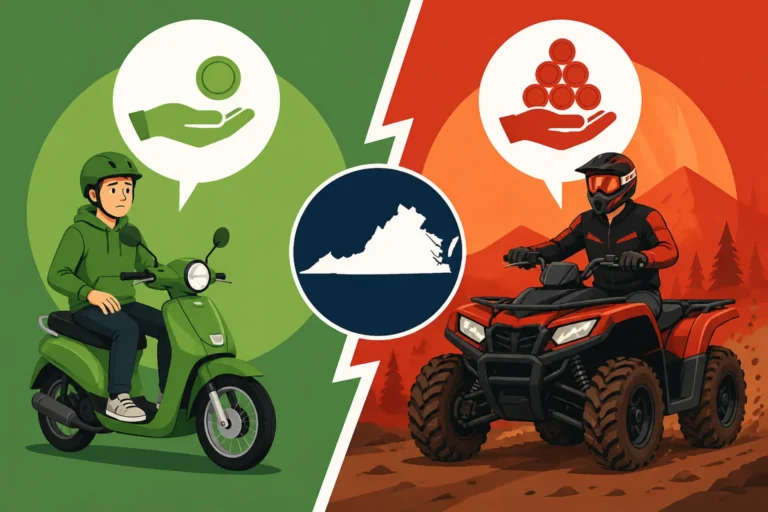
As mentioned earlier, illegally riding an ATV or UTV on Virginia's public roads carries a civil penalty. In the unique context of Buchanan and Tazewell, this means that if you violate the conditions of the designated road access – for instance, by riding on a road that isn't designated, speeding, or riding at night – you could still face a significant fine. While the initial intent of the law was to enable limited access, it's not a license to disregard safety or specific conditions. [Virginia Penalties for Illegal Riding] can be quite steep, with the civil penalty reaching up to $500 for certain offenses.
Beyond monetary fines, there's always the risk of impoundment. If an officer determines that your machine is being operated in a grossly negligent manner, or if you're found to be a repeat offender, or if your machine lacks required safety equipment, they might have the authority to impound it. This means towing fees, daily storage fees, and the significant inconvenience of retrieving your vehicle. Such an event can turn a fun weekend trip into a logistical and financial nightmare. Understanding that these penalties exist, even within the "special" counties, should reinforce the importance of strict compliance with all rules and regulations.
Staying Informed About Changes and Updates
The landscape of laws and designated routes can sometimes change, albeit slowly. County Boards of Supervisors might approve new routes, revoke old ones, or modify specific conditions. State laws can also be updated through legislative action. As a rider, it's your responsibility to stay informed about any changes that might affect your ability to ride legally on county roads in Buchanan and Tazewell. Relying on outdated information or assumptions could lead to unintentional violations.
The best ways to stay informed are to regularly check the official websites of Buchanan and Tazewell counties, especially their Board of Supervisors meeting minutes or public works sections. The Spearhead Trails website is also an excellent resource, as they often communicate changes relevant to their trail systems and connecting routes. Joining local ATV clubs can also be beneficial, as members are often the first to hear about proposed changes or new opportunities. Being proactive about information gathering ensures that your riding experiences in Virginia's coalfields remain not only enjoyable but also fully compliant with the most current regulations.
What Virginia Defines as an ATV and a Utility Vehicle
Understanding the precise definitions of an "all-terrain vehicle" (ATV) and a "utility vehicle" (UTV) in Virginia law is more than just academic; it's fundamental to knowing which rules apply to your machine, especially when it comes to road access. Many riders use these terms interchangeably, but the state code draws important distinctions that influence titling, registration, and permitted uses.
The Official State Definitions
In Virginia, an "all-terrain vehicle" is generally defined as a motor vehicle that has three or more wheels, is suitable for off-road use, is not designed for highway use, and has a dry weight of 1,000 pounds or less. This definition typically covers the traditional quads and three-wheelers you see on trails. They're designed for a single operator, with handlebars for steering and a straddle seating position.
A "utility vehicle" often encompasses side-by-sides, also known as UTVs or SxSs. The Virginia Code defines a utility vehicle as a "multifunction motor vehicle that is designed for utility, recreational, or agricultural use and has four or more wheels, a roll cage or similar permanent protective structure, a steering wheel, and seating for two or more persons." These machines are often heavier, wider, and designed for carrying passengers or cargo, offering a different riding experience than a traditional ATV. Even with these distinct definitions, for the purpose of road use, especially in the context of the general ban and the specific county exceptions, they are largely grouped together. Understanding these [Virginia ATV and Utility Vehicle Definitions] is the first step in knowing where your machine stands in the eyes of the law.
Why a Side-by-Side Counts as an ATV for Road Rules
Despite the separate definitions for "all-terrain vehicle" and "utility vehicle," when it comes to the general prohibition on public roads (Code of Virginia 46.2-915.1) and the specific exceptions for Buchanan and Tazewell counties, side-by-sides (UTVs) are typically treated under the same regulatory umbrella as ATVs. The statute is written broadly to cover "all-terrain vehicles" and "utility vehicles" as machines generally unsuitable for highway travel. This means that if you own a side-by-side, even a large, powerful one, you are subject to the same road access restrictions and conditions as someone riding a traditional quad.
Many UTV owners, especially those with larger, more feature-rich machines that might even resemble small off-road cars, often assume their vehicle might somehow fall into a different category that allows for broader road use. However, the critical factor is often that these vehicles are still not manufactured to full "street legal" standards, lacking specific DOT approvals for components like tires, windshields, and lighting that are mandatory for highway-licensed vehicles. So, while your side-by-side from SuperATV might be incredibly capable off-road and look rugged, it's still an off-highway vehicle in Virginia's eyes when it comes to public roads outside of the designated exceptions. Do not assume your UTV's size or features grant it additional road privileges beyond what's explicitly allowed for ATVs.
The Differences That Matter for Road Access
While the general road rules largely lump ATVs and UTVs together, some subtle differences can become important, particularly for certain exceptions or classifications. For example, some utility vehicles designed strictly for farm use might have very limited exceptions for crossing public roads directly from one field to another, though this is distinct from recreational road access. The weight and width of UTVs also sometimes come into play for specific trail systems or width-restricted bridges, but this is more about trail rules than general road access.
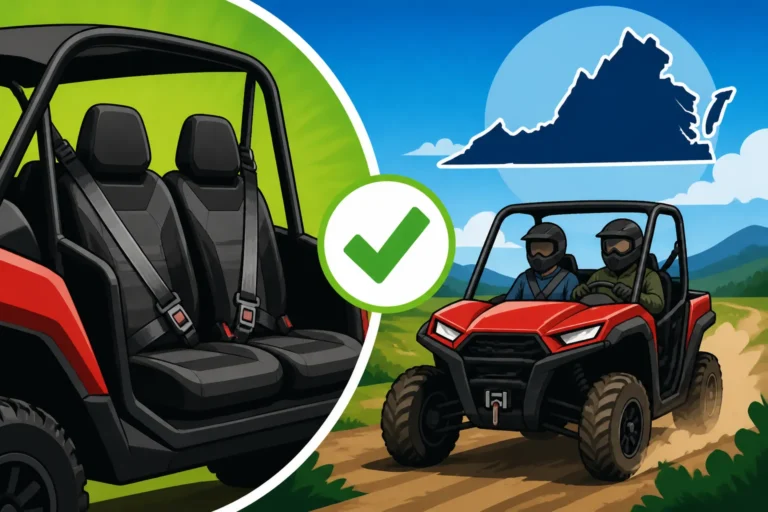
For the purpose of the designated county roads in Buchanan and Tazewell, the primary differences that matter are largely operational: UTVs typically carry passengers (often side-by-side), requiring seatbelts and a roll cage, while ATVs are usually single-rider straddle machines. These passenger considerations might influence how many people can legally be on the machine during road sections. However, the core principle remains: neither is considered a street-legal vehicle for general road use in Virginia, and both are subject to the same stringent conditions when accessing the special county routes. Always refer to the most recent county and state guidelines to confirm specific requirements for your type of machine, ensuring your ride is always legal and safe.
Comparative Overview: Virginia ATV/UTV Road Rules
| Feature | General Virginia Public Roads (Most Counties) | Buchanan & Tazewell Designated County Roads |
|---|---|---|
| Legal Status | Prohibited. ATVs/UTVs are generally banned on public highways/streets. | Limited Access. Specific county roads may be designated. |
| Authority | State Code 46.2-915.1 general prohibition. | County Boards of Supervisors designate specific routes. |
| Purpose of Access | None (outside of very limited farm/emergency crossings). | Connecting trail systems, accessing amenities/trailheads. |
| Speed Limit | N/A (prohibited). | 25 mph (max limit on designated routes). |
| Operating Hours | N/A (prohibited). | Daylight hours only (sunrise to sunset). |
| Crossing State Rts. | Prohibited. | Direct crossing only (most direct route, yield to traffic). |
| Equipment Req. | N/A (prohibited). | Headlights, taillights, horn (spark arrester often required). |
| Helmet Req. | Mandatory for all riders, regardless of location. | Mandatory for all riders. |
| Eye Protection Req. | Mandatory for all riders, regardless of location. | Mandatory for all riders. |
| Age/Supervision | Strictly enforced across all riding environments. | Strictly enforced. |
| Penalties | Significant civil penalty (up to $500), potential impoundment. | Significant civil penalty (up to $500), potential impoundment. |
Disclaimer
This article is for general informational purposes only and does not constitute professional advice. Laws, prices and regulations vary by location and change over time. Consult a qualified professional for guidance on your specific situation.