Correcting a Misspelled Name at the Virginia DMV
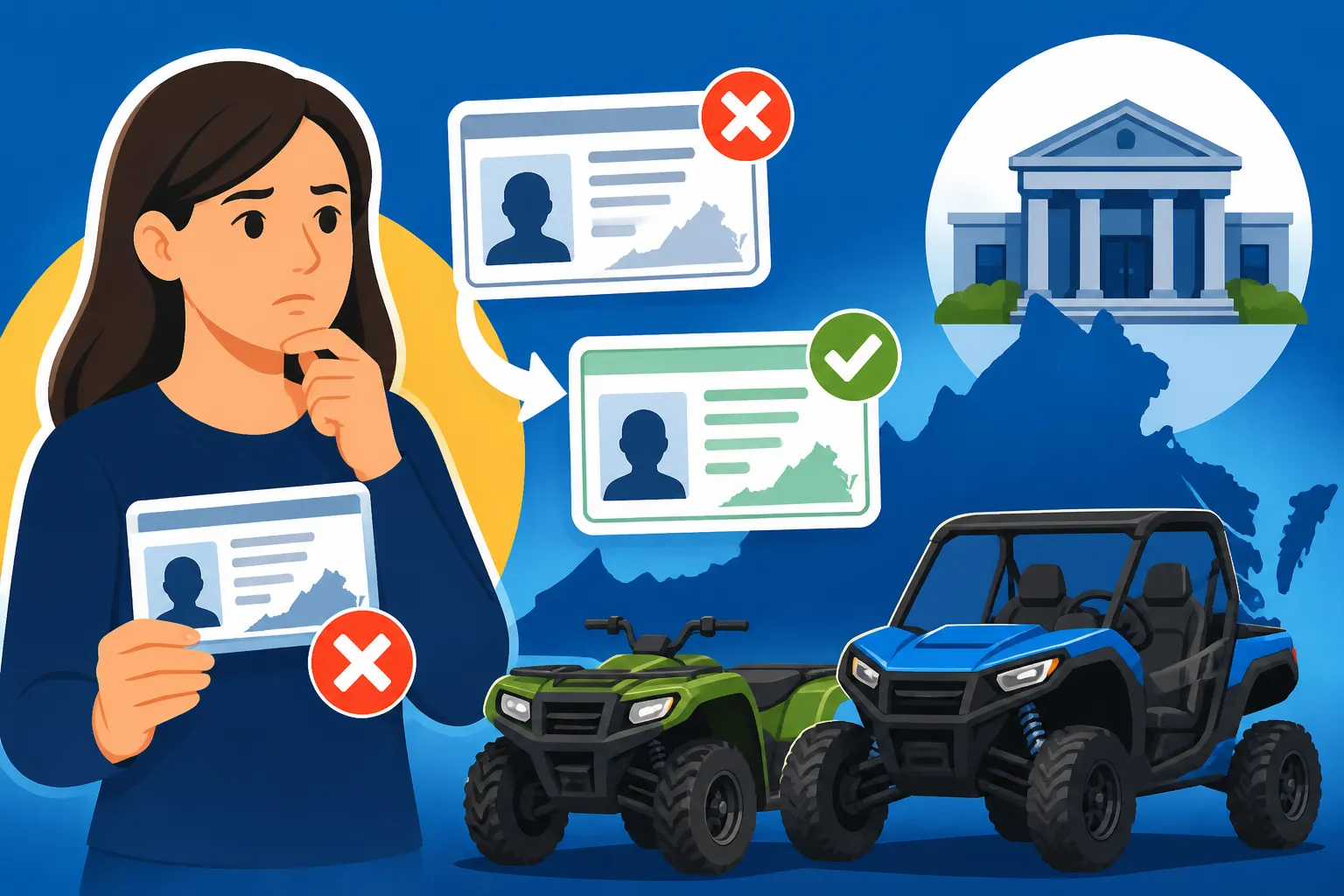
It’s an incredibly frustrating feeling to finally get your hands on that official Virginia ATV or UTV title, only to spot a glaring error: your name is misspelled. You double-check, then triple-check, and sure enough, there it is – a letter missing, an extra letter, or just plain wrong. It immediately makes you question the validity of the document and conjures up all sorts of worries about what this could mean down the road. Rest assured, this guide is here to walk you through exactly how to correct a misspelled name on your Virginia ATV or UTV title, making sure your ownership records are accurate and headache-free.
Why a Misspelled Name on Your ATV/UTV Title Matters
A title is more than just a piece of paper; it’s the official proof that you own your all-terrain vehicle or utility vehicle in Virginia. When there's an error, especially with something as fundamental as your name, it can cause a surprising amount of complications. It's not just a minor annoyance; it can become a real barrier to future plans for your machine.
The Headache of Verification
Imagine this scenario: you're out on the [Spearhead Trails in Virginia Explained], enjoying a ride, and for some reason, an officer asks for your paperwork. You confidently hand over your title, but they raise an eyebrow at the misspelled name. Suddenly, what should be a straightforward verification of ownership becomes a mini-interrogation. Even if it’s an honest mistake, it can cast doubt on the legitimacy of your ownership in the eyes of law enforcement or even a private individual. This isn't just a hypothetical situation; these moments of scrutiny can happen when you least expect them.
Beyond law enforcement, a misspelled name can create a huge hurdle if you ever decide to sell your ATV or UTV. When a potential buyer performs a title check, or when you attempt to transfer the title, any discrepancy can make them wary. They might assume something fraudulent is afoot, or at the very least, they’ll see it as a major red flag that could complicate their own future ownership. Financial institutions, if you're trying to use your ATV as collateral for a loan, will scrutinize every detail, and a misspelled name can bring the entire process to a screeching halt. They need absolute certainty that the person applying for the loan is the legal owner, and a title error undermines that certainty. You'll find yourself needing to sort it out before any serious transaction can proceed, which often leads to frustrating delays and extra trips to the DMV.
Legal Implications Down the Line
The legal implications of a misspelled name on your title can extend far beyond simple verification issues. If you ever have an insurance claim, particularly for theft or a major accident, your insurer will require clear proof of ownership. A misspelled name, even if it's just one letter off, could create a bureaucratic nightmare. The insurance company might argue that the title doesn't officially belong to you, the policyholder, potentially delaying or even denying your claim. This is a terrifying prospect, especially if you're relying on that insurance payout to replace a stolen machine or cover repair costs after a [Virginia Accident Reporting for an ATV Crash].
Furthermore, consider situations like inheriting a machine. If you're trying to [Transferring an ATV Left Behind in an Estate] and the original owner’s name was misspelled, it could significantly complicate the probate process. The estate might need to jump through extra hoops to prove the deceased person was indeed the rightful owner despite the title error. Or, imagine a scenario where you co-own the ATV with someone, and their name is misspelled. This can create confusion over legal responsibilities and rights. The bottom line is that any error on a legal document, especially one that proves ownership, has the potential to cause significant legal and financial headaches down the road. Getting it corrected promptly is not just about peace of mind; it's about protecting your investment and your legal standing.
Common Scenarios Leading to a Misspelled Name
It’s easy to feel like you’re the only one who has ever dealt with a misspelled name on a title, but trust me, it’s a more common occurrence than you might think. There are several ways these errors can creep into your official documents, often through no fault of your own, or sometimes, with a simple oversight during a busy transaction.
Dealer Errors During Paperwork
This is perhaps one of the most frequent culprits. When you buy a brand new ATV or UTV from a dealership, there's a mountain of paperwork to get through. Sales agreements, financing documents, warranty registrations, and, of course, the title application itself. Dealers are often processing multiple sales a day, and even with the best intentions, a busy clerk or finance manager can easily make a typo. Maybe they misread your handwritten information on a form like [Virginia Form VSA 17A Explained], or perhaps a quick keyboard slip led to an incorrect spelling when inputting your data into their system.
You sign a stack of papers, eager to get your new machine home, and it’s easy to overlook a small spelling error amidst all the excitement. Sometimes, the dealer will even handle the entire titling process for you, submitting the paperwork to the DMV on your behalf. While this convenience is great, it also means you might not see the official title until weeks later when it arrives in the mail, by which point the error is already cemented. It's a common frustration, and many riders find themselves in this exact situation after relying on the dealer to handle the details. Always remember to scrutinize every single document, especially those related to your identity and the machine's specifics, before you sign and before you leave the dealership.
Your Own Typo on a Form
Let's be honest, sometimes the mistake lies closer to home. In the rush to get your off-road machine titled, whether it’s a new purchase or a used one you’ve just acquired, you might be filling out the forms yourself. Maybe you’re at the DMV, juggling a pen, your wallet, and a set of keys, trying to make sure you have all the required documents like [What to Bring to the DMV to Title a Quad]. In that moment of distraction, a letter gets transposed, a name is shortened incorrectly, or perhaps your handwriting isn’t as clear as you thought it was. It happens to the best of us!
Even if you’re meticulous, a simple brain lapse can occur. You might be filling out the [Virginia Title for a Youth Quad] for your child, or a [Virginia Title for a Side-by-Side] with multiple owners, and one name gets accidentally butchered. It's easy to make a small error, and once it's on the form and submitted, that's what the DMV has to work with. That's why taking a moment to review everything before you hand it over to the DMV clerk is a crucial step that can save you a lot of hassle later.
Out-of-State Title Transfer Issues
Bringing an ATV or UTV into Virginia from another state can add another layer of complexity to the titling process, and with it, more opportunities for errors. You might have purchased a machine in West Virginia, for example, and are now trying to title it in Virginia. The DMV will accept an out-of-state title as proof of ownership, but if there was already an error on that original title, or if the information is less clear than Virginia's standards, it could easily be transferred over to your new Virginia title.
Alternatively, during the data entry process at the Virginia DMV, a clerk might misinterpret information from an out-of-state document that uses a different format or terminology. Perhaps the previous state’s title used an initial instead of a full middle name, and that was entered incorrectly. Or, if the machine came with a complex history, like an auction buy or an inherited machine from a distant relative, the paperwork might be less straightforward, increasing the chance of a data entry error when it transitions to a Virginia title. [Virginia Titles for a Machine Bought Out of State] covers many aspects of this, but name spelling is a specific detail that can sometimes slip through the cracks.
Step-by-Step Guide to Correcting Your Virginia ATV/UTV Title
Discovering a misspelled name on your Virginia ATV or UTV title can feel like hitting a wall, but don't panic. The Virginia Department of Motor Vehicles (DMV) has a process for correcting these types of errors. It might involve a little legwork, but by following these steps, you can get your title straightened out efficiently.
Gathering Your Documentation
The very first and most crucial step is to gather all the necessary documents. Think of it like building your case: you need to prove who you are and what the correct spelling of your name is. You will absolutely need:
- Your original incorrect Virginia ATV/UTV title: This is the document with the misspelled name.
- Your valid photo identification: This typically means your Virginia driver's license or state ID card, which clearly shows your correct name.
- Proof of your correct name: This is where you might need a bit more. Acceptable documents include your birth certificate, Social Security card, a certified copy of a marriage license (if the name change is due to marriage), or a court order showing a legal name change. The goal is to provide official documentation that establishes the accurate spelling of your name.
- Original purchase paperwork (if available): This could be the buyer's order from a dealer, a bill of sale from a private seller, or any other document from when you initially acquired the ATV or UTV. While not always strictly required for a simple name correction, having these on hand can help if there's any confusion, especially if the original error stemmed from these documents.
- Proof of Address: You'll want to bring a utility bill or other proof of your current residence, just in case. The DMV might need to verify this for your updated title. [Virginia Proof of Address at Titling] is always a good idea to have in your pocket.
Before you even think about heading to the DMV, organize these documents. Make copies of everything, keeping the originals safe. Having a neat, complete packet will make the process smoother and faster once you’re speaking with a DMV representative.
Completing the Necessary Forms
When you go to the DMV to correct a misspelled name, you'll likely need to complete a new title application. This is typically Form VSA 17A, Application for Certificate of Title and Registration. Even though you already have a title, this form is used to initiate any changes to the title record.
On the VSA 17A, you'll fill out all the standard information, but pay particular attention to:
- Section 1: Applicant Information: Clearly write your correct full legal name, address, and driver's license number. This is where you rectify the previous error.
- Section 3: Vehicle Information: Fill in the details of your ATV or UTV, including the VIN (Vehicle Identification Number) to ensure it matches the machine.
Sometimes, if the error was made by the seller (in a private sale) or the dealership, and they are no longer easily reachable to sign new documents, you might need to use an affidavit. An affidavit is a sworn statement of facts. For example, if a private seller misspelled your name on the bill of sale and the original title application, and they've moved or are unresponsive, you might need to provide an affidavit explaining the situation and confirming the correct spelling. While the DMV has its own specific forms for certain affidavits (like [Virginia Form VSA 12M Affidavit] for missing titles), for a unique situation like a seller-induced name error, a general affidavit might be appropriate. Services like LawDepot can provide customizable affidavit templates that you can then have notarized, although you'll still need to ensure the DMV accepts this specific type of affidavit for your situation. Always check with the DMV first if an affidavit is truly necessary and what information it needs to contain.
Visiting the Virginia DMV
With your organized stack of documents and completed forms in hand, your next step is to visit a Virginia DMV customer service center. While some DMV tasks can be done online or by mail, correcting a title error, especially one involving personal identification, usually requires an in-person visit.
Here’s what to expect:
- Check for appointments: Some DMV locations allow you to schedule an appointment online, which can save you a lot of waiting time. It’s always a good idea to check their website or call ahead to see if this option is available for your specific needs.
- Explain the issue clearly: When you get to the counter, clearly state that you need to correct a misspelled name on your ATV/UTV title. Provide the original incorrect title and your supporting documentation.
- DMV Clerk Verification: The clerk will review your documents, verify your identity, and confirm the correct spelling of your name against your official proof (like your birth certificate). They will then initiate the process for issuing a corrected title. Be prepared to answer any questions they might have about how the error occurred.
- New Application: As mentioned, they will likely have you fill out or review a new VSA 17A form to reflect the corrected name.
- Review the new paperwork: Before you leave, and before the clerk submits the final request, meticulously review any new forms they ask you to sign or any printouts they give you. Make absolutely sure your name is spelled correctly this time! This is your last chance to catch any new errors before the process moves forward.
Potential Fees and Processing Times
Correcting a title error, even if it wasn't your fault, often incurs a small fee. This fee is typically similar to the cost of obtaining a duplicate title or making a title change. It’s usually a nominal administrative charge, but it’s important to budget for it. [Virginia ATV Title Cost] is a flat fee, so expect something in that range for the corrected document. Since fees can change, always check the current figures on the official Virginia DMV website before your visit. Be prepared to pay by accepted methods like credit card, debit card, or check. [Virginia Title Payment Methods] are usually pretty flexible.
Once you’ve submitted your application and paid any required fees, the DMV will process your request. [Virginia Title Processing Time] can vary. Sometimes, you might receive a temporary document, and the corrected title will be mailed to you. It could take a few weeks for the new title to arrive in your mailbox, so don’t be alarmed if it’s not instantaneous. Make sure the mailing address on your application is absolutely correct, or you might find your new title going to the wrong place!
## Comparison: Documents for Initial Title vs. Name Correction

| Document Type         | Initial ATV/UTV Titling                                  | Correcting a Misspelled Name                                |
| :-------------------- | :------------------------------------------------------- | :---------------------------------------------------------- |
| **Proof of Ownership**| Manufacturer's Statement of Origin (MSO) (new) or Previous Owner's Title (used) | Your Existing Incorrect Virginia Title                      |
| **Application Form**  | Virginia Form VSA 17A                                    | Virginia Form VSA 17A (New Application for Correction)      |
| **Identification**    | Valid Photo ID (Driver's License/State ID)               | Valid Photo ID (Driver's License/State ID)                  |
| **Proof of Correct Name**| Not typically required unless name change occurred       | Birth Certificate, Social Security Card, Marriage License, Court Order |
| **Proof of Address**  | Required                                                 | Recommended                                                 |
| **Bill of Sale**      | Required (especially for private sales)                  | Helpful for reference, not strictly required for correction |
| **Lien Information**  | Required if financed                                     | Only if a lienholder also needs the name corrected          |
| **Fees**              | Titling fees, sales tax                                  | Small correction/duplicate title fee                        |
Preventing Future Title Name Errors
It’s always better to prevent an error than to correct one. While typos can happen, there are definitely steps you can take to minimize the chances of a misspelled name appearing on your Virginia ATV or UTV title in the first place, saving yourself a future headache.
Double-Checking at the Point of Sale
Whether you’re buying from a bustling dealership or a private seller in the [Shenandoah Valley], the point of sale is your absolute best opportunity to catch any errors. When you’re at a dealer, they’ll present you with a stack of documents. Don't let the excitement of a new machine or the pressure to quickly sign everything rush you. Take your time. Read every single form carefully, especially the buyer's order, the credit application, and particularly the [Virginia Form VSA 17A Explained] (the title application).
Look specifically at your name. Is it spelled correctly? Is your middle initial or full middle name accurate? Is your address perfect? Ask questions if anything looks unclear or incorrect. It might feel awkward to pause and scrutinize every detail, but a few extra minutes at this stage can save you hours of frustration at the DMV later. If you're working with a private seller, ensure that the bill of sale accurately reflects your full legal name, their full legal name, and the machine's VIN. A quick check of their existing title against their ID, and your ID against the new paperwork, can prevent misspellings. [Questions Worth Asking Before You Sign a Buyer's Order] should always include verifying name accuracy.
The Value of a Bill of Sale
A well-drafted and accurate bill of sale is your first line of defense against title errors, especially when you're buying from a private party. Even if [Virginia Titles Are Optional on Used Machines], a comprehensive bill of sale is crucial proof of your transaction. This document should clearly state the buyer's full legal name (you!), the seller's full legal name, the sale price, the date, and the complete Vehicle Identification Number (VIN) of the ATV or UTV. Both parties should sign and date it, and it’s always a good idea to have it notarized if possible, especially for higher-value machines.
Think of the bill of sale as the foundational document that informs the title application. If your name is misspelled on the bill of sale, that error is much more likely to carry over to the title application and, consequently, your official title. Even if you're titling a used quad that doesn't strictly require a title, a solid bill of sale proves you own it. It establishes a clear paper trail. This is particularly important for machines bought from a private seller where you might not have an MSO to rely on.
Using Legal Document Templates
While the Virginia DMV has its own specific forms for titling, for other related documentation or personal records, general legal document templates can be incredibly helpful in maintaining accuracy. For instance, if you're drawing up a formal bill of sale for a private transaction, or an affidavit for another purpose where the DMV form isn't specific enough, services like LawDepot offer a range of customizable legal templates. You can use these to ensure all details, including names, are accurately entered and legally sound before anything is submitted to the state.
While LawDepot won't create your official DMV title application for you, it can assist with complementary documents that support your overall ownership record. For example, if you need a notarized statement from a seller acknowledging a mistake they made, a platform offering legal document templates could help you draft that statement clearly and correctly, ensuring all names and facts are precise. This precision in supporting documents can ultimately reduce the chance of errors translating to your official title applications.
When to Seek Professional Help
Most misspelled name corrections are straightforward and can be handled by visiting the DMV with the right documents. However, there are times when an error is part of a larger, more complex issue. If the name error is tied to a legal name change (like after a divorce where the title still reflects a previous married name), a dispute over ownership, or a situation where the original seller is completely unreachable and uncooperative, you might need more than just a trip to the DMV.
In these more complicated scenarios, it might be wise to consult with an attorney specializing in vehicle titling or property law. They can guide you through the specific legal requirements, help you understand your rights, and even assist in drafting specialized affidavits or court petitions if necessary. They can navigate the legal intricacies that a DMV clerk might not be equipped to handle, ensuring your corrected title is legally bulletproof, particularly if you are trying to [Virginia Titles After the Owner Dies] and the estate details are convoluted. While it’s an extra step and cost, for truly complex situations, professional legal advice can be invaluable in safeguarding your ownership rights and ensuring peace of mind.
Disclaimer
This article is for general informational purposes only and does not constitute professional advice. Laws, prices and regulations vary by location and change over time. Consult a qualified professional for guidance on your specific situation.