What an Officer Can Ask For at a Trailhead
Imagine you're out on a beautiful trail ride in Southwest Virginia, soaking in the sights, when suddenly you see flashing lights or a trail ranger waving you down. It can be a real jolt to the system, causing your heart to race and questions to swirl: "Did I do something wrong? What do they even need?" This guide is here to demystify those trailhead encounters, walking you through exactly what a law enforcement officer or trail ranger might ask for when they stop you on a Virginia ATV or UTV trail. Being prepared and knowing what to expect can make all the difference, turning a potentially stressful moment into a quick, routine check.
Understanding Why Officers Conduct Trailhead Stops in Virginia
It's easy to feel singled out when an officer or trail ranger approaches you on a trail, but it's important to understand the bigger picture. These stops aren't always about you personally doing something wrong; they're often part of broader efforts to ensure everyone's safety, protect the trails, and uphold the rules that keep our riding areas open. Virginia's trails, whether they're part of the [Spearhead Trails in Virginia Explained] system or the national forests, have specific regulations designed to keep things running smoothly and safely for all users.
The Role of Law Enforcement and Trail Rangers
On Virginia's public and private trail systems, you might encounter various individuals authorized to enforce rules. This could be a Virginia State Trooper, a local sheriff's deputy, a game warden, a national forest ranger, or even a specific trail ranger employed by an organization like Spearhead Trails. Each has a slightly different jurisdiction and focus, but their core aim is consistent: to ensure compliance with the law and trail regulations. They're looking out for things like proper permits, safe riding practices, and adherence to age restrictions, all of which contribute to a positive and safe environment for everyone enjoying the outdoors. They're not there to ruin your day, but to make sure everyone is following the rules that protect both riders and the trails themselves. Their presence is ultimately for the benefit of all who wish to enjoy these unique recreational opportunities.
The varying roles mean an officer might be focused on general traffic laws as they apply to off-road vehicles, while a game warden might be checking for compliance with hunting regulations if you're riding during hunting season. A trail ranger, on the other hand, is usually focused strictly on the rules of that specific trail system, like checking for your permit or ensuring you're sticking to designated trails. Knowing these distinctions can help you understand the context of the stop, but the core expectation for you, the rider, remains consistent: be prepared and cooperative.
Common Triggers for a Trailside Check
Sometimes, a stop is purely random, a routine check to touch base with riders and ensure everyone is legal and safe. This is often the case on busy weekends or at popular trailheads, where officials are simply trying to maintain a visible presence and ensure compliance across the board. These routine stops are a part of responsible trail management, much like a park ranger checking for fishing licenses at a lake.
Other times, there might be a specific reason for the stop. An officer might have observed a rider operating recklessly, perhaps exceeding the [Virginia's 25 mph Trail Speed Limit] on a marked section, or riding in a clearly restricted area. They might also be responding to a complaint from another trail user or a nearby resident, perhaps about excessive noise or riding outside designated hours. It's also possible they're looking for a specific machine reported stolen or involved in an incident earlier on the trail. Understanding these potential triggers can help you react calmly and cooperatively, knowing that the stop isn't necessarily a personal accusation, but a procedural check aimed at ensuring everyone's safety and the integrity of the trail system.
Essential Documents and Items You Must Have on Hand
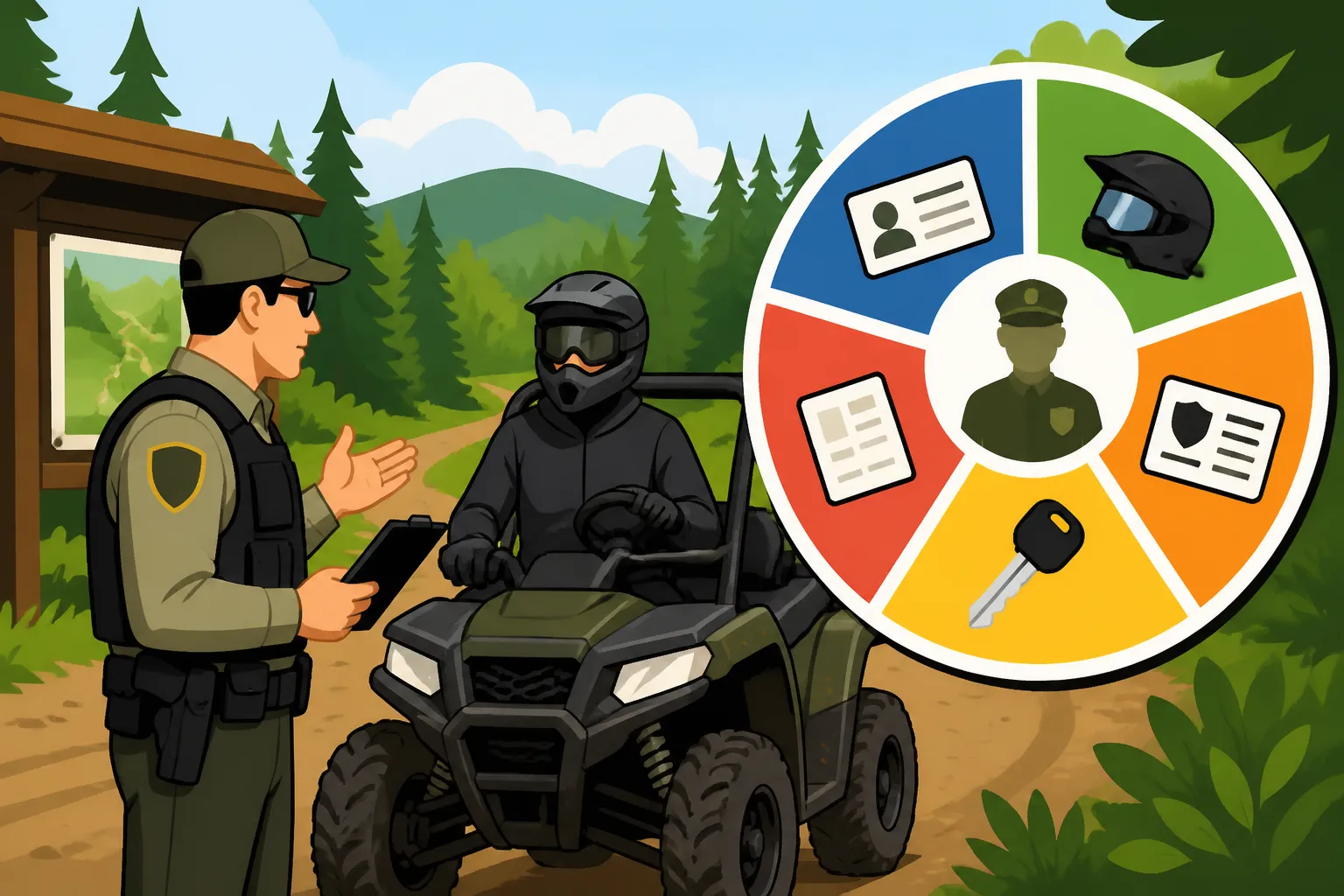
When an officer stops you on the trail, the first thing they'll typically ask for is proof of who you are and that your machine is legitimate. It's really no different than getting pulled over in your car; they need to establish identity and verify compliance. Being prepared with these items can make the stop quick and stress-free, letting you get back to your ride with minimal delay. Think of it as your "trail readiness kit" for legal encounters.
Valid Identification and Proof of Age
First and foremost, an officer will want to see your government-issued photo identification. This could be a driver's license, a state ID card, or even a passport. While you don't need a driver's license to operate an ATV in Virginia on designated trails, having a valid ID proves who you are. This is especially crucial for younger riders. [Virginia ATV Age Requirements] are strict, often tied to engine size, and officers will need to verify a rider's age against these regulations. For instance, a rider under 12 cannot operate a machine larger than 70cc, and a rider between 12 and 16 is capped at 90cc. If you're riding with minors, be ready to confirm their identity and age as well, especially if they are operating machines with engine sizes that have specific age limits. Having their ID, or at least a clear photo of it, readily accessible can expedite this process.
It's also worth noting that some private parks or special events might have their own age verification requirements beyond state law, so always check the rules of your specific riding location before heading out. Sometimes, if a younger rider doesn't have a state ID, a birth certificate or school ID might be accepted in a pinch by a sympathetic ranger, but a state-issued photo ID is always the most definitive proof of age.
Proof of Ownership for Your ATV or UTV
This is a big one. An officer will want to know that the machine you're riding actually belongs to you, or that you have permission to use it. The primary way to prove this is through the machine's title. In Virginia, while [Virginia Titles Are Optional on Used Machines], new machines purchased after July 1, 2006, generally require a title. If your machine is titled, have that document, or a clear photo of it, readily available. This is critical for establishing that the machine isn't stolen or otherwise involved in any legal dispute.
If your machine is untitled, a bill of sale can serve as proof of purchase, especially if it includes the Vehicle Identification Number (VIN) and the names of the buyer and seller. Even a simple handwritten bill of sale, particularly one created using a template from a service like LawDepot, can be incredibly helpful in establishing a chain of ownership and avoiding unnecessary scrutiny. The VIN is paramount here, as it's the unique identifier for your machine. Without a title, a comprehensive bill of sale becomes your most vital document.
Sometimes, you might be riding a machine that belongs to a friend or family member. In this case, a written statement from the owner granting you permission to operate it is highly recommended. This document should include the owner's name, your name, the machine's VIN, and the dates for which permission is granted. Again, a simple agreement template from a resource like LawDepot can make drafting this quick and official, saving you a lot of hassle and demonstrating your due diligence. [Virginia Proof of Ownership on the Trail] is key to a smooth encounter, and having these papers ready shows you're a responsible operator.
Required Permits and Passes for Trail Access
Accessing many of Virginia's fantastic off-road trails requires a permit. This is particularly true for systems like Spearhead Trails or riding within a National Forest. Officers and rangers are vigilant about checking these.
- Spearhead Trails: If you're on a Spearhead system, they'll ask for your [Virginia Spearhead Trail Permits]. These are usually digital, so having the confirmation email or proof of purchase on your phone, along with photo ID, is essential. They'll often verify it by looking up your name in their system. Don't forget that [Virginia Youth Permits at $38] are also required for younger riders, and they must be accompanied by a permitted adult who also has their own valid permit.
- National Forests: If you're on federal land like Peters Mill Run OHV Trails, you'll need a [Virginia National Forest OHV Permits]. These can often be purchased online, at ranger stations, or local vendors. Make sure you have the physical permit or digital proof readily available, along with any necessary day passes. Some forest permits are even designed to be displayed on your machine, so ensure it's visible if that's the requirement.
It's common for officers to ask to see these permits right away, so keep them somewhere easily accessible, not buried at the bottom of a backpack or phone menu. A quick display of your permit shows respect for the rules and helps keep the trails well-maintained through permit fees. Many trail systems now have online systems, but it’s always wise to screenshot your digital permit in case you lose cell signal on the mountain.
Safety Gear and Machine Compliance
Virginia has specific safety regulations for ATV and UTV riders, and officers are trained to check for compliance. These aren't just suggestions; they're legal requirements designed to prevent serious injuries.
- Helmets and Eye Protection: The [Virginia ATV Helmet Law Explained] is non-negotiable: every rider, regardless of age or experience, must wear a DOT-approved helmet. Eye protection is also mandatory. Officers will definitely be checking for this, and a violation can result in a significant fine. There's no exception for riding on private land or for adults; it applies to all riders on all terrains.
- Machine Equipment: They might also do a quick check of your machine. This includes ensuring you have a functioning spark arrester (to prevent wildfires), a muffler that keeps noise levels within acceptable limits (especially on federal lands like Peters Mill Run, which has a 99-decibel limit at 20 feet), and working brakes. For UTVs, they'll often check for seatbelts and roll cages, ensuring they are factory-installed and functional, as [Spearhead Requires a Factory Cage and Working Seatbelts]. This means no homemade modifications to the roll cage or missing seatbelts. On certain systems, they might even check for width restrictions if you're on trails with limits, like Taskers Gap which caps machines at 50 inches wide. [Virginia Lighting Rules on a Machine] might also be a point of check if you're riding near dawn or dusk, or on trails where lights are required.
Remember, the goal of these checks is not to inconvenience you but to enforce safety standards that protect both you and other trail users. Ensuring your machine is up to par before you hit the trail saves you potential trouble and keeps the trails safer for everyone.
Table: Documents & Items to Carry on Virginia ATV/UTV Trails
| Item Category | Specific Items | Importance | Notes |
|---|---|---|---|
| Personal Identification | Government-issued photo ID (Driver's License, State ID, Passport) | Essential for verifying identity and age. | [Virginia ATV Age Requirements] are strictly enforced for all riders. |
| Proof of Ownership | ATV/UTV Title OR Bill of Sale | Proves legitimate ownership of the machine. | If untitled, a detailed bill of sale with VIN is crucial. [Virginia Titles Are Optional on Used Machines], but proof of ownership is not. Consider using a LawDepot template for a bill of sale. |
| Permission to Operate | Written consent from owner (if not your machine) | Demonstrates you have legal authority to ride the machine. | Include owner's name, your name, VIN, and dates. A LawDepot general power of attorney or simple agreement can be adapted. This is also important for [Virginia Written Consent on Private Land]. |
| Trail Permits | Spearhead Trails Permit OR National Forest OHV Permit | Required for legal access to designated trail systems. | Digital permits on phone are accepted, but physical is best if available. [Virginia Spearhead Trail Permits], [Virginia National Forest OHV Permits]. |
| Safety Gear | DOT-approved Helmet & Eye Protection | Mandatory for all riders under Virginia law, regardless of age or location. | [Virginia ATV Helmet Law Explained] covers this thoroughly. |
| Machine Compliance | Spark arrester, Muffler, Working Brakes, Factory Seatbelts/Roll Cage (UTVs) | Ensures your machine meets safety and environmental standards for trail operation. | Noise limits and width restrictions may also apply depending on the trail system. |
| Other (Recommended) | Emergency contact info, Basic first aid kit, Small toolkit, Water, Snacks | For your personal safety and comfort, and minor repairs on the trail. | While not legally required, these are practical for any off-road adventure, especially when riding [Virginia Trails That Allow Side-by-Sides] on longer routes. |
Navigating a Trailhead Stop with Confidence
Being stopped by an officer can be intimidating, but how you react can significantly influence the outcome. Staying calm, respectful, and cooperative is always the best approach, even if you're unsure why you've been stopped. Remember, these officers are doing their job, often to keep everyone safe and preserve the trails we all love. A calm demeanor on your part can often lead to a quicker, less stressful interaction.
How to Respond When Stopped
When an officer signals you to stop, do so safely and promptly. Pull over to the side of the trail in a clear, visible spot, turn off your engine, and keep your hands visible. Remove your helmet and eye protection so they can see your face and you can hear them clearly. Avoid reaching for documents before they ask, as sudden movements can be misinterpreted. Wait for their instructions. They will likely approach, state who they are, and explain why they stopped you.
Listen carefully to what they say and answer their questions honestly and politely. If you don't understand a question, politely ask for clarification. Don't argue, become defensive, or try to talk your way out of something immediately. Focus on providing the information requested. If you are asked to provide written consent for riding on private land, for example, a form generated through LawDepot that you have on hand can demonstrate your preparedness and compliance, showing you've taken the necessary steps to ride responsibly. This proactive approach can often de-escalate a situation and show that you are a responsible rider.
It's natural to feel a bit flustered, but maintaining a calm and respectful tone can truly make a difference. Officers are more likely to be understanding and cooperative if you are. A simple "Yes, sir/ma'am" or "No, sir/ma'am" is usually sufficient for direct questions.
Understanding Potential Consequences and Your Rights
If an officer finds a violation, they might issue a warning (especially for minor infractions or first-time offenders), a citation (which means a fine), or in more severe cases, impound your machine. Common violations include not having a required permit, riding in restricted areas, underage riding, or not wearing a helmet. Penalties can range from fines to more significant consequences, especially for repeat offenses or serious safety infractions. Knowing the potential [Virginia Penalties for Illegal Riding] can help you understand the gravity of certain actions and why compliance is so important.
It's important to remember your rights. You have the right to remain silent if you believe your answers could incriminate you, though you must provide identification. You also have the right to challenge a citation in court. However, arguing with an officer on the trail is rarely productive and can escalate the situation unnecessarily. If you receive a citation, accept it calmly. Collect any information they give you, clarify any instructions, and if you feel a citation is unwarranted, you can address it through the proper legal channels later. Documenting the interaction, such as noting the officer's badge number, the time of stop, and any specific details, can be helpful if you decide to contest a ticket.
Maintaining a Positive Relationship with Trail Officials
The vast majority of riders respect the rules and appreciate the efforts of trail officials to keep our riding areas safe and accessible. By being prepared, cooperative, and respectful, you contribute to a positive atmosphere on the trails. This benefits everyone. A good relationship between riders and enforcement benefits everyone, helping to ensure trails remain open and enjoyable for years to come. Remember, these officials are often riders themselves, passionate about the sport, and focused on maintaining order and safety so everyone can enjoy our beautiful Virginia outdoors.
Having all your paperwork in order, whether it's your title, a bill of sale, or a permission slip (which you can quickly generate with LawDepot), shows you're a responsible rider and that you take the rules seriously. This not only makes your individual encounters smoother but also helps reinforce the positive image of the ATV and UTV riding community in Virginia. By following the rules, you help preserve the future of off-road recreation in our state. Even taking something like a basic ATV safety course, though [Virginia Has No Safety Course Requirement], can show an officer your commitment to safe riding practices.
Disclaimer
This article is for general informational purposes only and does not constitute professional advice. Laws, prices and regulations vary by location and change over time. Consult a qualified professional for guidance on your specific situation.