Virginia Title for a New Resident
Moving to a new state is a whirlwind of packing, unpacking, and trying to figure out a whole new set of rules for everything, including your beloved ATV or UTV. If you've just landed in the Commonwealth and brought your off-road machine with you, you might be scratching your head trying to understand Virginia's unique approach to titling, especially since it's quite different from how cars and trucks are handled. This guide is here to walk you through the often-confusing process of getting a Virginia title for your ATV or UTV as a new resident, ensuring you understand exactly what you need to do to hit those trails legally and confidently.
Understanding Virginia's Unique Titling for New Residents
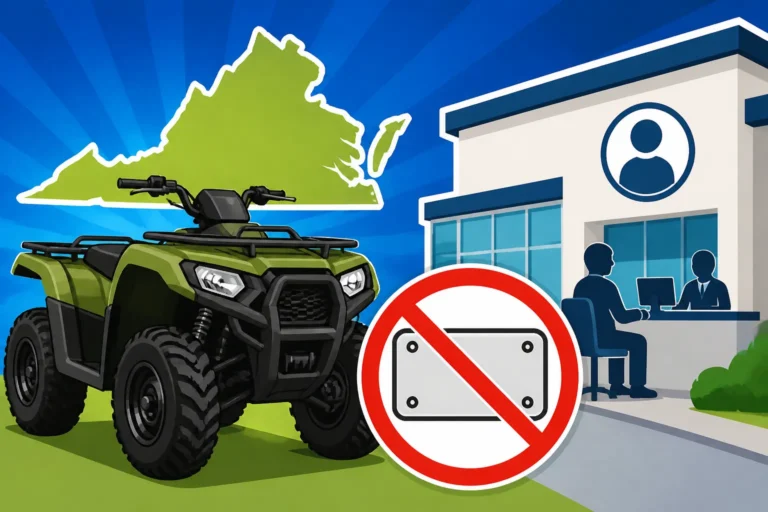
Let's be honest, Virginia's titling rules for ATVs and UTVs aren't what most folks expect. You've probably moved from a state where if it has an engine and wheels, it gets a title and a registration plate. Here in Virginia, things are a little different, and that can lead to a lot of head-scratching when you're a new resident trying to do the right thing. The biggest takeaway right upfront is that while Virginia titles ATVs and UTVs, it generally [Virginia Titles ATVs but Does Not Register Them]. This means no license plate, no annual tags, and often, no annual renewal fees like you'd pay for a car.
This distinction is super important for new residents. Your primary goal isn't to register your machine for road use – because you can't ride an ATV or UTV on most public roads in Virginia anyway – but to establish legal ownership within the state. This title serves as your official proof that the machine belongs to you, which is crucial for resale, insurance, and simply having a clear paper trail. Trying to figure out this system on your own can feel like navigating a winding mountain trail without a map, so let's break down the philosophy behind it.
Why Virginia Titles Off-Road Machines Differently
Virginia's approach to ATV and UTV titling stems from their classification as off-road vehicles, not street-legal motor vehicles. For a long time, many states didn't title these machines at all, which made ownership transfers and theft recovery a real headache. Virginia stepped in to provide a legal mechanism for ownership, but without the full weight of motor vehicle registration that applies to cars, trucks, and even motorcycles. It's a pragmatic middle ground that acknowledges these machines are valuable assets while also recognizing their intended use is off the pavement.
When you arrive in Virginia with an ATV or UTV from another state, your first thought might be, "Do I really need a Virginia title?" The answer depends on a few factors, but for most new residents, it's a smart move. While [Virginia Titles Are Optional on Used Machines] bought from a private seller within the state, having a Virginia title, especially if you're bringing it from out of state, solidifies your ownership. It makes it easier to sell the machine down the line, proves ownership to law enforcement if questions arise, and can sometimes be a requirement for certain insurance policies. Think of it as formally introducing your machine to its new home state.
The July 2006 Cutoff: Does It Affect New Residents?
You might hear whispers about [Virginia's July 2006 Titling Cutoff] and wonder if it applies to your machine. This rule primarily impacts machines bought new in Virginia. Specifically, if an ATV or UTV with an engine size over 50cc was bought new after July 1, 2006, it generally must be titled in Virginia. If it was bought new before that date, titling might be optional or handled differently.
For new residents bringing in a machine from another state, the primary concern isn't when it was first purchased new, but rather its current ownership status and whether you have an existing title from your previous state. Virginia is generally very accommodating if you arrive with a valid out-of-state title in your name. The 2006 cutoff is less about your specific situation as a new resident with an existing machine and more about the historical titling requirements for machines initially sold in Virginia. The main goal for you is simply to transfer the proof of ownership from your old state to your new one, usually by converting your out-of-state title to a Virginia one.
The Step-by-Step Process for Titling Your ATV or UTV as a New Virginia Resident
Alright, let's get down to the nitty-gritty. Bringing your ATV or UTV into Virginia as a new resident doesn't have to be a nightmare, but it does require attention to detail. The key is to gather all your ducks in a row before you head to the DMV. Trust me, showing up prepared saves you a ton of frustration. The process is straightforward once you know what documents you need and what steps to follow.
Gathering Your Essential Documents
Before you even think about setting foot in a DMV customer service center, make sure you have these critical documents ready. Missing just one can send you home to start over, which is exactly what we want to avoid.
- Your Out-of-State Title: This is the absolute cornerstone of your application. Virginia needs to see that you legally owned the machine in your previous state. Make sure the title is in your name and is free of any liens, or that you have the lien release if applicable. [Virginia Accepts an Out-of-State Title] as the primary proof of ownership.
- Proof of Virginia Residency: Since you're a new resident, the DMV will need to verify your Virginia address. This can include a utility bill, a lease agreement, a Virginia driver's license (which you should already be working on getting), or a voter registration card. It's all about proving you genuinely live here now. You'll definitely need [Virginia Title and Proof of Address].
- Photo Identification: Your valid driver's license or state-issued ID.
- Application for Certificate of Title and Registration (Form VSA 17A): Even though ATVs don't get traditional registration, this is the form the DMV uses for titling. You'll fill out the relevant sections for an ATV/UTV title. It’s always a good idea to download and fill out [Virginia Form VSA 17A Explained] before you go to save time.
- Payment for Fees: There's a title fee, which is a fixed amount. While I can't give you the exact current number, it's typically a modest fee. [Virginia Title Cost] will break down the expected cost. Be prepared for any sales tax that might apply, especially if you recently purchased the machine before moving to Virginia, though specific rules apply for out-of-state purchases.
What if Your Out-of-State Title is Missing?
This is where things can get a little more complicated, but it's not insurmountable. If your out-of-state title is lost, stolen, or otherwise unavailable, you'll need to provide alternative proof of ownership. This might involve contacting the DMV in your previous state to request a duplicate title first. If that's not possible, Virginia may accept other documents like a bill of sale, canceled checks, or even an affidavit of ownership. In some cases, you might need to use [Virginia Notarized Affidavits in Lieu of Title], which is often [Virginia Form VSA 12M Affidavit]. You can use a platform like LawDepot to draft a generic bill of sale or affidavit if you need a template to start with, but always check with the Virginia DMV for their specific requirements and forms before relying solely on a generic document. They want to ensure a clear chain of ownership.
Completing Form VSA 17A and Submitting Your Application
Once you have all your documents, it’s time to fill out Form VSA 17A. Pay close attention to the sections related to vehicle description, owner information, and any lienholder details if you have a loan on the machine. For an ATV or UTV, you'll typically mark the box indicating "Off-Road Motorcycle, All-Terrain Vehicle, or Utility Vehicle" where applicable. Don't worry about odometer readings; [Virginia Skips the Odometer Rule for ATVs].
You have a couple of options for submitting your application:
- In Person at a DMV Customer Service Center: This is often the quickest and most straightforward way, especially for new residents. You can get real-time assistance if you have questions and walk out with your temporary title or receipt knowing everything is processed correctly. This is usually how you go about [Titling an ATV in Virginia In Person at a DMV Office].
- By Mail: If visiting a DMV isn't feasible, you can mail your completed forms and supporting documents to the address provided on the DMV website. However, mailing original titles can be nerve-wracking, and any errors in your application will delay the process significantly. It's generally recommended for less complex situations or if you're not in a rush. [Mailing an ATV Title Application to the DMV] is an option, but be extra diligent with your paperwork.
Expected Processing Time and What You'll Receive
After submitting your application, the DMV will process your title. If you apply in person, you often receive a temporary title or a receipt immediately. The official physical title certificate will then be mailed to you, usually within a few weeks. The [Virginia Title Processing Time] can vary, so be patient.
Once your title arrives, keep it in a safe place, separate from your machine. This is your proof of ownership. Remember, you won't receive license plates or registration stickers for your ATV or UTV, as [Virginia Issues No Plates for ATVs] and [Virginia Issues No Decals for ATVs]. Your Virginia title is the primary document you'll receive from the state regarding your off-road machine.
Common Pitfalls and How to Avoid Them
Even with a clear roadmap, the journey to obtaining your Virginia ATV or UTV title as a new resident can have a few bumps. Knowing what these common issues are ahead of time can help you avoid them, saving you time, money, and a good deal of stress.
Sales Tax Confusion for Out-of-State Purchases
One of the most common areas of confusion for new residents is sales tax. You might have bought your ATV or UTV in your previous state and already paid sales tax there. When you move to Virginia, you might wonder if you'll have to pay it again. Virginia has a "use tax" provision, which generally means that if you paid sales tax in another state at a rate equal to or greater than Virginia's rate, you typically won't owe additional sales tax when you title your machine here. However, if your previous state's sales tax rate was lower than Virginia's, you might owe the difference.
It's crucial to bring proof of the sales tax you paid in your previous state (e.g., a bill of sale showing the tax collected). Without it, the DMV might assume no tax was paid and assess the full Virginia sales tax. This falls under [Virginia Tax on an Out-of-State Purchase]. The key is to be prepared with documentation proving your prior tax payment. ATVs are subject to [Virginia ATV Sales Tax Rate] at the retail rate, not the lower vehicle sales tax rate, so understand that difference when calculating.
Issues with Missing or Incomplete Paperwork
As mentioned earlier, missing paperwork is a huge time-waster. Double-checking every form and every document before you go to the DMV is critical.
- Missing Out-of-State Title: If you can't get a duplicate from your old state, Virginia may require more than just a bill of sale. Sometimes, a sworn affidavit of ownership, like [Virginia Form VSA 12M Affidavit], might be necessary, and it usually needs to be notarized. Finding [Where to Find a Notary for a VSA 12M] is usually easy at banks, credit unions, or even some shipping stores. Having a detailed bill of sale, perhaps generated using a service like LawDepot if you can't locate the original, can help support your claim, but always prioritize official DMV forms and guidance.
- Lienholders: If you still have a loan on your ATV or UTV, your lender (the lienholder) will typically hold the original title. You'll need to contact them to arrange for the title to be sent to the Virginia DMV or to provide you with a lien release if the loan is paid off. The DMV won't issue a clean title in your name if there's an active lien without proper documentation from the lender. [Virginia Title and Financing Documents] are crucial here.
- Incorrect Information: Mistakes on forms, like misspelled names or incorrect Vehicle Identification Numbers (VINs), can cause significant delays. Double-check everything, including comparing the VIN on your paperwork to the physical VIN on your machine. [Correcting a Misspelled Name at the Virginia DMV] can be a hassle, so it's best to avoid it upfront.
Understanding the Lack of Registration and Plates
New residents often find it hard to wrap their heads around the fact that their titled ATV or UTV won't get a license plate or traditional registration. They might even ask for one, only to be politely informed that Virginia doesn't issue them. It's a fundamental difference from how cars are handled. For you, the new resident, this means that while you'll have a Virginia title, you won't have the typical "street legal" documentation you might be used to. This ties into the general rule that [Virginia Bans ATVs on Public Highways].
It's important to internalize this distinction to avoid future confusion or accidentally trying to register your machine for road use. Your Virginia title is for ownership, not for road legality. If you have questions about specific trail access or where you can ride, those rules are separate from titling and usually don't involve a registration plate.
Table: Key Documents for New Residents Titling an ATV/UTV
| Document Type | Required for Most Cases | If Out-of-State Title Missing | Notes for New Residents |
|---|---|---|---|
| Out-of-State Title (in your name) | Yes | No | Original title from your previous state is essential. |
| Proof of Virginia Residency | Yes | Yes | Utility bill, lease, VA driver's license, etc. |
| Valid Photo ID | Yes | Yes | Driver's license or state-issued ID. |
| Form VSA 17A | Yes | Yes | Application for Certificate of Title. Fill out relevant sections for ATV/UTV. |
| Payment for Fees | Yes | Yes | Check current [Virginia Title Fee of $15] and any sales tax (if applicable). |
| Lien Release (if applicable) | Yes | Yes | From your lender, if the loan is paid off. |
| Notarized Affidavit (Form VSA 12M) | No | Yes | If original title is genuinely lost and cannot be replaced by prior state DMV. LawDepot can provide templates for generic affidavits, but always check if DMV has a specific form. |
| Detailed Bill of Sale | No | Highly Recommended | Especially helpful if previous state title is missing; shows purchase details. |
| Proof of Sales Tax Paid in Other State | No | No | Bring if you paid sales tax in your previous state to avoid paying again. |
Moving to Virginia with your ATV or UTV shouldn't add unnecessary stress to your life. By understanding Virginia's unique titling process, gathering your documents meticulously, and knowing what pitfalls to avoid, you can seamlessly transition your machine to its new home and get ready to explore the Commonwealth's incredible off-road opportunities. Welcome to Virginia!
Disclaimer
This article is for general informational purposes only and does not constitute professional advice. Laws, prices and regulations vary by location and change over time. Consult a qualified professional for guidance on your specific situation.