Virginia Title Requirements for a New Machine
Getting a brand new ATV or UTV in Virginia is exciting! There's nothing quite like the smell of a fresh engine and the promise of new adventures. But that excitement can quickly turn into a headache when you realize there's a specific process to follow to make your new machine legally yours, especially when it comes to getting it titled. This guide will walk you through the precise Virginia title requirements for a new machine, so you can hit the trails knowing all your paperwork is in order.
Why Titling a New Machine is Different
You might think buying a brand-new ATV or UTV means the dealership handles everything, and you just drive (or haul) away. While they do handle a lot, understanding your role and the unique requirements for a new machine in Virginia is crucial. Unlike a used machine, where you'd be looking for a previously issued title, a new machine requires a completely fresh start in the titling system. It's a fundamental difference that many first-time buyers overlook, leading to delays and frustration at the DMV.
One of the biggest distinctions is the Manufacturer's Statement of Origin, or MSO. This document is the absolute bedrock of titling a new off-road machine. It’s essentially the birth certificate of your ATV or UTV, proving it’s never been titled or registered anywhere else. Without a proper MSO, you won't be able to get a Virginia title, full stop. The dealer is responsible for providing this to you, but you need to know what to look for and ensure it's correct. It's not uncommon for errors to creep in, or for documents to go missing, which can create a real mess. Always double-check this critical piece of paper before you leave the dealership, as correcting it later can be a bureaucratic nightmare. Remember, [Virginia Requires an MSO for a New Machine] to even begin the process.
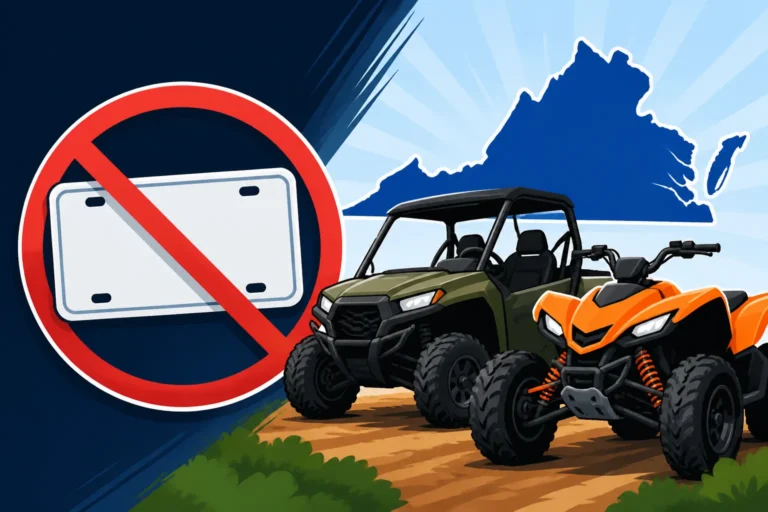
The state of Virginia treats ATVs and UTVs a bit differently than cars and trucks, which can add to the confusion. For instance, [Virginia Titles ATVs but Never Registers Them], meaning you won't get a license plate or annual stickers like you would for a street-legal vehicle. This can be counter-intuitive for many, especially if you're used to titling automobiles. It's also important to clarify the definition of what constitutes an ATV or UTV in the eyes of the law, as this affects titling requirements. For the purpose of titling, if your machine is over 50cc and was bought new since July 1, 2006, you'll need a title. This is clearly spelled out in [Virginia's July 2006 Titling Cutoff] and [Virginia Titles Required on Machines Over 50cc]. Don't let anyone tell you otherwise if your machine falls into these categories.
Key Documents You Must Have for a New Machine
Alright, let's get down to brass tacks. When you're buying a brand-new ATV or UTV, there's a specific stack of paperwork you absolutely must have to get that Virginia title. Missing even one piece, or having a mistake on it, will send you packing from the DMV, and nobody wants that after waiting in line.
The Manufacturer's Statement of Origin (MSO)
As we touched on earlier, the MSO is paramount. This document comes directly from the manufacturer to the dealership, and then from the dealership to you. It should be an original, not a copy, and it will contain vital information about your machine: the full VIN (Vehicle Identification Number), make, model, year, engine size, and the manufacturer's name. Crucially, it also verifies that the machine is "new" and has never been titled or registered before. Think of it like a birth certificate for your ATV or UTV. When you're at the dealership, make sure to inspect it carefully. Is your name spelled correctly? Does the VIN match the one on your machine precisely? Even a single typo can cause major headaches down the road. If the dealership is preparing your titling paperwork, they'll use this document as the foundation. [The MSO You Need to Title a New Quad] cannot be understated in its importance.
The Bill of Sale or Purchase Agreement
While the MSO proves the machine's origin, the bill of sale or purchase agreement proves that you legally bought it from the dealer. This document will show the purchase price, any trade-in value, taxes paid, and the dealer's information. It's what establishes the transfer of ownership from the dealer to you. It's also critical for calculating sales tax, which you'll typically pay at the time of purchase or when you title the machine at the DMV. Ensure the sales price is clearly stated, and any additional fees are itemized. Having a clear, detailed bill of sale protects both you and the dealer. If for some reason you needed to generate a supplementary agreement or affidavit for your records, services like LawDepot can provide customizable templates, though for the initial dealer sale, their document is usually sufficient. Keep an eye out for hidden charges; knowledgeable buyers always scrutinize [Virginia Dealer Paperwork at Delivery].
Virginia Application for Certificate of Title and Registration (Form VSA 17A)
This is the official form you'll fill out to apply for your Virginia title. Even though ATVs don't get registered in the traditional sense, this form is still used for titling. You can often get this form from the DMV directly or download it online. The dealer might pre-fill parts of it for you, especially if they offer to process the title on your behalf. However, it's always your responsibility to ensure all the information is accurate before you sign it. You'll need to provide your personal details, the machine's information (straight from the MSO), and sign where indicated. Make sure you don't miss any sections, as incomplete forms will cause delays. Understanding [Virginia Form VSA 17A Explained] will help you navigate this essential piece of the puzzle.
Here's a quick checklist of what you'll typically need:
| Document | Purpose | Key Details to Verify |
|---|---|---|
| Manufacturer's Statement (MSO) | Proof of new machine status, origin, and identity | Original, VIN match, make/model/year correct, no erasures |
| Bill of Sale/Purchase Agreement | Proof of purchase, sales price, and tax paid | Your name, dealer name, purchase price, date, VIN match |
| Form VSA 17A | Application for title (and registration for other vehicles) | All fields complete, accurate personal/machine info, signed by owner(s) |
| Proof of Identity | Verifies you are who you say you are | Valid driver's license, state ID, or other acceptable photo ID |
| Proof of Virginia Residency | Establishes you live in Virginia (if not on ID) | Utility bill, lease agreement, vehicle registration (if existing) |
| Payment for Title Fee | Covers the cost of issuing the title | Check for current fees (typically a modest fixed amount) |
| Sales Tax Payment | State sales tax on the purchase price (if not paid at dealer) | Calculated based on purchase price and applicable Virginia sales tax rate |
The Titling Process Step-by-Step
Once you have all your documents in hand, the actual titling process for your new ATV or UTV in Virginia is fairly straightforward, though it does require a visit to the DMV. Knowing the steps can help alleviate any anxiety and ensure a smooth transaction.
Step 1: Gather All Your Documents
Before you even think about heading to the DMV, make sure you have every single document listed above, neatly organized. This includes the original MSO, your completed (or verified) bill of sale, the filled-out Form VSA 17A, and your personal identification. It’s a good idea to make copies of everything for your records before you go, just in case. Also, bring proof of your Virginia address, such as a utility bill, if your ID doesn't show your current Virginia residential address. This can prevent unnecessary delays.
Step 2: Pay Sales Tax (If Not Already Paid)
When you buy a new ATV or UTV from a dealership in Virginia, they will typically collect the sales tax from you at the time of purchase. This is the simplest scenario, as the dealer then remits the tax to the state. However, if for some reason the sales tax wasn't collected by the dealer, or if you purchased the machine out of state and are bringing it into Virginia, you'll be responsible for paying the [Virginia Sales Tax at Titling] directly to the DMV when you apply for your title. The sales tax rate applied to ATVs and UTVs is generally the retail sales tax rate, not the lower motor vehicle sales and use tax rate. Always confirm the current rate to avoid surprises.
Step 3: Visit a Virginia DMV Customer Service Center
With all your documents and payment ready, your next step is to head to your nearest Virginia Department of Motor Vehicles (DMV) Customer Service Center. While some simple transactions can be done online, titling a new vehicle, especially an off-road one with specific requirements, almost always necessitates an in-person visit. You'll need to present your documents to a DMV clerk, who will verify the information and process your application. This is where having everything perfectly in order pays off – it makes the clerk's job easier and gets you out the door faster. If you want a deeper dive, read [How to Title an ATV in Virginia].
Step 4: Pay the Title Fee
Virginia charges a modest fee for issuing an ATV or UTV title. This fee is separate from the sales tax and must be paid at the time of your application. While specific amounts can change, it's typically a set, low charge. Ensure you have the correct form of payment accepted by the DMV, whether it's cash, check, or a debit/credit card. Don't forget to account for this in your budget. It's a small expense, but an essential one to finalize your ownership.
Step 5: Receive Your Title
Once the DMV clerk processes your application and all fees are paid, you'll receive a temporary document, and your official Virginia Certificate of Title will usually be mailed to you within a few weeks. It's important to keep this title in a safe place, as it is the legal proof of ownership for your new ATV or UTV. You won't get a plate or registration decals, but you will have that critical title document. The entire [Virginia Title Processing Time] can vary slightly, so patience is key. If you have a loan on the machine, the title will usually be sent directly to your lender until the loan is satisfied, at which point it will be mailed to you.
Common Pitfalls and How to Avoid Them
Even with the best intentions, the titling process can hit snags. Knowing the common pitfalls can help you sidestep them and ensure a smooth experience. Many of these issues stem from incomplete paperwork or misunderstandings about Virginia's specific regulations for off-road machines.
Incorrect or Missing MSO Information
This is arguably the biggest hurdle. If the VIN on the MSO doesn't exactly match the VIN stamped on your ATV or UTV, you're going to have a problem. Similarly, if the MSO is damaged, illegible, or appears to have been altered, the DMV will likely reject it. It’s also crucial that the MSO is an original document. If the dealership provides you with a copy, politely but firmly request the original. The VIN is unique to your machine, so ensuring it's accurate on all documents from the start is paramount. Double-check the VIN yourself against the machine's frame before you leave the dealership, not just relying on the paperwork.
Incomplete Form VSA 17A
The Virginia DMV forms can sometimes feel like a maze of checkboxes and blanks. Forgetting to fill in a required field, or writing illegibly, can cause your application to be rejected. Pay close attention to sections requiring signatures, especially if there are multiple owners. If you're unsure about a specific section, it's better to ask a DMV representative than to guess and potentially make a mistake. You might find it helpful to review the form online beforehand and even pre-fill it neatly before your visit.
Misunderstanding Sales Tax Rules
Virginia sales tax rules for ATVs and UTVs are a frequent source of confusion. Unlike cars, which have a specific motor vehicle sales and use tax, off-road machines are typically subject to the general retail sales tax. This means the percentage rate might be different than what you expect if you're comparing it to a car purchase. If you bought your machine out of state, you’ll likely owe Virginia's "use tax" when you title it here, based on the purchase price. Always be clear on how much sales tax you owe and when it needs to be paid. If you used a service like LawDepot to draft any side agreements related to the purchase, ensure those documents clearly reflect the final sales price for tax purposes.
Not Having Proper Identification or Proof of Residency
It might seem basic, but forgetting your driver's license or other valid photo ID can halt your titling process immediately. The DMV needs to verify your identity. Furthermore, if your current Virginia address isn't on your driver's license, you'll need a secondary document, like a utility bill or a lease agreement, to prove you reside in the Commonwealth. These seem like small details, but they are non-negotiable requirements for nearly all DMV transactions.
Dealer Errors or Delays
While reputable dealers strive for accuracy, mistakes can happen. Sometimes, a busy finance department might misspell a name, enter an incorrect VIN, or even misplace the MSO. Delays can also occur if the dealer is slow to send in your paperwork, assuming they handle the titling for you. If the dealer is submitting your title application, get a clear timeline from them and follow up if you don't receive your title within that period. Don't be afraid to ask [Virginia Title Questions the DMV Hears] directly to ensure you're getting correct information. Remember, ultimately, it's your responsibility to ensure your machine is properly titled.
Final Thoughts Before You Ride
Titling a new ATV or UTV in Virginia is a crucial step that ensures legal ownership and compliance with state regulations. While it involves a bit of paperwork and a trip to the DMV, understanding the specific requirements for a new machine – especially the importance of the MSO – can make the process much smoother. Take your time, double-check all documents, and don't hesitate to ask questions if something isn't clear. Soon enough, you'll have your title in hand and be ready to explore Virginia's fantastic trails with peace of mind.
Disclaimer
This article is for general informational purposes only and does not constitute professional advice. Laws, prices and regulations vary by location and change over time. Consult a qualified professional for guidance on your specific situation.