Virginia ATV and Utility Vehicle Definitions
It's incredibly frustrating when you're trying to do the right thing, like making sure your off-road machine is titled correctly or that you're riding legally, but the very first hurdle is figuring out what your machine actually is in the eyes of Virginia law. Is it an ATV? A UTV? Something else entirely? This confusion can lead to headaches, fines, or worse. This guide will meticulously break down Virginia's official definitions for ATVs and Utility Vehicles, helping you understand the nuances so you can navigate the trails and the paperwork with confidence.
Why Definitions Matter: Navigating Virginia's Off-Road Landscape
Picture this: you've just bought a shiny new side-by-side, or perhaps you're looking at a used quad. You heard something about titling, maybe even registration, but then a buddy tells you, "Oh, a side-by-side isn't an ATV, so the rules are different." Suddenly, you're in a fog of conflicting information. The truth is, how Virginia defines your off-road machine isn't just bureaucratic jargon; it's the foundation for every rule you need to follow, from where you can ride to what kind of paperwork you need. Ignoring these definitions is like trying to build a house without a blueprint – it's destined for problems.
The Confusion Between ATVs, UTVs, and Other Machines
For many riders, anything with four wheels and knobby tires that goes off-road is simply a "quad" or an "off-road vehicle." And while that's fine in casual conversation, the law doesn't speak in generalizations. Virginia's legal code makes very specific distinctions that dictate everything from titling requirements to helmet laws. What you might casually call a "four-wheeler" could legally be an ATV, a utility vehicle (UTV), or even an off-road motorcycle in disguise, each with its own set of regulations. This broad, catch-all term that we often use in everyday chat can really trip you up when it comes to legal compliance.
Consider a scenario where you're at a popular trailhead like one of the Spearhead Trails in Southwest Virginia. An officer might be performing equipment checks or verifying permits. If you're unsure whether your machine is legally an ATV or a UTV, you might inadvertently violate a rule specific to its class. For example, some trail systems might have width restrictions that only apply to one type of machine, or age restrictions for drivers that vary depending on whether it's classified as an ATV or a utility vehicle. Without knowing the precise definition, you're essentially riding blind to a whole host of regulations, making it difficult to ride responsibly and legally.
Impact on Titling, Registration, and Riding Rules
The classification of your machine directly impacts whether it needs a title, how you apply for one, and where you're permitted to operate it. Virginia’s Department of Motor Vehicles (DMV) uses these definitions to determine if your machine is subject to titling laws, specifically if it's an ATV with an engine of 50cc or more and was bought new after July 1, 2006. If your machine falls under the "utility vehicle" definition, the titling rules might differ, and often they are not considered "motor vehicles" in the same way, which exempts them from some requirements that apply to ATVs. This distinction can save you a trip to the DMV or, conversely, land you in hot water if you mistakenly believe your machine doesn't require a title. You can dive deeper into these specifics by checking out Virginia ATV and Utility Vehicle Definitions.
Furthermore, the definitions dictate where you can legally ride. Virginia law [Virginia Bans ATVs on Public Highways] explicitly prohibits ATVs on public highways, but there are specific exceptions for certain designated routes in counties like Buchanan and Tazewell. Utility vehicles, while generally also restricted, might have different allowances for farm or commercial use. Understanding these subtle differences is crucial. Imagine being pulled over on a county road, confident you're within the law, only to find out the definition of your machine means you're breaking it. Or perhaps you're planning a trip to a designated off-road park, and their rules for entry differentiate between an ATV and a side-by-side. Knowing the state's official stance helps you avoid costly mistakes and ensures your riding adventures stay on the right side of the law.
Virginia's Official ATV Definition: What the Law Says
So, what exactly is an ATV in the Commonwealth of Virginia? The state code is quite clear, and it’s important to understand these specifics because they really do set the stage for everything else. An "all-terrain vehicle" is defined by its design, engine size, and intended use. It’s not just a generic term; it’s a specific category with distinct characteristics that differentiate it from other off-road machines. Knowing these details is your first step in being a compliant rider.
Engine Size and Design
Virginia law defines an all-terrain vehicle as any three-wheeled or four-wheeled motor vehicle that's 50 inches or less in width, has a dry weight of 900 pounds or less, travels on three or four low-pressure tires, and has a seat designed to be straddled by the operator. Crucially, its engine must be 50 cubic centimeters (cc) or greater in size. This 50cc threshold is a really important one. If you have a small youth quad, for example, that's under 50cc, it often falls outside the mandatory titling requirements that apply to larger machines. You can learn more about this by reading [Why 50cc Decides Whether Your ATV Needs a Title].
The "straddled by the operator" part of the definition is key. This is what distinguishes an ATV from a utility vehicle, where you sit in seats much like a car, or an off-road motorcycle, which is two-wheeled. The design is for a single rider, perched on a saddle-like seat. While some ATVs are designed to carry a passenger, the fundamental definition is based on the operator's seating position. Any machine that meets all these criteria, from its width and weight to its straddle seat and engine size, is legally an ATV in Virginia. This strict definition helps the DMV and law enforcement classify machines consistently, even if riders themselves use broader terms.
Purpose and Use
The Virginia code further clarifies that an ATV is "designed for off-road use by a single operator." This aspect of its definition reinforces that these machines are not intended for public roads, even though specific exceptions exist in certain coalfield counties. The law understands that ATVs are built for trails, fields, and rugged terrain, not asphalt. This focus on "off-road use" is paramount to understanding the restrictions on where you can operate your machine. It’s why you see signs at trailheads explicitly stating that these are off-road vehicle parks, and it’s why an officer on a public highway will have questions if they see you on an ATV.
This "designed for off-road use" doesn't just apply to public highways. It also factors into how law enforcement views their presence on other public lands, like state parks (where ATVs are generally banned) or certain private lands where explicit permission is required. The design informs the intended use, and the intended use dictates the rules. This fundamental understanding is critical for anyone who owns or plans to buy an ATV in Virginia. If you're ever looking to draft documents like a bill of sale for your ATV, especially if you want to ensure the description matches the legal definition, resources like LawDepot can provide templates that help ensure all the necessary details are included for a smooth transaction.
Common Misconceptions
One of the biggest misconceptions is that if a machine has four wheels, it's automatically an ATV. This isn't true, especially when you bring utility vehicles into the picture. Another common error is assuming that just because a machine looks like a small, compact vehicle, it automatically qualifies as an ATV. Virginia's definition has specific weight and width limits, so a slightly larger, heavier machine might actually fall outside the ATV category, even if it has a straddle seat. These nuances are often overlooked by riders who are just trying to get out and enjoy the trails.
For example, some larger, more powerful sport quads might push the 900-pound dry weight limit, or some older utility-focused ATVs might be slightly wider than 50 inches. If your machine exceeds these parameters, even if it looks and feels like a typical ATV, it might not legally be one. This can affect titling, as a machine that doesn't fit the ATV definition might not be subject to the same mandatory titling laws that apply to new ATVs over 50cc. It’s always best to check your machine's manufacturer specifications against the Virginia code to be certain. A little research upfront can prevent a lot of hassle down the road when dealing with the DMV or a trail ranger.
Unpacking Virginia's Utility Vehicle (UTV) Definition: More Than Just an ATV
The rise of the "side-by-side" has certainly added another layer of complexity to off-road vehicle definitions. Many riders call them ATVs, but in Virginia, they are usually categorized as "utility vehicles," and that distinction carries significant weight. While they share some similarities with ATVs – off-road capability, four wheels – their design and seating arrangements fundamentally change their legal classification and, consequently, the rules that apply to them. Understanding this difference is paramount for owners of these popular machines.
Seating Capacity and Features
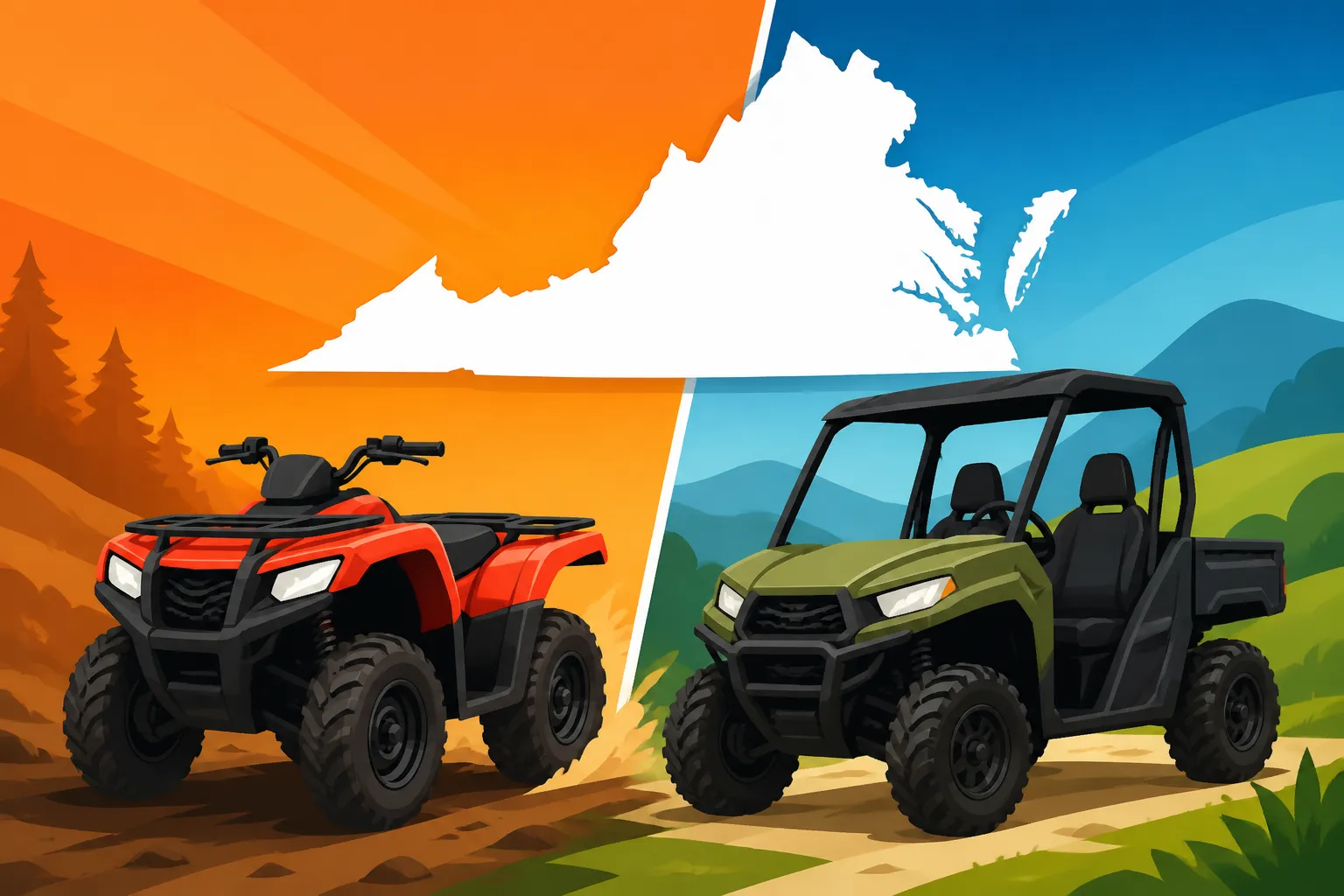
Virginia law defines a utility vehicle as a "motor vehicle that is not an all-terrain vehicle" and has "at least four wheels," is "propelled by an internal combustion engine," and is "designed for off-road use." The crucial differentiating factors from an ATV are its seating and steering. Utility vehicles typically feature side-by-side seating for two or more passengers, often with bucket seats or bench seats, and are controlled by a steering wheel, much like a car or small truck. They also usually have foot pedals for acceleration and braking. This distinct design immediately sets them apart from the straddle-seat, handlebar-steered ATV.
Think about a typical Polaris RZR or a Can-Am Defender. These machines offer car-like controls, seat multiple occupants comfortably side-by-side, and are often equipped with features like roll cages, seatbelts, and sometimes even windshields. These design elements are what Virginia's definition focuses on to classify them separately. The focus isn't just on power or off-road ability, but on the practical aspects of how the operator and passengers are seated and how the machine is controlled. This difference in design leads directly to different legal interpretations, particularly regarding whether they are considered "motor vehicles" in the same way as street-legal cars and trucks, or even ATVs.
How UTVs Differ Legally from ATVs in Virginia
This is where it gets particularly interesting, and often confusing for new owners. While ATVs are considered "motor vehicles" in the general sense and are specifically regulated for titling, Virginia law often carves out utility vehicles from many standard motor vehicle regulations. In fact, a utility vehicle is specifically defined as not an all-terrain vehicle, which implies it doesn't fall under the same exact set of rules for titling or operation that applies to ATVs. This is a critical nuance: [Why a Virginia Utility Vehicle Is Not a Motor Vehicle] further explains this distinction. Because they aren't considered motor vehicles in the traditional sense for highway use, they typically don't require registration or inspection, and their titling process, if any, can be different.
This means that while an ATV over 50cc bought new since 2006 generally must be titled in Virginia, the rules for a utility vehicle are often less stringent or even optional depending on the context. This difference can be a relief for some owners, but it also means you need to be acutely aware of how your specific machine is classified. For instance, if you're trying to secure financing for a new UTV, a lender might still require it to be titled for their lien to be recorded, even if the state's baseline requirement for an individual owner is more relaxed. This discrepancy is precisely why understanding the exact legal definitions is so important, especially when dealing with financial institutions or for purposes of proving ownership, which can be facilitated with proper documentation often available through services like LawDepot.
Common UTV Types and Their Classification
Utility vehicles broadly fall into two categories: recreational (sport-focused) and work-oriented. Recreational UTVs, like the aforementioned Polaris RZR or Can-Am Maverick, are designed for high-performance trail riding, often with powerful engines and sophisticated suspension systems. Work-oriented UTVs, such as the John Deere Gator or Kubota RTV, are typically built for hauling, towing, and navigating rugged terrain on farms, construction sites, or large properties. They prioritize utility over speed and often come equipped with cargo beds and towing hitches.
Regardless of their specific design intent – whether it’s flying through trails or hauling feed across a farm – both types generally fall under Virginia's utility vehicle definition due to their side-by-side seating, steering wheel control, and multi-passenger capacity. What's crucial to remember is that even if your UTV is primarily used for farm work, it still has specific regulations that apply to its operation, particularly on public roads or shared access ways. While there are exceptions for farm use, they are narrow. If you're ever entering into an agreement for shared land access or a rental for a work-based UTV, using templates from LawDepot can ensure that the type of machine, its intended use, and responsibilities are clearly documented, preventing future disputes rooted in definitional ambiguity.
When Does a Machine Cross the Line? Overlapping Categories
The world of off-road vehicles isn't always neatly compartmentalized. Sometimes, machines blur the lines, or their descriptions are so close that it’s easy to get them confused with another category. This is especially true when comparing ATVs to dirt bikes, or even smaller machines like mopeds and mini-bikes. Virginia’s laws, however, draw pretty firm lines, and understanding these boundaries is crucial for legal operation and titling. A slight misidentification can lead to applying the wrong set of rules, which can be an expensive mistake.
Distinguishing ATVs from Dirt Bikes
At a glance, both ATVs and dirt bikes are off-road machines designed for rugged terrain. They both have powerful engines and knobby tires. But Virginia's definition clearly separates them. An ATV, as we've discussed, is typically a three- or four-wheeled vehicle with a straddle seat. A dirt bike, on the other hand, is an "off-road motorcycle" and is characterized by having two wheels. This might seem obvious, but the distinction is important because the rules for off-road motorcycles, including titling and helmet laws, can sometimes differ from those for ATVs. You can explore this further in [Virginia Off-Road Motorcycle Definitions].
Consider a scenario where you're looking to purchase a used off-road machine from a private seller. If the seller refers to it generically as a "quad" or "dirt bike," but the actual physical characteristics, like the number of wheels or the seating arrangement, don't match that description, you could be buying a machine that has different legal requirements than you anticipated. For example, while Virginia mandates helmets for all ATV riders, regardless of age, the specific enforcement might be interpreted differently for off-road motorcycles in certain contexts. Always rely on the physical design and engine size, not just the common name, when trying to classify your machine against Virginia's legal definitions.
Mopeds, Scooters, and Mini-Bikes: Why These Aren't ATVs/UTVs in Virginia's Eyes
This is where confusion can sometimes arise, particularly with smaller, engine-powered recreational vehicles. Mopeds, scooters, and mini-bikes, while also motor-powered, are distinct from ATVs and UTVs in Virginia law. A moped, for instance, has a very specific definition involving pedals (even if they're not always used), an engine under 50cc, and a maximum speed. These characteristics immediately set it apart from an ATV, which has no pedals and a larger engine requirement for titling. [Virginia Moped Rules Compared] provides a deeper look into those differences.
The main reason these categories are kept separate is their intended use and design limitations. Mopeds and scooters are often street-legal, or at least have a path to being so, and are designed for urban or paved road travel, albeit at lower speeds. ATVs and UTVs, as defined, are strictly off-road machines. Mini-bikes, depending on their engine size and design, might fall into an unregulated "toy" category for off-road use, but they certainly don't meet the definition of an ATV or UTV subject to titling. Never assume that because a small, gas-powered vehicle looks like it could be an off-road fun machine, it falls under ATV rules. The specifics of engine size, speed capability, and design are paramount.
Modified Machines and Custom Builds
What happens if you modify your machine? Let's say you take an ATV and add a roll cage, seatbelts, and perhaps even some extra seating. Does it magically become a UTV? In most cases, no. Virginia's definitions are based on the original design intent and key characteristics like the straddle seat for an ATV or the steering wheel for a UTV. While modifications might enhance safety or functionality, they generally don't change the fundamental legal classification of the vehicle as originally manufactured. Trying to reclassify a heavily modified ATV as a UTV, or vice-versa, for titling or riding purposes, would likely be met with skepticism by the DMV or law enforcement.
The critical point here is that modifications rarely alter the core definition that Virginia uses for titling and operation. If you start with an ATV, it remains an ATV in the eyes of the law, even with extensive aftermarket add-ons. The same goes for a UTV. The state isn't generally interested in custom builds that push the boundaries of these definitions; they look at what the manufacturer originally intended and how the core components align with the legal language. If you're building a custom off-road machine, it's wise to consult with the DMV or a legal professional before you put it into operation to ensure you understand how it will be classified and what rules will apply.
Practical Implications: What These Definitions Mean for You
Understanding the difference between an ATV and a utility vehicle in Virginia isn't just an academic exercise. It has very real, tangible consequences for you as an owner and rider. From the moment you purchase your machine to every time you hit the trails, these definitions will dictate your responsibilities and limit your freedoms. Getting it wrong can lead to costly mistakes, so let's break down the practical impacts.
Titling Requirements Based on Classification
The most immediate practical impact of your machine's classification is on titling. In Virginia, new ATVs with an engine size of 50cc or more, purchased after July 1, 2006, must be titled with the DMV. This is a mandatory requirement. If you buy a new ATV in Virginia that fits this description, the dealer will likely handle the initial titling paperwork. You can read more about this in [ATVs Over 50cc Bought New Since 2006 Need Titles]. For used ATVs, titling is generally optional, but a lender will almost always require it to secure their loan.
Utility vehicles, because they are not considered "all-terrain vehicles" in the same exact sense and often fall outside the direct definition of a "motor vehicle" for titling purposes, may have different or more ambiguous titling requirements. While it's generally a good idea to title any significant purchase like a UTV to establish clear ownership and record any liens, the mandatory state requirement might not apply in the same way it does to ATVs. This distinction is crucial when you are trying to navigate the paperwork at the DMV. Always verify the specific requirements for your machine based on its exact classification to avoid any surprises.
Riding Rules and Restrictions
Where you can legally ride your machine is heavily influenced by its classification. Virginia law, specifically § 46.2-915.1, explicitly prohibits ATVs on public highways, streets, and sidewalks, with very narrow exceptions, primarily in Buchanan and Tazewell counties on designated routes. You can find detailed information on these rules in [Virginia ATV Road Rules Under 46.2-915.1]. Utility vehicles generally fall under similar restrictions, as they are also designed for off-road use. However, specific allowances for farm use or private property might be interpreted differently.
Consider this: riding your ATV on a public road in most parts of Virginia could lead to a significant fine, potentially up to $500, and even impoundment of your machine. The same applies to UTVs. Even on private land, you need written consent from the landowner, regardless of your machine's classification. The definitions aren't just for titling; they inform police officers, park rangers, and landowners about what machines are allowed where. Knowing your machine's official status is your best defense against inadvertently breaking the law and facing unnecessary penalties.
Insurance and Safety Gear
While Virginia law generally does not require insurance for ATVs or UTVs used exclusively off-road, the classification can still play a role in how insurance companies view and price policies. Most insurers will ask about the specific type of machine you own (ATV vs. UTV) because these categories have different risk profiles. A UTV, with its heavier weight, higher passenger capacity, and often greater speed, might be seen differently than a lightweight, single-rider ATV. You can read more about the lack of a state insurance requirement in [Virginia Requires No ATV Insurance].
Beyond insurance, safety gear requirements can also be influenced. For ATVs, Virginia mandates that all operators and passengers wear a helmet. For UTVs, while a helmet is always a good idea and often required by trail systems, the state law might focus more on seatbelt use, especially for machines with factory-installed roll cages and seatbelts. Understanding your machine's classification ensures you're adhering to all safety regulations, protecting yourself and your passengers, and avoiding citations for improper gear.
Buying and Selling: Ensuring Proper Paperwork
When you're buying or selling an off-road machine in Virginia, its classification impacts the necessary paperwork. If you're selling an ATV that's titled, you'll need to properly sign over the title to the new owner. If it's a used ATV without a title, you might need a bill of sale to document the transaction and prove ownership. This is especially true if the buyer intends to title it themselves. [Selling a Machine Without a Title in Virginia] covers some of these scenarios.
For UTVs, if titling is not mandatory but you still want proof of ownership, a robust bill of sale is essential. Services like LawDepot offer excellent templates for a bill of sale, which can be invaluable for private transactions involving both ATVs and UTVs. This document should clearly identify the machine, the buyer and seller, the purchase price, and state that the machine is sold as-is. Having proper documentation, regardless of mandatory titling, is crucial for establishing a clear chain of ownership, resolving disputes, and providing proof for insurance purposes. Without it, you could face difficulties proving ownership or even reselling the machine in the future.
Avoiding Common Pitfalls: Knowledge is Power
It's easy to get caught up in the excitement of owning an ATV or UTV and overlook the finer points of the law. But ignorance is never an excuse, and in Virginia, misinterpreting your machine's classification can lead to a host of problems. Being proactive and informed is your best defense against these common pitfalls. Let's look at what can go wrong and how to make sure you're always on solid ground.
The Consequences of Misclassification
The most significant consequence of misclassifying your off-road machine is facing legal penalties. If you're riding a UTV but believe it's an ATV, you might inadvertently violate a rule that applies specifically to UTVs, or vice-versa. This could result in fines, which in Virginia can be substantial for ATV violations, potentially reaching $500 for a single offense. In some cases, a machine ridden illegally on public property or roads could even be impounded, leading to additional towing and storage fees on top of the initial fine.
Beyond legal trouble, misclassification can also impact your insurance. If you've insured your machine but described it incorrectly to your insurer, they might deny a claim if an accident occurs. Imagine having a rollover on a trail and finding out your policy is void because the description of your "ATV" actually referred to a "UTV," which has a different risk profile and premium. Such a scenario would leave you personally responsible for repair costs or medical bills. It's a situation no one wants to be in, and it highlights why getting the definition right from the start is so critical.
Resources for Verification
When in doubt, always seek official clarification. The Virginia Department of Motor Vehicles (DMV) is your primary resource for understanding titling and registration requirements based on official definitions. While local DMV customer service centers are great, sometimes the specific nuances of off-road vehicle law require a deeper dive, potentially to their central office or legal department if your question is particularly complex. Don't hesitate to call their main information line or consult their website.
Another excellent resource is the manufacturer's documentation for your specific machine. The owner's manual or manufacturer's website will typically provide the exact specifications, including engine size, weight, and dimensions, which you can then cross-reference with Virginia's legal code. If you're buying a used machine, try to get the make, model, and year, and then look up the original specifications online. For legal questions, especially concerning unique situations or if you need to draft specific legal documents relating to ownership or land use, a legal professional specializing in property or vehicle law in Virginia can provide tailored advice. Also, don't forget that templates for various legal documents, like specific affidavits or more detailed bills of sale, can often be found through services like LawDepot, which can help ensure your paperwork aligns with legal requirements.
Comparing ATVs and Utility Vehicles in Virginia
To help solidify your understanding, here’s a quick comparison of key characteristics based on Virginia’s general interpretations. This isn't exhaustive, but it highlights the primary distinctions.
| Feature | All-Terrain Vehicle (ATV) | Utility Vehicle (UTV) |
|---|---|---|
| Common Name | Quad, Four-wheeler | Side-by-side, SxS, Gator, Ranger |
| Seating Arrangement | Straddle seat, typically for one operator (some two-up models exist) | Side-by-side seating for 2+ passengers (bucket or bench seats) |
| Steering Control | Handlebars | Steering wheel |
| Typical Width | 50 inches or less (as per definition) | Generally wider than 50 inches |
| Dry Weight | 900 pounds or less (as per definition) | Typically heavier than 900 pounds |
| Engine Size | 50cc or more (for titling purposes) | Varies, generally larger engines than ATVs |
| Titling (New) | Mandatory for 50cc+ bought new after 7/1/2006 | Often not explicitly mandatory by state, but recommended/required by lenders |
| Road Legal | No, generally prohibited on public roads (few exceptions) | No, generally prohibited on public roads (farm use exceptions) |
| Helmet Law | Mandatory for all operators and passengers | Recommended, often required by trail systems/parks |
| Primary Design Use | Recreational off-road by single operator | Recreational off-road and utility/work functions |
Disclaimer
This article is for general informational purposes only and does not constitute professional advice. Laws, prices and regulations vary by location and change over time. Consult a qualified professional for guidance on your specific situation.