Virginia Issues No Decals for ATVs
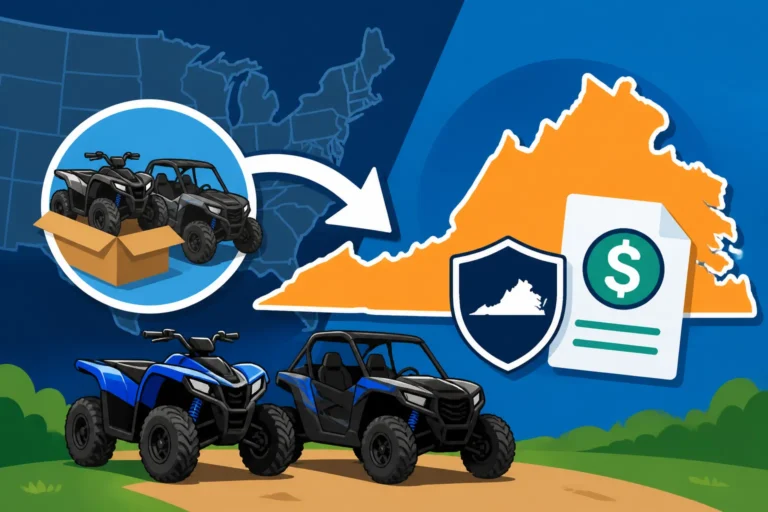
It’s a common moment of confusion for many new or even seasoned ATV and UTV owners in the Commonwealth of Virginia: you've got your new machine, you've handled the purchase, maybe even the title, and then you start looking for that registration sticker, that decal, that little piece of paper you’re used to putting on your car or boat. You search your paperwork, you comb the DMV website, and you come up empty. That feeling of "Am I missing something crucial?" is incredibly frustrating. This guide is here to clarify exactly why you won't find a registration decal for your ATV or UTV in Virginia and what that means for proving ownership and legality.
The Sticker Shock (or Lack Thereof): Why Virginia ATVs Don't Get Decals
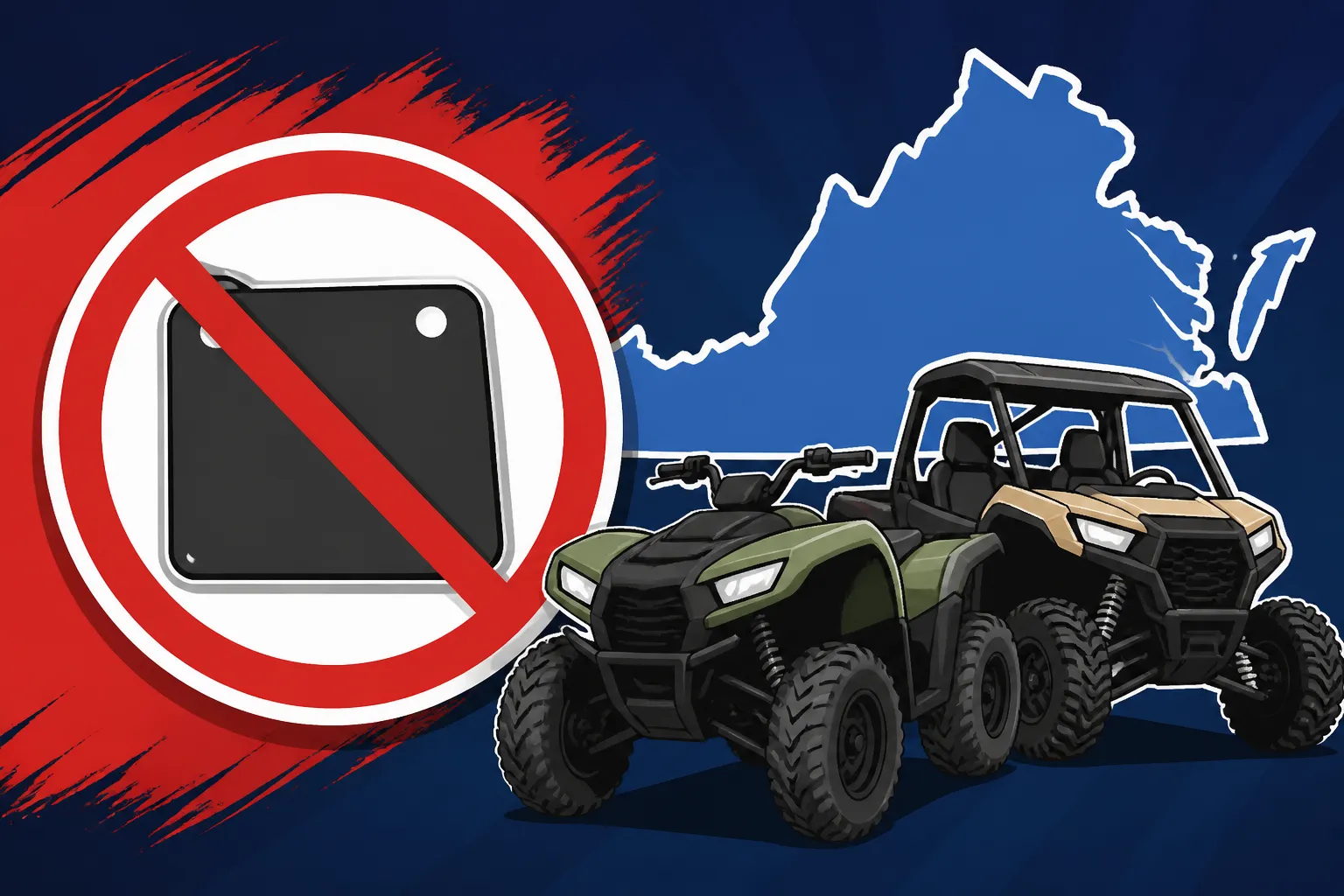
One of the biggest head-scratchers for folks accustomed to traditional vehicle ownership is the complete absence of registration decals or plates for ATVs and UTVs in Virginia. You might imagine a neat little sticker showing the year, like you see on boat trailers or even mopeds. But when it comes to your quad or side-by-side, that expectation just doesn't align with Virginia law. This isn't an oversight, nor is it a sign you've done something wrong; it's simply how the system works here.
Dispelling the Common Misconception About ATV Registration
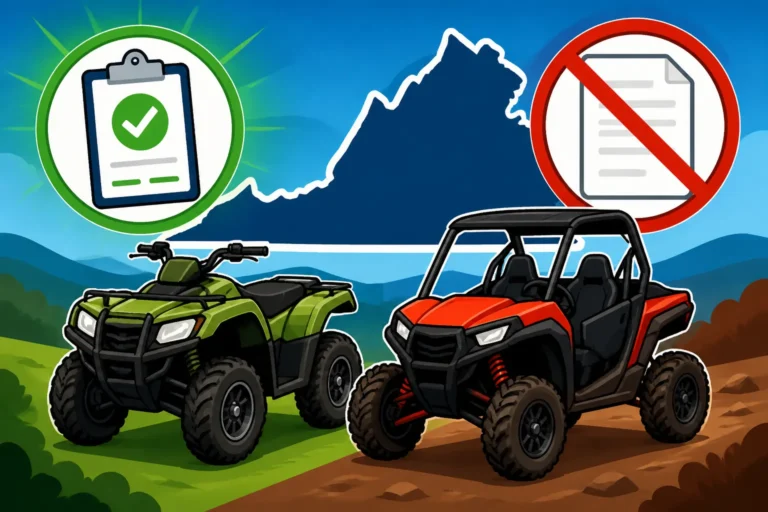
Many people assume that because a vehicle can be titled, it must also be registered and display some form of annual identification. This is a deeply ingrained assumption based on our experience with cars, trucks, motorcycles, and even boats. When you buy a car, you title it, you register it, and you get plates and a registration sticker. For ATVs and UTVs in Virginia, however, the concept of "registration" as a separate, annual process with corresponding decals simply doesn't exist. The state views these machines differently from on-road vehicles. They are not designed for public roads, and therefore, the regulatory framework that applies to cars and trucks—including yearly registration and the display of decals—does not extend to them. This can lead to a moment of panic for new owners, thinking they're somehow circumventing the law, but rest assured, you're not. [Virginia Titles ATVs but Never Registers Them] delves deeper into this unique situation.
The confusion is understandable. In many other states, off-road vehicles do require some form of registration or trail permit decal that is affixed to the machine. Virginia, however, has opted for a different path. The primary identifier and proof of legal ownership for an ATV or UTV in Virginia is its title, along with the machine's unique Vehicle Identification Number (VIN). There's no annual fee you pay to the Department of Motor Vehicles (DMV) to keep your off-road machine "registered," because that process itself is absent.
What Virginia Does Instead of Traditional Registration
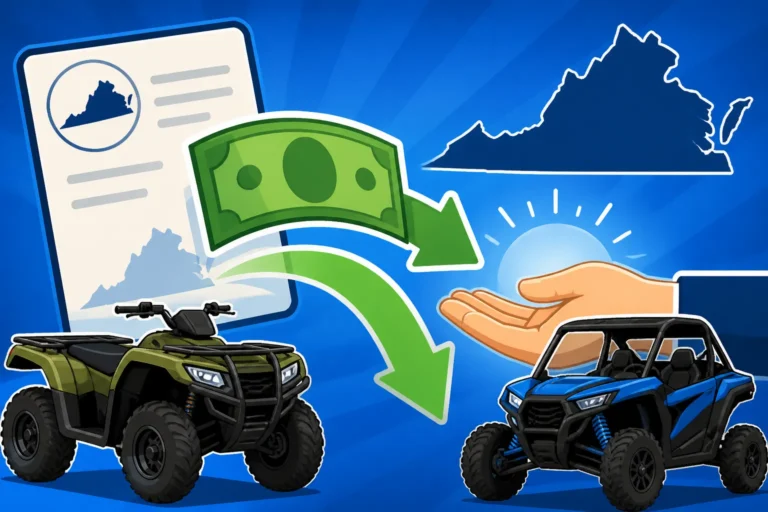
Since there are no decals, no plates, and no annual registration fees, how does Virginia keep track of ATV ownership? The answer lies almost entirely in the titling process. For new machines bought since July 1, 2206, and for used machines at the owner's option, a title issued by the Virginia DMV serves as the official record of ownership. This title contains the VIN, the owner's name, and other pertinent details, acting as the definitive legal document. Think of it as the deed to your machine. [Virginia Titles Required on Machines Over 50cc] outlines the rules for mandatory titling.
Beyond the title, when you're riding on public trails or land where permission is required, you might encounter requirements for trail permits. For example, systems like Spearhead Trails or those within the George Washington National Forest require specific permits, which often involve carrying proof of purchase or displaying a sticker from that trail system. However, these are not state-issued registration decals; they are specific to the operating authority of the trail. So, while you might have a sticker on your fender for the Spearhead system, don't confuse that with a state registration decal. The state simply doesn't issue them for ATVs or UTVs. This distinction is critical for understanding your responsibilities as an off-road rider in Virginia.
Understanding Virginia's Unique Titling Process for ATVs
Since traditional registration with decals isn't a thing for ATVs and UTVs in Virginia, the title becomes even more paramount. It's the central document that establishes legal ownership, and understanding when it's required, when it's optional, and what documentation you need is key. Don't let the lack of a registration sticker make you think there's no official process; the title is that process.
When a Virginia Title Is Required (and When It's Not)
The rules around ATV titling in Virginia can be a bit nuanced, leading to confusion. Here's the clearest way to break it down:
-
New ATVs (50cc and Over) Bought Since July 1, 2006: If you purchased a brand-new ATV with an engine displacement of 50cc or more on or after July 1, 2006, Virginia law requires you to obtain a title. This is a one-time process, not an annual one. The dealer typically handles the initial titling paperwork for you, submitting it to the DMV. You'll pay a one-time fee for this title. [Virginia Titles Machines Bought New Since 2006] provides more context on this cut-off date. This ensures a clear chain of ownership from the manufacturer to the first retail buyer.
-
ATVs Under 50cc: Machines with an engine displacement under 50cc are generally exempt from titling requirements, regardless of when they were purchased. These are often youth-model ATVs, and the state considers them less substantial for formal titling.
-
Used ATVs (50cc and Over): This is where it gets interesting. If you buy a used ATV (50cc or over), titling is generally optional for you, the new owner. Yes, you read that right. While it's highly recommended for your own protection to establish a clear paper trail, the state does not legally compel you to title a used machine in your name. However, if you plan to finance the purchase through a lender, that lender will almost certainly require you to obtain a title to secure their interest. [Virginia Titles Are Optional on Used Machines] explains why this choice exists.
The bottom line is that while you might not have to title every ATV, doing so provides irrefutable proof of ownership, which is crucial for resale, insurance claims, or proving your machine isn't stolen. It simplifies many future transactions, even if it feels like an extra step.
The Documentation You Actually Need for Ownership Proof
Regardless of whether titling is mandatory or optional, you need solid documentation to prove you own your ATV or UTV. Here’s a rundown of what typically comes into play:
-
Manufacturer's Statement of Origin (MSO): For a brand-new machine, the MSO is your initial proof of ownership, essentially the birth certificate of your ATV. The dealer uses this to apply for your first Virginia title. Make sure you get a copy for your records, even if the dealer sends the original to the DMV. [Virginia Requires an MSO for a New Machine] clarifies its importance.
-
Previous Virginia Title: If you're buying a used ATV that was previously titled in Virginia, the seller should sign over their existing title to you. This is the cleanest and most straightforward way to transfer ownership. Make sure all names are spelled correctly and all fields are filled out.
-
Bill of Sale: A robust bill of sale is critical, especially when buying a used machine, or if the ATV was never titled. It should include the seller's and buyer's full names and addresses, the ATV's make, model, year, VIN, purchase price, and the date of sale. Both parties should sign and date it. This document, even in the absence of a title, is strong evidence of ownership. You can find templates online, including through services like LawDepot, to ensure you're covering all the necessary legal bases and protecting yourself.
-
Notarized Affidavit in Lieu of Title (VSA 12M): If you've bought a used ATV that was never titled, or if the original title is lost and the seller can't obtain a duplicate, a notarized affidavit (Form VSA 12M) can sometimes serve as acceptable proof of ownership for titling. This form essentially states under oath that you are the rightful owner. It's a key document to use when the paper trail isn't as clear-cut as desired. [Virginia Form VSA 12M Affidavit] provides a deeper dive into this alternative. Again, a platform like LawDepot could help you structure similar affidavits if specific state forms are unavailable or you need additional clauses for protection.
Keeping all these documents organized and accessible is paramount. While you won't have a registration decal on your ATV, these papers are your equivalent for proving legitimate ownership.
The Difference Between Titling and Registering Your Off-Road Machine
It’s easy to conflate "titling" and "registering" because, for cars and trucks, they often happen at the same time and involve the same agency (the DMV). However, for ATVs and UTVs in Virginia, they are distinct, with "registration" in the traditional sense being entirely absent. Understanding this difference is crucial for any off-road enthusiast in the Commonwealth.
Why Your Quad Gets a Title But Never a Plate or Sticker
The core reason your ATV or UTV receives a title but no plate or sticker boils down to its intended use and legal classification. In Virginia, ATVs and UTVs are classified as "all-terrain vehicles" and "utility vehicles," respectively, and critically, they are not considered "motor vehicles" in the same way cars, trucks, and even street-legal motorcycles are for public road use. The DMV’s role in titling these machines primarily serves to establish legal ownership and a record of transfer, much like a land deed records property ownership. It's about who owns it, not about granting permission for operation on public roadways or requiring annual fees to maintain that permission.
Here’s a simple table to illustrate the distinction:
| Feature | Virginia Cars/Trucks/Motorcycles | Virginia ATVs/UTVs |
|---|---|---|
| Titling Required | Yes | Yes (for most) |
| Annual Registration | Yes | No |
| Plates Issued | Yes | No |
| Decals Issued | Yes (registration renewal) | No (state registration) |
| Intended Use | Public roads, highways | Off-road, private land |
| Legal Status | "Motor Vehicles" for road use | "All-Terrain Vehicles," "Utility Vehicles" |
Because ATVs and UTVs are designed for off-road environments, Virginia law explicitly prohibits their operation on most public highways and roads. This fundamental restriction means the state sees no need to issue traditional vehicle registration or associated decals, which are primarily mechanisms for regulating on-road use and collecting annual revenue for road maintenance. [Virginia Issues No Plates for ATVs] further elaborates on this point.
Implications for Insurance and Law Enforcement Stops
The absence of registration decals and annual fees doesn't mean your ATV or UTV operates in a legal vacuum. There are still significant implications for how you interact with insurance providers and law enforcement.
-
Insurance: While Virginia does not require you to carry liability insurance for your ATV or UTV (because it’s not a registered "motor vehicle"), it is highly, highly recommended. Without state registration to track your machine, insurers rely on your title and VIN to identify your vehicle and provide coverage. When purchasing a policy, your insurance agent will ask for the VIN and often inquire if the machine is titled. A clear title makes the insurance process smoother and provides concrete proof of ownership if you ever need to file a claim due to theft, damage, or liability. [Why Virginia Requires No ATV Insurance] explains the optional nature of coverage.
-
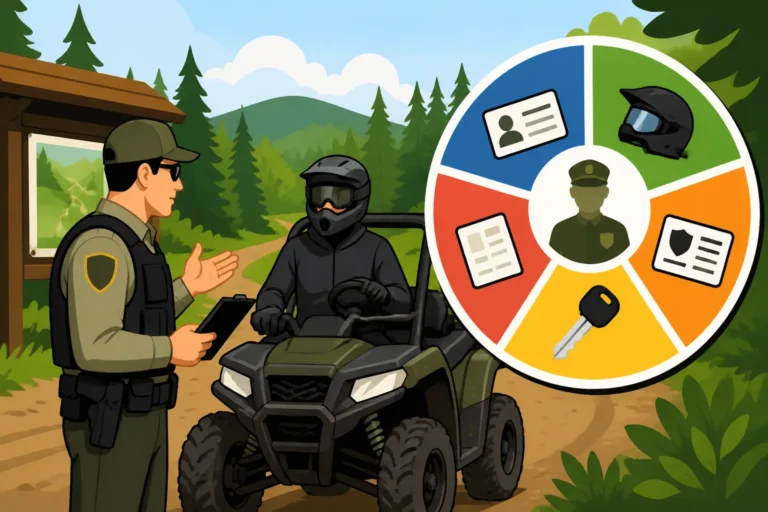
Law Enforcement Stops: If you're stopped by a game warden, forest ranger, or local sheriff's deputy while riding your ATV or UTV, they won't be looking for a registration decal. Instead, they'll primarily be interested in:
- Proof of Ownership: This is where your title (or a copy) and/or a solid bill of sale become critical. You need to be able to demonstrate that the machine legitimately belongs to you.
- Operator's Age and Helmet Use: Virginia has specific laws regarding rider age and helmet requirements that officers will enforce.
- Landowner Permission: If you're on private land, they'll want to see proof of permission to ride there.
- Trail Permits: On designated trail systems, they’ll check for valid trail permits, which, as discussed, are distinct from state registration.
- Compliance with Local Ordinances: Some localities may have their own rules regarding ATV use.
Carrying your title or a clear copy, along with your driver's license (if applicable), while riding is always a smart move. It quickly resolves any questions about ownership and helps avoid potential legal headaches. Remember, even without a decal, you're still accountable for following all other ATV laws.
Navigating Ownership Proof in a No-Decal State
Given that Virginia skips the traditional registration and decals for ATVs and UTVs, the burden of proving ownership falls squarely on your ability to maintain a robust paper trail. This is particularly important when buying or selling, or if you encounter any legal issues. Without that annual sticker, your documents become your primary form of identification and proof of legitimacy.
Building Your Paper Trail for a Private Sale
Buying or selling an ATV or UTV in a private sale in Virginia requires diligence, precisely because there's no official registration record to simply transfer. It's all about the paperwork you create and exchange.
-
For the Buyer:
- Get the Title (if available and titled): If the seller has a Virginia title, insist they sign it over to you completely and correctly. Verify the VIN on the title matches the machine's VIN.
- Comprehensive Bill of Sale: Always, always get a detailed bill of sale. This is your insurance against future claims. It should include:
- Full names and addresses of both buyer and seller.
- Date of sale.
- Make, model, year, and full VIN of the ATV/UTV.
- Purchase price.
- A statement that the machine is sold "as-is," if that's the agreement.
- Signatures of both parties.
- Ideally, a space for witnesses, or even better, have it notarized. A template from a reputable source like LawDepot can ensure all critical elements are included, providing peace of mind for both buyer and seller.
- Copies of Seller's ID: Consider getting a copy of the seller's driver's license for your records, especially if the title isn't available or if you're dealing with an older machine.
-
For the Seller:
- Sign Over the Title: If you have a title, sign it over accurately to the buyer. Make sure you keep a copy of the signed title for your records.
- Provide a Detailed Bill of Sale: A clear bill of sale protects you from any future disputes regarding the sale. It proves you no longer own the machine and are not liable for its use. Again, using a structured template from a service like LawDepot can provide a professional and legally sound document.
- Remove Personal Items: Before the sale is finalized, ensure all your personal belongings are removed from the machine.
Even if you buy a machine that was never titled (which is legal for many older used machines in Virginia), a robust, notarized bill of sale is your best friend. It’s the foundational document for future transactions, insurance, or even if you decide to title it later. [Buying From a Private Seller in Virginia] offers more specific advice for navigating these transactions.
What to Do If You Don't Have Traditional Paperwork
Sometimes, you inherit an ATV, or buy an older machine that simply predates many of the titling requirements, and there's no clear title or bill of sale to be found. This situation can feel daunting in a no-decal state, but there are pathways to establishing ownership.
-
Search for Past Records: Start by searching for any old receipts, maintenance records, or even old insurance policies that might list the VIN and your name. These can help corroborate your claim of ownership.
-
Notarized Affidavit (Form VSA 12M): This is often your go-to solution. If you've been the legitimate owner for an extended period, or if you've purchased it without a title, you can apply for a title using the Virginia DMV's "Affidavit in Lieu of Title" (Form VSA 12M). This form requires you to attest to your ownership under oath and have it notarized. You'll need to provide details about how you acquired the machine, its VIN, and why you don't have a traditional title. The DMV will review this and, if satisfied, may issue you a title. [Virginia Notarized Affidavits in Lieu of Title] explains the process and requirements for this important form.
-
Proof of Possession and Use: While not formal legal documents, evidence like photographs of you with the ATV over time, statements from neighbors or friends who can attest to your long-term ownership, or repair shop receipts in your name can all contribute to a portfolio of evidence if you need to go the affidavit route. These types of supplementary proofs can strengthen your claim.
-
Bonded Title (Less Common for ATVs): In some extreme cases where ownership is highly questionable or the VIN is ambiguous, a bonded title might be an option. This usually involves purchasing a surety bond for a period, which protects previous owners if they come forward to claim the vehicle. However, for ATVs, the DMV often prefers the VSA 12M route unless the situation is particularly complex.
The key is to proactively gather and create as much documentation as possible. Even without a state-issued decal, a robust file of paperwork ensures your ownership is clear and defensible.
Why Virginia Differs from Neighboring States on ATV Identification
The lack of state-issued decals and traditional registration for ATVs and UTVs in Virginia often surprises riders from other states, particularly those from jurisdictions with different requirements. Understanding these regional differences is important, especially if you plan to ride across state lines or if you're a new resident moving into Virginia.
Comparing Virginia's Approach to Nearby Riding Destinations
Virginia's approach to ATV identification and regulation stands in contrast to some of its neighbors, particularly those with extensive public trail systems that require visible registration or permits.
-
West Virginia: Just across the border, West Virginia operates the hugely popular Hatfield-McCoy Trails system. Riders on these trails, whether residents or visitors, are required to purchase a Hatfield-McCoy Trails permit, which often involves affixing a decal to your machine. This permit is separate from any state-level registration, but it's a visible marker of your legal right to ride on that specific system. While Virginia's Spearhead Trails also requires permits, they are usually digital or a small hang tag, not a prominent state-level registration decal. [Virginia Title Compared to West Virginia] highlights some of these differences in approach.
-
North Carolina: North Carolina has a more structured registration system for off-road vehicles (ORVs) if they are operated on designated state-managed ORV areas. While not a full road registration, it often involves a sticker or plate for identification within those specific areas. Again, this differs from Virginia's absence of any statewide decal.
-
Tennessee & Kentucky: These states also have varying approaches, with some requiring a title and others having more robust registration programs for ATVs, especially if used on public lands. The general theme is that Virginia is an outlier in its minimal requirements for visible state-issued identifiers on ATVs and UTVs. This means a rider coming from a state like Pennsylvania, where ATVs must be registered and display a plate, would find Virginia's system surprisingly hands-off regarding physical identification.
This divergence in approach underscores why it's vital to research the specific laws of each state where you plan to ride. What's perfectly legal and expected in Virginia (no decal) could be a violation in a neighboring state if you're not carrying the required local permits or registration from that jurisdiction.
The Impact on Out-of-State Riders Visiting Virginia Trails
For out-of-state riders planning a trip to Virginia's off-road destinations, the "no decal" rule has a few key implications:
-
No Virginia Decal Needed: You won't be expected to obtain a Virginia state registration decal for your ATV or UTV, because none exist. Your home state's title or registration (if applicable) will typically suffice as proof of ownership.
-
Trail System Permits Still Required: While Virginia doesn't require a state registration decal, its popular trail systems, like Spearhead Trails or Peters Mill Run, absolutely require their own permits. You'll need to purchase these specific permits, and they may come with a small sticker or tag to display, which is for the trail system, not the state. You will likely be asked to show proof of these permits by trail rangers. [Virginia Spearhead Trail Permits] details how to acquire these.
-
Proof of Ownership: Always carry proof of ownership for your ATV/UTV. This could be your home state's title, a registration document, or a bill of sale. Law enforcement or trail officials may ask to see it to ensure the machine isn't stolen.
-
Familiarize Yourself with Virginia's Riding Laws: Beyond ownership, understand Virginia's specific laws regarding helmet use, rider age restrictions, passenger rules, and where you can legally ride. These laws apply to everyone, regardless of where your machine is titled or registered. For example, Virginia's strict helmet law applies to all ATV riders, regardless of age or where they are from. [Virginia Helmet Law Applies to Every Rider] is a must-read.
Ultimately, the lack of state decals in Virginia for ATVs and UTVs simplifies one aspect of ownership but places a greater emphasis on understanding the specific requirements for titles and trail permits. It’s a unique system, and knowing its ins and outs will ensure your off-road adventures in the Commonwealth are hassle-free.
Disclaimer
This article is for general informational purposes only and does not constitute professional advice. Laws, prices and regulations vary by location and change over time. Consult a qualified professional for guidance on your specific situation.