Riding Out of Edinburg
Edinburg is a convenient starting point for exploring the Peters Mill Run and Taskers Gap OHV area, but a mountain ride takes more than picking a trail on a map. Permits, seasonal closures, machine width, weather and trailer access can all change your plan. This guide explains how to prepare, choose a suitable route and avoid an unwelcome surprise at the trailhead.
Planning an ATV ride out of Edinburg
Know which trail system you’re heading to
Edinburg sits in Shenandoah County, near the western edge of the Shenandoah Valley. The nearby Peters Mill Run and Taskers Gap OHV trails are part of the George Washington National Forest riding area. Riders often talk about the two together, but they are distinct trail networks, so don’t assume every road, trail or vehicle rule applies to both.
Before leaving home, identify the specific trail system and its access point. A search for “ATV trails near Edinburg” may return parking areas, forest roads or informal map pins that are not the designated entrance you need. Use forest information and signs at the site to confirm where riding begins and which routes are open. The overview Virginia’s 36-Mile Peters Mill Run and Taskers Gap System is a useful starting point for understanding how the two networks fit together.
A navigation app such as onX Offroad can help you review terrain, estimate your route and keep track of your location. Still, treat the app as a planning aid rather than permission to ride. Forest roads and trail conditions can change, and a line on a screen does not prove that a road is open to ATVs. Check local forest information before setting out, then follow signs and closures on the ground.
Check the permit and access rules before you haul
National Forest riding has its own permit requirements. A permit for a different Virginia riding area—or one from a neighboring state—should not be assumed to cover Peters Mill Run or Taskers Gap. Review Virginia National Forest OHV Permits and confirm the current purchase, display and riding requirements for the system you plan to use.
A common planning mistake is waiting until arrival to sort out the permit. That can be stressful if you have a trailer behind you, limited cell service or a group waiting to unload. Check Virginia Forest Permit Purchase Options ahead of time, and save any confirmation or permit information where you can access it without relying on a strong signal. If you are riding with others, make sure each person understands what the permit applies to rather than assuming one rider’s paperwork covers the whole group.
Also check the operating requirements for your machine. Forest riding rules can cover items such as required equipment, noise and tire restrictions. The details are not just technicalities: a machine that fails an equipment check can turn a long drive into a day spent parked. Review Virginia Forest Equipment Requirements before packing, especially if your ATV has aftermarket exhaust, lighting or other modifications.
Choosing routes for your machine and riding group
Match your machine to the trail network
Width is one of the most important things to check when choosing between the nearby networks. Taskers Gap has a width limit, while Peters Mill Run does not have the same stated restriction. That distinction matters if you ride a side-by-side or a wider ATV. Read Virginia’s Taskers Gap Width Limit before you decide where to unload.
A wider machine may make Taskers Gap unsuitable even if it appears capable of handling the terrain. Conversely, the absence of that particular width limit at Peters Mill Run is not a blanket guarantee that every vehicle is allowed or that every trail will suit your rig. Confirm the current vehicle rules and route conditions for the exact system you plan to ride.
If your group has different machines, settle the route question before the trip. For example, a rider with a narrow ATV and a friend bringing a wider side-by-side may need to choose the network that accommodates both rather than splitting up after reaching the forest. Use onX Offroad to compare mapped routes and terrain in advance, but verify the route against official information and posted signs.
| Planning question | Why it matters near Edinburg | What to do |
|---|---|---|
| Which network are we riding? | Peters Mill Run and Taskers Gap are separate systems with different considerations. | Confirm the named system and its access point before driving. |
| How wide is the machine? | Taskers Gap has a width restriction. | Measure the machine as used, including relevant accessories, and check the rule. |
| Is the route open? | Weather, maintenance and seasonal closures can affect access. | Check forest notices before leaving and obey signs at the trailhead. |
| Do we have the right permit? | Permits are not automatically interchangeable between riding areas. | Confirm requirements for this forest riding area and keep permit details accessible. |
| Can the trailer reach and use the staging area? | A tight approach or limited parking can complicate unloading. | Review the access route and parking information before towing. |
Choose a ride that fits the least experienced person
A group’s ability is not defined by its most confident rider. A steep, rocky stretch that feels manageable to one person may be intimidating to someone who has only ridden flat farm tracks. Before starting, discuss the group’s experience, machine sizes and comfort with uneven terrain. Agree on a pace that leaves room for stopping safely and regrouping.
For a mixed group, a conservative plan is usually the more enjoyable one. Build in time to pause, check the map and turn around if the route feels beyond someone’s comfort level. Don’t let pressure to keep up push a new rider into a section they are not ready for. If the group separates, decide in advance where to wait and how you will reconnect.
It also helps to keep the ride plan flexible. A route that looked straightforward at home may feel different after rain or when fallen leaves hide rocks and ruts. Use onX Offroad to help keep track of your planned route, and tell someone who is not riding where you expect to go and when you plan to return. A paper map is a sensible backup when a phone battery dies or reception drops.
Preparing for forest roads, weather and trail conditions
Check closures and conditions before the drive
Conditions can affect both the ride and the drive to the trailhead. Rain can make dirt approaches slick, wash debris across a route or turn a steep section into a poor choice for a less experienced rider. Dry weather has its own challenges: dust can reduce visibility, particularly when several machines are traveling together.
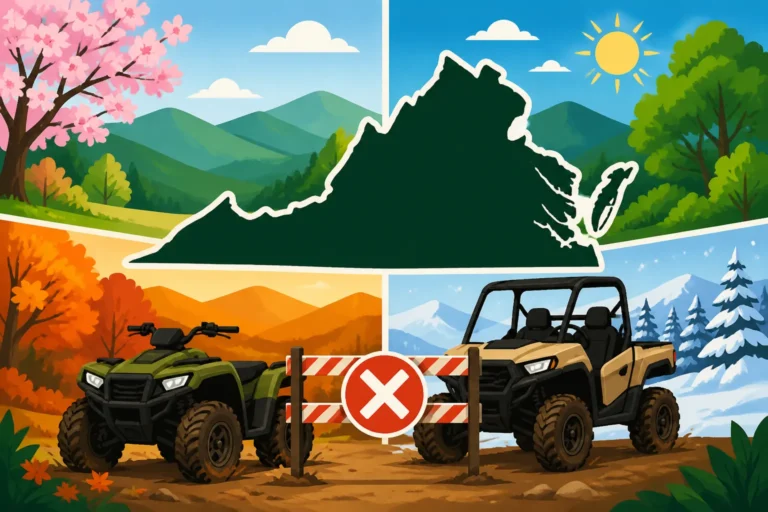
Seasonal closures are another reason to check before you leave. Peters Mill Run and Taskers Gap may have winter access restrictions, and the closure schedule can affect plans made well in advance. Review Virginia Forest Season Closures and Virginia’s Winter Forest Closure, then confirm the current status before towing from Edinburg, Woodstock or farther away. A general memory of when a trail “usually opens” is not as useful as checking the latest forest notice.
Make a last check shortly before departure, not just when you first book the trip. Look for access updates, weather changes and any notices affecting the trailhead or intended route. Virginia Trail Conditions Before You Haul offers a practical reminder of the checks worth making before committing to a long drive.
Pack for a mountain day, not just a short loop
Bring water, food, basic first aid supplies, weather-appropriate layers and the tools needed for simple repairs. In the mountains, the temperature can feel different from the valley, and a sunny morning does not guarantee comfortable conditions later in the day. A rain layer, gloves and an extra warm layer can make the difference between a manageable change in weather and an early, miserable return.
Plan for navigation and communication to be imperfect. Charge your phone, carry a backup power source and download maps or route information before you lose service. Keep important contact details and the day’s plan accessible offline. onX Offroad may be useful for viewing your position and route, but battery life and reception are not guaranteed; a paper map and a group meeting plan are helpful backups.
Finally, inspect the machine and trailer before leaving. Check tires, brakes, tie-downs, fuel and the basic tools you may need. If your ATV has been stored through winter, test it at home rather than discovering a dead battery or fuel problem at the forest entrance. A quick inspection is less exciting than unloading, but it is far better than trying to troubleshoot a machine with the group already waiting.
Making the trip smoother from Edinburg
Plan the tow and staging details
A trail trip can go sideways before the first ride if the trailer route or unloading area is not suitable. Check directions to the designated trailhead, confirm where vehicles may park and consider the length and turning radius of your tow vehicle and trailer. Do not assume every forest road is comfortable for a long trailer just because a navigation app recommends it.
If you are bringing a larger rig, contact the appropriate forest office or check official trail information for access and staging details. Give yourself extra time for the final approach, especially if you are unfamiliar with the area. Look at Virginia Trailheads With Trailer Parking when planning how you will arrive, unload and leave room for other riders.
Be considerate once you reach the staging area. Keep loading and unloading organized, avoid blocking access and take all trash with you. If several vehicles are arriving together, agree on a meeting point outside the busy entrance so the group is not trying to coordinate in the middle of the parking area.
Use a simple pre-ride checklist
A short checklist helps catch the easy-to-forget details before they become problems. It is especially useful when one person is responsible for the trailer, another is handling permits and everyone assumes someone else checked the weather.
- Confirm whether you are riding Peters Mill Run or Taskers Gap.
- Check the current forest access status and any seasonal closure notices.
- Confirm permit requirements and save the relevant permit information.
- Check the machine’s width and required equipment for your chosen network.
- Review the route and trailhead access, including trailer staging.
- Charge phones, download navigation information and pack a backup map.
- Tell someone your planned route and expected return time.
- Inspect the machine, trailer, tie-downs, fuel and basic repair supplies.
A little preparation is particularly valuable if you are making the trip from outside Shenandoah County. It gives you a chance to change plans while you are still at home, rather than after you have reached the trailhead with a loaded trailer. For a first visit, keep the route modest, leave room in the day for delays and make the ride itself—not the rush to complete a long loop—the priority.
Disclaimer
This article is for general informational purposes only and does not constitute professional advice. Laws, prices and regulations vary by location and change over time. Consult a qualified professional for guidance on your specific situation.