Virginia Riding in Summer
Summer riding in Virginia can mean humid afternoons, sudden mountain storms, muddy climbs, and long stretches without reliable cell service. A little planning helps you avoid arriving at a closed trailhead, underestimating the heat, or getting caught out after a storm. This guide covers where to ride, how to prepare, and what to check before hauling your ATV or UTV.
Choose a Virginia riding area that suits your summer plans
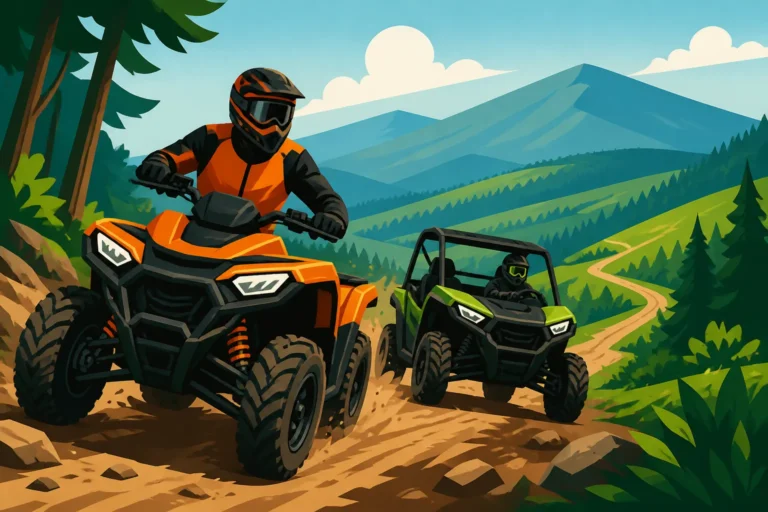
Virginia’s riding options range from large trail networks in the southwest coalfields to forest routes in the north. They differ in terrain, vehicle access, permit requirements, and nearby services, so choose a destination based on your machine and the kind of day you want—not just the mileage shown on a map.
Explore the coalfield trail systems
The Spearhead trail systems offer riding near communities such as Grundy, Coeburn, Richlands, and Haysi. The terrain can include rocky grades, wooded routes, and scenic mountain views. Conditions and machine requirements vary by system, so confirm that the trails you plan to ride are suitable for your ATV or UTV before setting out. A route that works for a narrower quad may not be appropriate for a wider side-by-side.
Treat each system as a separate destination when planning. Confirm the correct permit, trail access, operating hours, and current closures for your chosen network. Do not assume that a permit or access rule for one riding area applies to another. For an overview, see [Spearhead Trails in Virginia Explained] and [Virginia Trail Closures and Seasons].
Nearby towns can be useful places to fuel up, pick up supplies, or find food, but services may be limited once you leave the main roads. Plan fuel and rest stops before you head into the mountains, particularly if you are traveling with a group or riding a route you do not know well.
Consider forest routes near Edinburg
Peters Mill Run and Taskers Gap in the George Washington and Jefferson National Forest region are another option for riders looking for forest terrain. The area has its own permit, equipment, and access rules, and the route may not suit every machine. Check current forest information before departure rather than relying on an old trip report or a map saved from a previous season.
The route and width limits matter especially if you ride a side-by-side. Confirm the rules for the specific trail you intend to use, and check whether seasonal closures or weather conditions affect access. A trail that looks close to a road on a map may still require a longer detour to reach legally.
For a closer look at the area’s routes and access considerations, read [Peters Mill Run OHV Trails in Virginia] and [Virginia's Taskers Gap Width Limit]. Also review [Virginia Trails With Camping] if you plan to make a weekend of the trip; nearby camping availability and trail access are separate things to verify.
| Riding area | What to consider in summer | Before you go |
|---|---|---|
| Spearhead systems near Grundy, Coeburn, Richlands, and Haysi | Mountain grades, heat, storms, and system-specific rules | Confirm the right permit, vehicle access, hours, and closures |
| Peters Mill Run and Taskers Gap near Edinburg | Forest conditions, route limits, seasonal access, and equipment rules | Check forest notices, permit details, and suitability for your machine |
| Private riding parks | Park-specific terrain, age rules, waivers, and operating policies | Contact the park directly for its current requirements |
Verify access instead of relying on a map alone
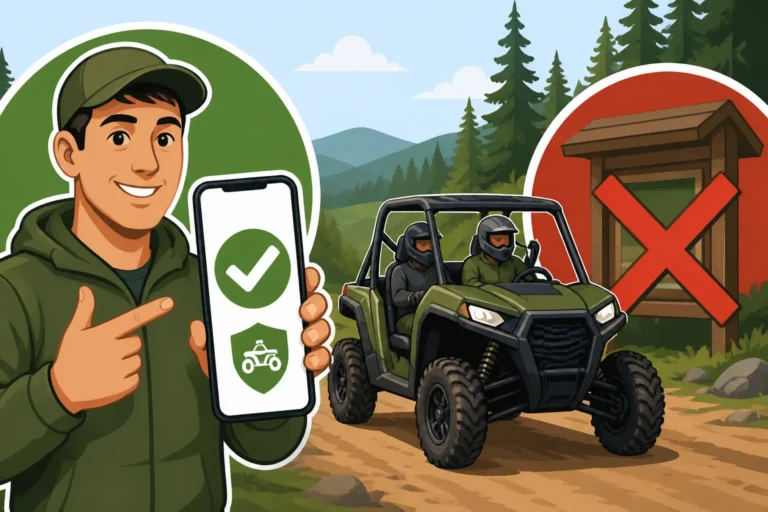
A trail map is a planning tool, not permission to ride every route it displays. A line may indicate a road, connector, or nearby path that is not open to ATVs. Land ownership, route status, and seasonal restrictions can also change what you may legally use.
Apps such as onX Offroad can help you organize routes and understand the surrounding terrain. Use onX Offroad as one part of your planning, not as proof that a route is open or that you have permission to ride it. Confirm access with the trail operator, land manager, or property owner before you load the machine.
If you use onX Offroad, download the information you need before leaving areas with dependable service. Keep a paper map or written route notes as a backup. For more map-planning tips, see [Virginia ATV Trail Map Downloads].
Prepare for Virginia’s summer heat and mountain weather
Summer in Virginia can feel very different at a shaded trailhead than it does on an exposed ridge or during a slow, technical climb. Heat, humidity, changing weather, and limited cell reception can turn a comfortable outing into a tiring one if you do not plan ahead.
Plan around heat, humidity, and hydration
Start early when you can, take regular breaks, and make water easy to reach. A cooler in the truck is useful, but it does not help much once the group is far from the trailhead. Carry enough water for the planned ride and allow for delays, especially if you are riding unfamiliar trails or traveling with children.
Heat can affect concentration and coordination before a rider realizes how worn out they are. Watch for unusual fatigue, dizziness, headache, nausea, or confusion. Stop riding, move to shade, cool down, and seek medical help if symptoms are serious or do not improve. Do not pressure a tired rider to keep going just because the group is trying to finish a loop.
Choose lightweight, protective clothing that suits the terrain rather than riding in clothing that leaves skin exposed to branches, dust, or falls. Take breaks in shaded places where it is safe to stop, and avoid letting a quick pause turn into a group split. Make sure everyone knows the meeting point if riders become separated.
Expect storms and changing trail conditions
Mountain weather can shift quickly. A route that is dry at the parking area may be slick farther up the ridge, and a heavy shower can change stream levels, wash debris across a trail, or make steep sections harder to manage. Check the forecast for the riding area—not only the town where you are staying—and reassess if storms are expected.
Rain also changes how you should approach the trail. Slow down on wet rock, clay, and loose gravel. Avoid charging into water crossings when you cannot see the bottom or judge the current. If a crossing looks questionable, stop and choose a safer option rather than risking a stuck machine, a damaged vehicle, or an injury.
Before leaving home, review [Virginia Trail Conditions Before You Haul]. If rain is in the forecast, identify a shorter route or a sensible turnaround point. A flexible plan is more useful than trying to complete every mile you originally hoped to ride.
Pack for insects, sun, and sudden temperature changes
Summer riding brings more than heat. Ticks, mosquitoes, sun exposure, and cooler conditions at elevation can all affect comfort. Pack sunscreen and insect repellent, and check clothing and skin for ticks after the ride. If you are riding with children, build in time for breaks and checks rather than waiting until someone is uncomfortable.
A compact rain layer can be helpful even on a warm day. Weather can feel cooler after a storm, particularly when riders are damp and moving slowly. Bring basic first-aid supplies, a charged phone, and any necessary medications, but do not count on continuous cell service in remote areas.
For a more complete packing checklist, use [Packing for Mountain Weather]. If your group’s rides vary by month, [Virginia Riding Season Month by Month] can help you think through seasonal differences rather than treating every summer outing the same way.
Ride safely and respectfully on the trail
A fun day depends on more than choosing the right route. Riders need to follow the rules for their machine and trail system, keep the group together, and share access responsibly with other visitors and nearby communities.
Check rider, machine, and trail requirements
Rules can differ between public forest routes, managed trail systems, and private parks. Confirm the current requirements for permits, helmets, eye protection, age, machine type, and operating hours before you ride. If you are bringing young riders, make sure the machine is appropriate for them and that the route matches their experience.
Do not assume a machine’s size or design makes it acceptable on every route. A wider UTV may be excluded from a trail that is open to smaller ATVs, and a machine that is permitted in one area may not meet another area’s requirements. Check details with the operator rather than trying to infer access from a trail name or an online map.
For younger riders, review [Virginia Trail Rules for Riders Under 18]. For protective gear and trail-specific expectations, see [Virginia Helmet and Eye Protection Rules on Trail]. Rules are only one part of a safe ride, but knowing them before unloading can prevent a frustrating conversation at the gate.
Keep the group together and ride within your limits
Agree on a pace and regrouping points before leaving the staging area. In a larger group, place an experienced rider at the front and another at the back. Stop at safe locations where the whole group can gather without blocking the trail. If someone falls behind, do not let the rest of the group continue until you know where that rider is.
Ride at a speed that gives you time to react to blind corners, loose gravel, other vehicles, hikers, and trail obstacles. Dust can reduce visibility, so leave enough distance between machines. On steep or rocky sections, take turns through difficult spots rather than crowding the rider ahead.
Be willing to turn around. A route can become unsafe because of weather, fatigue, a mechanical problem, or a rider who is no longer comfortable. The goal is not to prove that the group can finish every trail; it is to get everyone back safely.
Respect land, other riders, and local communities
Stay on designated routes and follow posted signs. Do not bypass a closure, cut across private land, or treat a gate as an invitation to find another way around. Written permission may be necessary on private property, and a route that appears on a map does not automatically provide access rights.
Keep noise and dust in mind near homes, farms, and trailhead communities. Yield thoughtfully, avoid throwing debris toward other riders, and pack out trash. Follow the local operator’s rules for stopping, parking, and passing. Good trail manners help protect the riding opportunities that visitors and local residents share.
Read [Virginia Trail Etiquette Locals Expect] before traveling with a group. If creek crossings are part of the route, check [Virginia Trails With Creek Crossings] and remember that water depth and flow can change after rain. Never assume a crossing is safe simply because another rider made it through earlier.
Build a practical summer ride plan
A strong plan does not need to be complicated. It should give your group a clear destination, a realistic route, and a way to respond if conditions change.
Use a pre-trip checklist
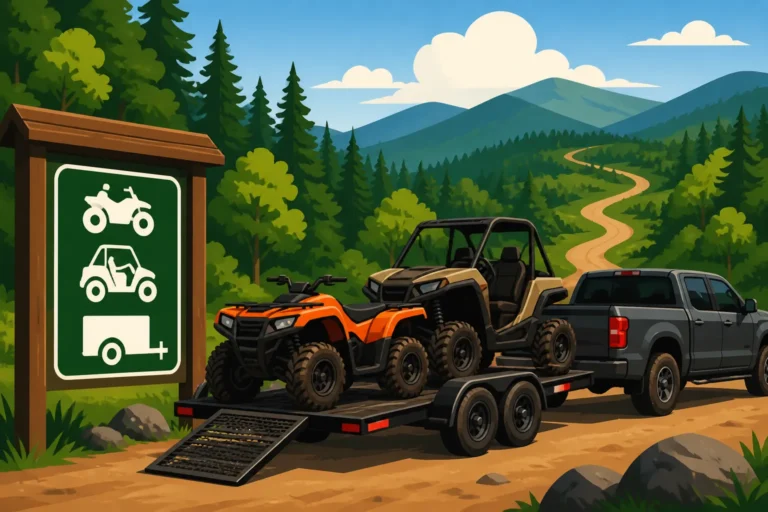
Before the ride, confirm the trail system’s access rules and check for closures or weather concerns. Then make sure the machine and group are ready for the route.
- Choose a trail system that allows your ATV or UTV.
- Confirm permits, hours, age rules, and any equipment requirements.
- Check weather for the riding area and identify a shorter backup plan.
- Fuel the machine and inspect tires, brakes, lights, fluids, and protective equipment.
- Pack water, food, basic first aid, a rain layer, insect repellent, and navigation backups.
- Share the destination and expected return time with someone who is not on the ride.
- Agree on the pace, regrouping points, and what to do if someone becomes separated.
A navigation app such as onX Offroad can help you organize a route, but save your plan for offline use and carry a backup. Before departure, confirm that the route is actually open with the organization or land manager responsible for the area.
Leave room for a safer change of plan
It is tempting to squeeze in one more loop when the day is going well. In summer, that extra loop may mean riding during the hottest part of the afternoon, returning in a storm, or finishing with too little daylight. Set a turnaround time and stick to it.
If conditions change, scale back without treating it as a failed trip. A shorter ride, an early return, or a day spent exploring the nearby town can be the right call. Keep an eye on the least-experienced rider in the group; their comfort and energy may be a better measure of the day than the distance covered.
When you plan around access, weather, heat, and the needs of everyone riding, summer trails are easier to enjoy—and much less likely to become a stressful scramble back to the truck.
Disclaimer
This article is for general informational purposes only and does not constitute professional advice. Laws, prices and regulations vary by location and change over time. Consult a qualified professional for guidance on your specific situation.