Virginia OHV Camping With Trail Access
Planning an ATV or UTV camping trip in Virginia can get confusing fast: a campground may be close to a trail but not connected to it, and a legal riding area may not allow overnight parking or camping. This guide explains how to match campgrounds with riding areas, what to check before you haul, and how to plan a trip that does not depend on guesswork.
What “Camping With Trail Access” Means in Virginia
On-site riding is different from nearby camping
The phrase “camping with trail access” can mean several different things. At some places, you may be able to ride from your campsite onto an authorized trail. At others, the campground is simply a convenient base near a trail system, and you must trailer your machine to the trailhead. Those are very different trips when you are bringing a long trailer, several machines, children, or a group.
Before you reserve, ask the operator exactly what “access” means. Is the route from the campground to the trail legal for ATVs or UTVs? Is it a marked connector, an open public road, or only a route for licensed vehicles? Is the connection available to guests staying at that campground, or does it require a separate permission or permit? A nearby road is not automatically an ATV route.
It also helps to ask whether the campground allows machines to be ridden around the property. Some places permit riding only to and from the designated trail connection; others expect machines to remain parked until they are loaded. Confirm speed limits, quiet hours, exhaust rules, and whether machines can be started or unloaded early in the morning. A quick phone call can save an awkward arrival-day dispute.
Virginia has several kinds of riding destinations
Virginia riding areas are not all managed the same way. The Spearhead trail systems in Southwest Virginia, national forest routes such as Peters Mill Run and Taskers Gap, private off-road parks, and private land all have different access rules. A permit or permission that applies at one destination does not necessarily apply at another. Check the rules for the specific trail system you plan to ride.
Spearhead’s coalfield systems are associated with places including Grundy, Coeburn, Richlands, Haysi, Pocahontas, and Pennington Gap. They can make a useful starting point for looking for nearby lodging and campgrounds, but proximity to a trail town does not confirm that a campground has a legal machine connection. Begin with the relevant local trail system, then contact potential overnight accommodations to confirm their access arrangements.
The George Washington and Jefferson National Forests offer a different kind of trip. Peters Mill Run and Taskers Gap are in the Edinburg area, and riding there involves federal land rules as well as any campground rules. A forest campground or primitive site may be a place to stay, but it should not be treated as permission to ride any nearby road, trail, or forest track. Start with [Virginia ATV Trails: Spearhead and the Forest] to understand how these destination types differ.
A practical first-pass comparison
Use the table below to decide which type of trip fits your group. It is a planning aid, not a substitute for checking the current rules of the riding area and campground.
| Trip style | What it usually means | Best fit | Main question to confirm |
|---|---|---|---|
| Campground with an authorized trail connection | Ride from the property onto a permitted route | Riders who want fewer trailer trips | Is the connection legal for your machine and open to guests? |
| Campground near a trailhead | Camp at a nearby base and haul machines to the riding area | Families, groups, and riders who want campground amenities | Where can you park the trailer and unload? |
| Primitive or forest camping | A more basic stay near public-land recreation | Self-reliant riders comfortable with fewer services | Are camping and riding both allowed at the chosen locations? |
| Private off-road park lodging or camping | The park sets its own riding and overnight rules | Riders who want a managed riding venue | Are overnight stays available, and what does the admission or permit cover? |
| Town lodging with trailer parking | Stay in a nearby town and drive to the trail | Riders who prefer a bed, restaurants, or supplies | Can the property accommodate your trailer and machine transport? |
Virginia Riding Areas to Build a Camping Trip Around
Spearhead systems in the coalfields
Spearhead’s riding areas are spread across Southwest Virginia rather than gathered around one central campground. Coal Canyon is associated with Grundy, Mountain View with Coeburn, Jawbone with Richlands, and other systems serve communities such as Haysi, Pocahontas, and Pennington Gap. That regional layout gives riders several places to build a trip, but the best overnight base depends on which system you intend to ride.
Think about the daily logistics before choosing accommodation. A group riding Coal Canyon may value easy access to Grundy and a secure place to leave a truck and trailer. A group headed toward Mountain View may prefer to base closer to Coeburn. If your group plans to ride more than one system, compare drive time, trailer access, and each system’s permit requirements instead of assuming one campground is equally convenient for all of them.
Do not assume that a campground in a Spearhead trail town provides direct access to the trail network. Ask whether guests may ride from the property, whether there is a designated connector, and whether the connection is open to your particular machine. For broader destination planning, [Spearhead Trails in Virginia Explained] and [Virginia Coalfield Trail Towns] are useful starting points.
Peters Mill Run and Taskers Gap
Peters Mill Run and Taskers Gap offer a different setting from the coalfield trail networks. They are forest recreation routes near Edinburg in the Shenandoah Valley, where riders need to pay close attention to seasonal closures, equipment requirements, permits, and the exact boundaries of the open riding area. A nearby campsite does not make every forest road or spur available for ATV use.
The Forest Service’s Little Fort Campground is an area name worth checking when planning around Peters Mill Run and Taskers Gap. Confirm whether it is open for your dates, whether it can accommodate your vehicle and trailer, and how its camping rules relate to the riding area you plan to use. If you are considering dispersed or primitive camping instead, verify that camping is allowed at the exact location and that you will not block a gate, trailhead, or road.
This is a place where day-by-day planning matters. Forest routes can close because of seasonal schedules or conditions, and the campground situation may not match the riding calendar. Check the route status and camping details before leaving home, then keep a backup plan in case weather or a closure changes the trip. [Peters Mill Run OHV Trails in Virginia] and [Virginia's 36-Mile Peters Mill Run and Taskers Gap System] provide useful background for narrowing down the area.
Private parks and other managed venues
Private off-road parks can be a good fit for riders who want clearly defined property rules and a managed riding environment. But amenities, machine types, age requirements, camping availability, and access policies vary from park to park. Some parks may offer lodging or camping; others may have no overnight facilities. Confirm the details with the operator rather than relying on an old social media post or an unofficial map pin.
Ask whether the park permits ATVs, UTVs, or both, and whether there are width, noise, age, helmet, or passenger rules. Find out whether camping is available only to riders with a park reservation or permit, whether there are hookups or only basic sites, and whether the camping area is inside or outside the riding property. Clarify whether you can ride directly from the campsite or must transport machines to a separate staging area.
For any private venue, review the waiver and posted rules before you arrive. A campground’s permission to stay overnight does not necessarily cover trail access, and a park’s riding admission does not necessarily include camping. Keep both sets of rules handy. [Virginia Private Off-Road Parks] can help you think through the questions to ask before choosing a private riding destination.
How to Find a Campground That Actually Works
Search by trail system, not just by county
A broad search for “ATV camping Virginia” often produces listings that are close to a riding area but say little about machine access. Start with the exact system you want to ride, then search for campgrounds, cabin rentals, and other overnight options within a practical towing distance. This makes it easier to check the right trail rules and avoids mixing up unrelated areas.
Next, call the campground or accommodation directly. Explain what you are bringing: number of machines, trailer length, tow vehicle, number of guests, and whether you need a place to unload. Ask whether the property allows ATV or UTV transport and use, not just whether it is “near trails.” If the staff member is unsure, request clarification from a manager or the property owner before paying a deposit.
Distance on a map can be misleading in the mountains. A campground that looks close to a trailhead may require a slow drive on narrow roads, a long trailer route, or a detour around a closed connection. Map the route with your tow vehicle in mind. Consider the approach grade, tight turns, road surface, and whether there is a safe place to turn around if the site is not suitable.
Use maps as a planning aid, not permission
Digital maps can help you compare trailheads, roads, campgrounds, fuel stops, and the likely drive between them. A tool such as onX Offroad can be useful for organizing potential routes and saving map information before a trip, especially where phone coverage is inconsistent. Use it to identify questions to verify, not as proof that a route is currently open or legal for your machine.
Cross-check your planned ride with the official trail operator or land manager. A line on a map might be a hiking path, a private road, a closed forest route, or a road where ATVs are prohibited. Even a route that appears connected to a campground may cross property with separate access rules. Confirm the full route, including the first and last mile between your campsite and the authorized riding area.
Download or save the information you will need before reaching a dead zone. Keep the campground address, trailhead directions, permit details, contact numbers, and a paper map when practical. onX Offroad can help you keep your planned route organized, but the official operator’s closure notice or land-manager guidance takes precedence if the information differs.
Check the campground’s practical limits
A campground may welcome riders but still be a poor fit for your setup. Ask about trailer length, parking space, the surface at the site, turning room, and whether you can park a tow vehicle and trailer together. A narrow lane or steep gravel approach can become stressful when you arrive late with a large rig and nowhere safe to turn around.
Ask about machine storage and security without assuming that the property provides a locked shed or guarded parking. Find out whether machines may remain on the trailer overnight, whether you can use a cover, and whether there is a designated place to park. Bring your own locks and consider how you will secure helmets, tools, fuel, and riding gear when you leave the site.
Also confirm the basics that can make or break a family trip: bathroom access, potable water, electricity, cell service, quiet hours, pet rules, and campfire restrictions. If a rider needs medication kept cool or a child needs a predictable bedtime, these details matter just as much as trail mileage. For more ideas about accommodation and trip logistics, see [Virginia OHV Camping With Trail Access] and [Virginia Campgrounds Next to a Riding Area].
Permits, Seasons, and Riding Rules to Confirm
Permits are specific to the destination
A common planning mistake is assuming that one riding permit covers every trail or forest route in Virginia. Different systems can have separate permits, purchase methods, age rules, and operating requirements. If you plan to ride more than one area during the same trip, list each destination separately and verify its rules independently.
For Spearhead, check the applicable permit and rider requirements before you travel. For national forest routes, check the Forest Service permit and equipment requirements that apply to the route. For private parks, follow the park’s own admission, waiver, and machine rules. A permit for one system should not be treated as permission to ride another one unless the operator explicitly says so.
Save confirmation of any required permits where you can access it without a signal. If the system provides a digital permit, keep the confirmation available offline and bring identification if required. Review [Virginia Spearhead Trail Permits] and [Virginia National Forest OHV Permits] while planning, then confirm the details with the relevant operator before departure.
Closures and weather can change the plan
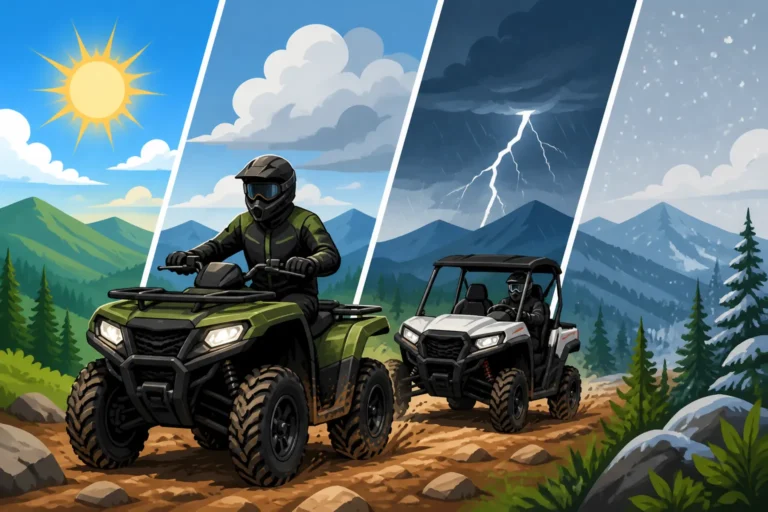
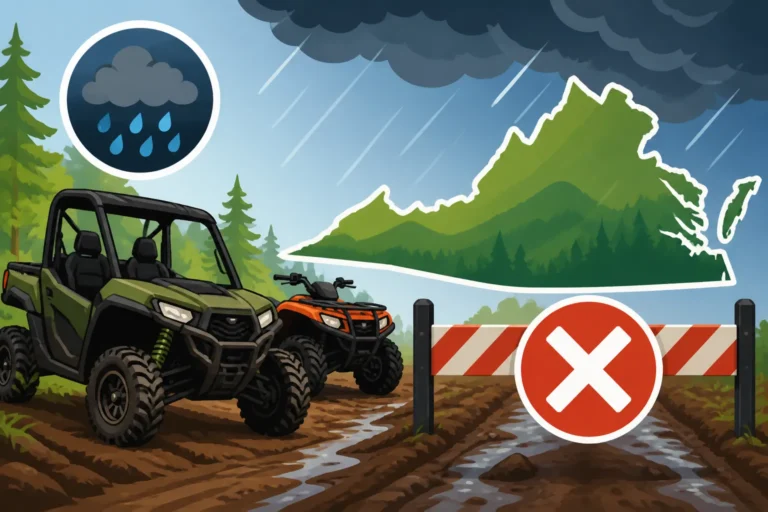
A trip that works in dry weather can become a poor choice after heavy rain. Muddy roads, washouts, water crossings, and soft campground surfaces can create recovery problems, especially for a loaded trailer or a heavier UTV. Ask the campground and trail operator about current conditions, and be willing to delay or change the ride if the route is not suitable.
Seasonal closures deserve special attention around forest riding areas. Peters Mill Run and Taskers Gap have a winter closure period, and trails can also be affected by conditions outside the regular schedule. Confirm exact dates and current status before you leave rather than relying on a previous year’s itinerary. A closure can affect the riding plan even if your campground reservation remains active.
Spearhead and other managed systems can also have closures, restrictions, or operating rules that riders need to check before each visit. Keep an alternate activity in mind in case the trail is closed, the weather turns, or a machine has a mechanical problem. [Virginia Trail Closures and Seasons] and [Virginia Trail Conditions Before You Haul] can help you build that backup into your plans.
Do not ride public roads just because they connect places
One of the most important safety checks is whether a route from your campsite to the trail is legally open to your machine. Virginia generally restricts ATV use on public highways, with limited exceptions and specifically authorized routes. A road shown between a campground and a trailhead is not automatically a legal connector, even if other riders have used it.
Ask the campground and trail operator to identify the authorized connection in clear terms. If the answer is “just follow the road,” ask which road, which segment, and what rule makes it open to your machine. If there is no confirmed legal connection, trailer to the trailhead rather than improvising. [Virginia ATV Road Rules Under 46.2-915.1] and [Virginia Bans ATVs on Public Highways] explain why this distinction matters.
Landowner permission is another separate issue. Permission to camp on private land does not automatically authorize riding on neighboring property, timber roads, or utility corridors. Get permission for the riding area and route in writing when required, and respect gates, signs, and property boundaries. [Virginia Requires Written Landowner Consent] is a useful reminder that access must be established, not assumed.
Planning a Smooth Camping and Riding Itinerary
Build the trip around arrival and departure days
A realistic itinerary leaves room for unloading, setting up camp, checking permits, and dealing with small problems. If you arrive after a long tow, it may be safer to set up first and ride the next morning rather than trying to unload and hit a trail before dark. That is especially true when the campground entrance is unfamiliar or the trailhead is farther away than expected.
On the first riding day, choose a route that matches the group’s experience and machine capabilities. Keep the first loop shorter than the maximum possible mileage, then adjust after you see the terrain and conditions. A group that includes new riders, children, or unfamiliar machines may need extra breaks and more time than the map suggests.
Plan the final day so you are not racing to pack up after a full ride. Leave time to cool machines, secure gear, check tires and tie-downs, and inspect the campsite before departure. If the trailhead is a distance from the campground, account for loading and driving time. A rushed departure is when helmets, keys, straps, and small tools are most likely to be left behind.
Match the ride to the people and machines
A mixed group needs more planning than a group of experienced adults on similar machines. Ask about age requirements, supervision rules, passenger restrictions, and the machine manufacturer’s age recommendations. Do not assume that a youth rider can use every trail just because the campground welcomes families. [Virginia Trail Rules for Riders Under 18] is a helpful starting point for checking youth-related trail considerations.
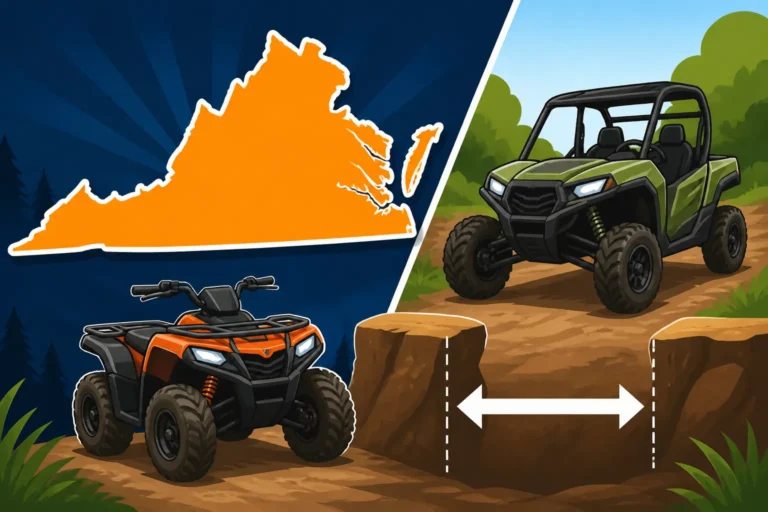
For UTV groups, confirm width limits and equipment requirements before booking. Some routes are unsuitable for wider machines, and some trail systems have specific rules for cages, seatbelts, or passengers. A route that looks manageable on a general-purpose map may have a restriction that rules it out for your vehicle. Check the trail system’s official requirements and [Virginia Trails That Allow Side-by-Sides] before hauling a large rig.
Give the group an honest picture of the riding day. A scenic trail can still be tiring if it includes rough surfaces, steep grades, dust, or long stretches without services. Set a meeting point, agree on a pace, and make sure everyone knows what to do if separated. OnX Offroad can help a group discuss possible routes before the trip, but riders should still follow the official trail map and stay within authorized boundaries.
Pack for the mountains and for repairs
Virginia’s mountain weather can shift during a day. Pack rain gear, warm layers, gloves, water, and a change of clothes even when the forecast looks comfortable at home. A wet ride followed by a cool evening at camp can make a rider miserable, particularly if their only dry clothes are buried in a trailer compartment.
Bring tools and spare items that fit your machine and the ride you plan to do. At a minimum, think through tire repair, basic hand tools, a way to secure loose cargo, a charged phone, and first-aid supplies. A long, remote loop calls for more preparation than a short ride close to town. Keep essential gear accessible rather than packed underneath camping equipment.
Fuel planning is part of the same preparation. Identify where fuel is available and whether your route leaves enough reserve for detours or slow riding. Do not assume a campground sells fuel, or that a nearby store will have the type your machine needs. For a more detailed packing checklist, see [Packing for Mountain Weather] and [First Aid on a Long Coalfield Loop].
Camping Choices and Trade-Offs
Primitive sites and forest camping
Primitive camping can be appealing when your group wants a quiet base and is comfortable bringing what it needs. The trade-off is fewer services and more responsibility. You may need to manage water, waste, food storage, lighting, and weather protection without the conveniences of a developed campground.
Confirm the exact camping rules for the site you have in mind. Public-land camping rules can differ by location, and a pull-off that looks suitable may be a trailhead, road shoulder, closed area, or location where overnight camping is not allowed. Check whether a reservation or permit is needed, whether fires are permitted, and how long a stay is allowed.
Be realistic about vehicle access. A primitive site may be fine for a truck but not for a long trailer, especially if the approach is narrow or the parking area has limited turning space. If you cannot verify that your full setup can get in and out safely, choose a developed campground or leave the trailer at an approved staging location.
Developed campgrounds and cabins
A developed campground can reduce the work of setting up and provide predictable facilities, but it may have stricter rules about machines, noise, generators, pets, and trailer parking. Ask for the rules before booking, especially if you are arriving with multiple vehicles. A site that fits a tent may not accommodate a truck, trailer, and UTV.
Cabins and other indoor lodging can be a good choice when the weather is uncertain or the group includes people who do not want to camp. Confirm whether the property allows machines to be parked on site and whether there is enough space for the trailer. A cabin near a trail does not necessarily include secure machine storage or permission to ride from the driveway.
If you are comparing several options, write down the total logistics rather than just the nightly rate: distance to the trailhead, unloading arrangements, parking, water, bathrooms, and cancellation terms. Costs and rules vary by provider, so check directly with the property before booking. For a wider comparison, [Virginia Trails With Camping] can help you identify riding destinations where overnight planning is part of the trip research.
Town stays and trailer-based access
Staying in a nearby town can be the easiest choice when you want restaurants, fuel, groceries, or a more comfortable room. Communities such as Grundy, Coeburn, Richlands, and Edinburg can serve as useful search points depending on the riding area. But a town stay usually means towing to the trailhead unless a legal connection is specifically confirmed.
Call the property about trailer parking before you reserve. Some motels or lodging properties may have limited parking or tight lots, and a long trailer can occupy more room than the staff expects. Ask whether you can park overnight, whether the trailer can remain attached to the tow vehicle, and whether there is a safer alternative if the main lot is crowded.
Town stays can also make it easier to adjust plans when weather or mechanical issues interrupt a ride. You may be closer to supplies or repair services, though availability depends on the location and time. Keep the machine secured and avoid leaving expensive gear visible. A convenient base is valuable, but it still needs to work for the vehicle you are towing.
Safety, Courtesy, and Campground Etiquette
Keep machines quiet and controlled
Campgrounds are shared spaces, not practice areas. Follow posted speed limits, avoid unnecessary engine revving, and do not ride around the property unless the operator explicitly allows it. A small amount of courtesy goes a long way when neighboring sites include families, early risers, or people who came for a quiet weekend.
Check local noise rules and trail equipment standards before leaving home. A loud exhaust can cause problems at camp and may violate requirements on some public-land routes. If your trip includes a national forest route, confirm the applicable sound limit and equipment rules in advance rather than trying to solve the issue at the trailhead.
Use a designated unloading area when one is provided. Keep machines off lawns, walking paths, and neighboring sites, and do not block campground roads with a trailer while you unload. If you need extra space, arrange it with the operator before arrival instead of assuming you can use an empty-looking site.
Protect the trail and the campground
Stay on authorized routes, especially near campsites, streams, and forest edges. Cutting across grass or taking an informal shortcut can damage property and create conflicts with landowners. If a route is muddy, do not widen it by riding around the edge; turn back or follow the official guidance for the area.
Take trash and food waste seriously. Pack out what you bring, secure food from wildlife, and follow campground rules for fires and ash. A careless campfire or a pile of discarded packaging can affect access for future riders and campers. Leave the site as clean as you would want to find it after a long tow.
Respect other visitors’ space. Keep dogs under control, observe quiet hours, and avoid riding past occupied campsites unless the route is designated for that purpose. If the campground has separate spaces for trailers, tents, and cabins, follow the layout rather than treating an empty area as available for staging.
Prepare for limited cell coverage
Some riding and camping areas in the mountains have unreliable phone service. Tell someone at home where you are going, what trail system you plan to ride, and when you expect to check in. If your route or schedule changes, update the group when you have coverage.
Carry the information you may need offline: campground directions, permit confirmations, emergency contacts, and a map of the area. A paper map can be especially useful if a phone battery runs down or the app cannot load. Digital tools, including onX Offroad, can support preparation, but battery life and signal should never be the only parts of your navigation plan.
Agree on a simple group procedure before the ride. Decide what to do if a machine breaks down, a rider gets separated, or someone needs to turn back. Choose meeting points that are easy to describe, and make sure every rider knows who is carrying the first-aid kit and basic repair supplies. Preparation will not prevent every problem, but it makes a bad day easier to manage.
A Pre-Trip Checklist for Virginia OHV Camping
Before you reserve
Start with the riding area, not the lodging search. Identify the specific trail system, confirm that it allows your machine type, and check its permit and seasonal rules. Then find overnight options that make sense for the route and ask whether they accept machines and trailers.
Confirm the meaning of “trail access” in concrete terms. Ask whether riding directly from the site is allowed, whether there is an authorized connector, or whether you must trailer to a trailhead. If the answer is unclear, plan to trailer rather than relying on an assumption.
Get the important details in writing when possible, especially rules about trailer parking, machine storage, cancellations, and access. Save the campground’s address and contact information. Make sure every adult in the group knows the plan rather than leaving all the details with one driver.
Before you tow
Check for trail closures, weather concerns, and campground changes. Confirm permits and operating requirements for every riding area on your itinerary. Make sure your machines are ready, your trailer lights and tie-downs work, and your tow vehicle can handle the route and load.
Pack for the trip you are actually taking. A two-night stay near a developed campground calls for different supplies from a remote, primitive camp. Bring the correct riding gear, water, first-aid supplies, tools, charging equipment, and layers for changing mountain weather. Keep essential items easy to reach.
Review the route to the campground and trailhead with the trailer in mind. Look for steep grades, narrow roads, and places where turning around may be difficult. Share your itinerary with someone who is not traveling with you, and set a check-in time.
On arrival and during the stay
Check in with the campground operator before unloading. Confirm where to park, whether riding is permitted on the property, and which route to use if an authorized connection exists. If the information differs from what you expected, pause and resolve it before riding.
Keep your permits, identification, and trail information accessible. Follow posted restrictions, respect quiet hours, and stay on routes that the operator or land manager has confirmed are open. Do not treat another rider’s shortcut or a visible tire track as proof of legal access.
Before leaving, check your campsite and trailer for forgotten gear and litter. Secure machines properly, inspect tie-downs, and make sure the group has a safe return route. A well-planned Virginia ATV camping trip is not just about finding a bed or campsite; it is about making sure the trail, the overnight stay, and the route between them all fit together.
Disclaimer
This article is for general informational purposes only and does not constitute professional advice. Laws, prices and regulations vary by location and change over time. Consult a qualified professional for guidance on your specific situation.