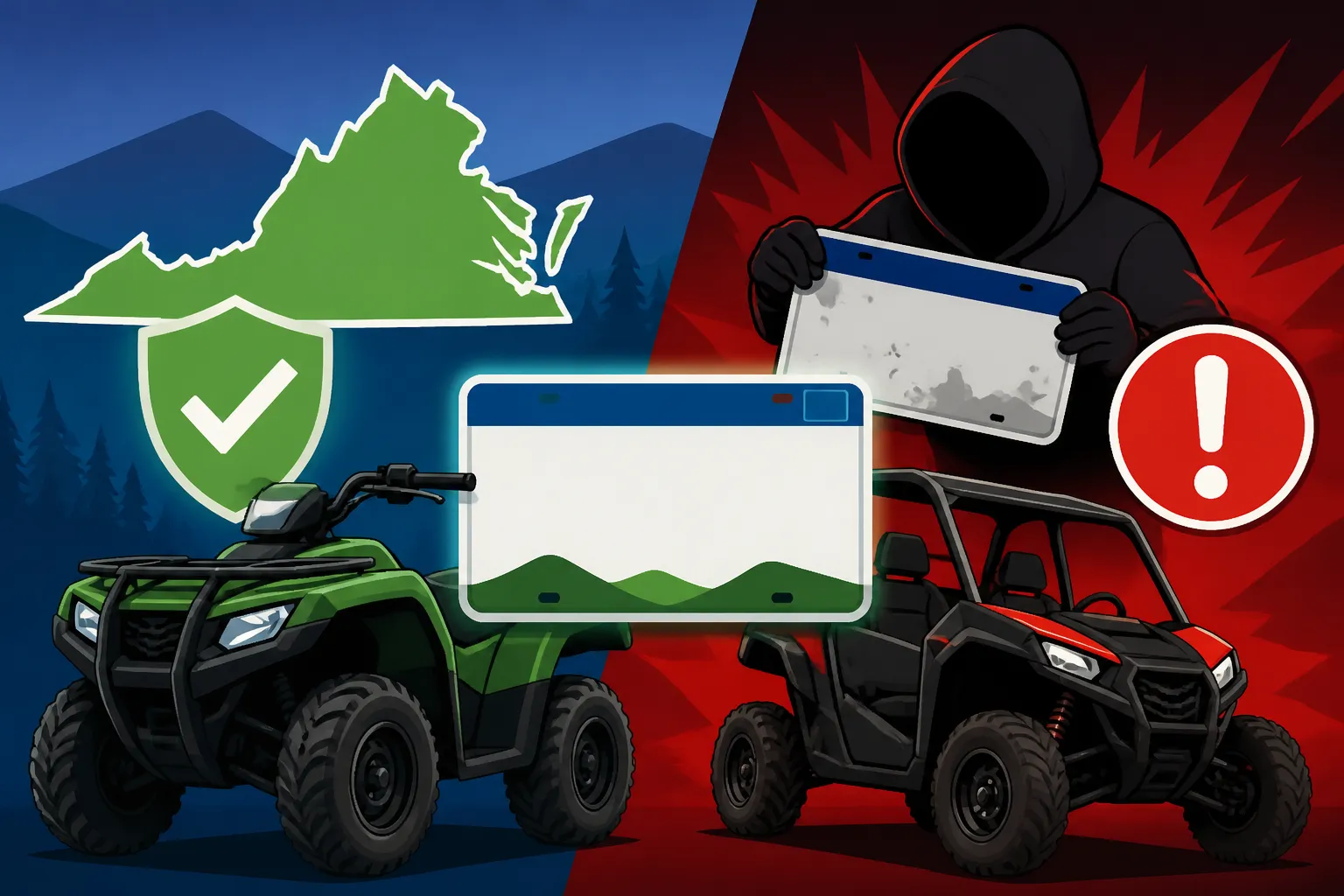
Why Out-of-State Plate Schemes Are Risky
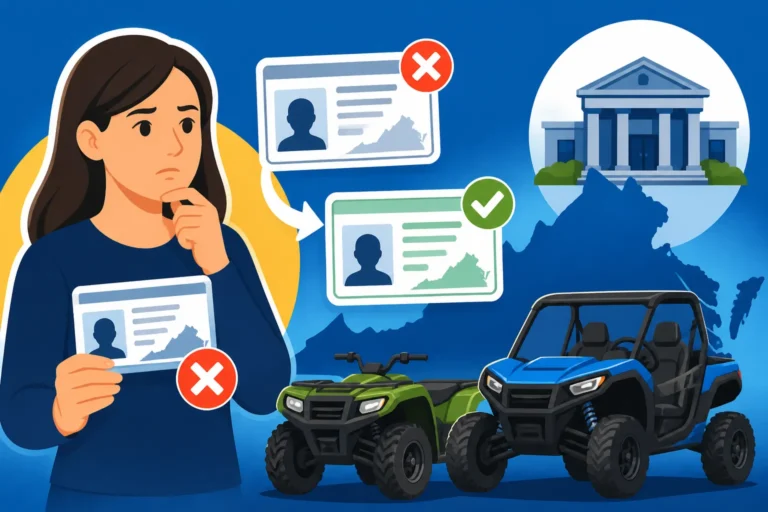
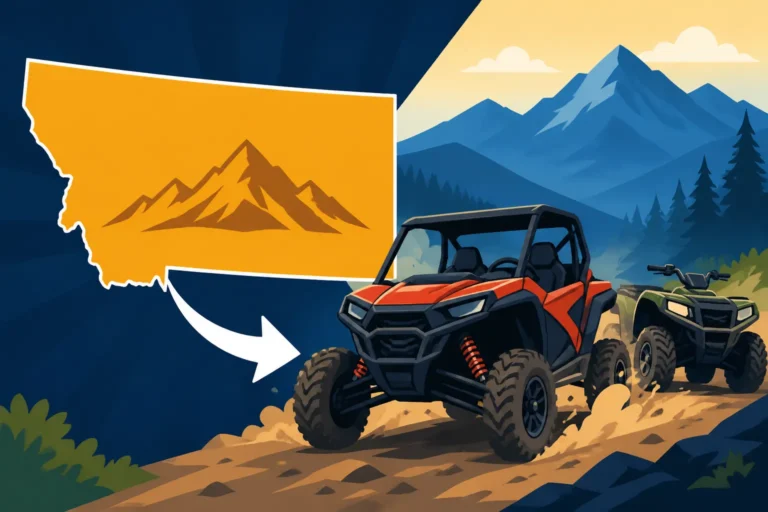
There’s a common misconception out there, especially for those of us who love our ATVs and UTVs, that there’s a secret shortcut to making off-road machines street legal or to simply avoid some of the hassles of ownership. You might have heard whispers about out-of-state plate schemes, often involving states like Montana or South Dakota, and the allure can be strong. But for Virginia riders, these "easy solutions" often create a tangled mess of legal headaches and financial risks far worse than simply understanding and following our local rules. This guide is all about why those out-of-state plate schemes are a gamble you really don't want to take in the Old Dominion.
The Allure of Out-of-State Plates: What Makes Them Seem Attractive?
It’s completely understandable why a rider might look for alternatives to Virginia’s off-road vehicle laws. We all want to enjoy our machines with as little fuss as possible, whether that’s hitting the trails, using a side-by-side on the farm, or just taking it to the local store. The idea that there might be a simpler, cheaper, or even "street legal" way to do things can be incredibly tempting.
The Promise of Fewer Headaches
Imagine this scenario: you're chatting with a fellow rider at the trailhead, and they start talking about how they "registered" their UTV in a state like Montana. They might claim it makes their machine street legal everywhere, or that they avoided paying sales tax, or that the annual fees are much lower. They might even say it's all done through an LLC, making it seem like a legitimate business move. The idea of bypassing what feels like complex or restrictive local rules, especially if you're trying to get a side-by-side on a county road for a short stretch, sounds like a dream come true. You just want to ride, and if another state offers a path that seems to unlock more possibilities, it's easy to see why someone would be interested.
Believing the Online Hype
The internet is awash with services and articles promoting these out-of-state registration schemes. You can find step-by-step guides on how to set up an LLC in a distant state, transfer ownership to that LLC, and then register the vehicle there as a "street legal" item. These promoters often highlight the low registration fees, the lack of emissions testing, or the perceived "freedom" this grants. They paint a picture where your Virginia-garaged machine suddenly becomes a universally recognized road vehicle. It’s a very compelling narrative, especially when it’s backed by what looks like legitimate corporate formation services. While companies like LawDepot provide invaluable services for legitimately forming LLCs and other legal documents, they can't change the laws of the state where your vehicle is actually used and garaged. It’s easy to get caught up in the excitement and overlook the fine print about how your resident state will view such an arrangement.
Virginia's Stance on Off-Road Vehicles: Why Your ATV Isn't a "Car" Here
Here’s where the rubber meets the trail, literally. Virginia has its own set of rules and definitions for off-road vehicles, and these are often very different from what you might find in a state promoting these plate schemes. What matters most is what Virginia law says about your machine, especially when it's being used within Virginia's borders.
Virginia's Specific ATV Definitions
Virginia law is pretty clear on what constitutes an All-Terrain Vehicle (ATV) and a Utility Vehicle (UTV) or side-by-side. Generally, these machines are defined by characteristics like having three or more wheels, being 50 inches or less in width (for ATVs), weighing less than 1,500 pounds, and being designed for off-road use. For utility vehicles, the definitions expand slightly but still categorize them as off-highway machines. These aren't motor vehicles in the traditional sense, like your car or truck, for the purpose of highway operation. This fundamental classification as an off-road machine is crucial. It means that while [Virginia Titles ATVs but Never Registers Them], it doesn't consider them suitable for public roads, with only a few very specific, limited exceptions.
No Street-Legal Path for Most ATVs
This is perhaps the hardest truth for many off-road enthusiasts: Virginia generally offers [No Street-Legal UTV Path] or ATV path for highway use. While you can sometimes convert an off-road motorcycle (a dirt bike) into a street-legal motorcycle with proper modifications and inspection, this pathway simply does not exist for ATVs or most UTVs. Trying to apply an out-of-state "street legal" designation to a machine primarily used in Virginia is like trying to fit a square peg in a round hole. An officer on a rural Virginia road isn't going to care what a Montana title says; they're going to apply Virginia law to the vehicle in front of them. This means that if your ATV is on a public highway, regardless of its out-of-state plate, you are very likely breaking [Virginia Bans ATVs on Public Highways].
The Legal Minefield: Why Out-of-State Plates Don't Work in Virginia
It's one thing to hear about these schemes online, but it's another to understand how they actually interact with Virginia law. The crucial point is that your residency and where your vehicle is primarily operated will almost always supersede an out-of-state registration.
The Principle of "Resident Registration"
Here’s the core issue: if you are a resident of Virginia, and your ATV or UTV is primarily garaged, stored, and operated within the Commonwealth, Virginia law will almost certainly apply to that machine. It doesn't matter if you've set up an LLC in Delaware or registered the machine in Wyoming. The state where the vehicle is domiciled and primarily used by its resident owner has jurisdiction over its titling, taxation, and operational legality.
Let's say you live in Buchanan County, a place known for its amazing coalfield trails. You buy a new side-by-side, set up an LLC in South Dakota through a service you found online, and get a South Dakota plate. If that side-by-side lives in your garage in Buchanan County and you primarily ride it on the Spearhead Trails, Virginia considers it a Virginia-domiciled vehicle. [Titling in Virginia When the Quad Is Garaged Elsewhere] doesn't typically apply to resident owners with their primary machines. An out-of-state plate means almost nothing when you, the owner, are a Virginia resident using the vehicle in Virginia.
Tax and Titling Evasion Concerns
Virginia takes its tax revenue seriously, and so do most states. Using an out-of-state LLC to register a vehicle that you, a Virginia resident, primarily use and garage in Virginia, is often viewed as an attempt to evade Virginia's sales and use taxes and titling fees. When you purchase a new ATV or UTV, Virginia typically requires sales tax at the retail rate at the time of purchase or titling. [Virginia Sales Tax at Titling]. If you buy a machine out of state and bring it to Virginia, you're generally subject to Virginia's use tax, even if you paid sales tax in another state (though a credit might apply if that state's tax was similar or higher). [Virginia Tax on an Out-of-State Purchase].
Companies like LawDepot are perfectly legitimate for forming an LLC in a state like Montana. You can absolutely use their services to legally establish a business entity. The problem arises when that LLC is then used by a Virginia resident to register a personal vehicle in Montana, with the sole or primary intent of avoiding Virginia's tax obligations and vehicle laws. This isn't what these services are designed for, and it puts you, the rider, at risk of being flagged for tax evasion or non-compliance. Virginia wants its fair share of taxes on vehicles used by its residents, and trying to bypass that often leads to bigger headaches down the road.
Virginia's Titling, Not Registration, Focus
One key difference to remember is that Virginia focuses on titling ATVs and UTVs, not traditional annual registration with plates for highway use. [Virginia Titles ATVs but Does Not Register Them] for highway operation. The $15 title fee is a one-time thing, establishing ownership. [What a Virginia ATV Title Costs]. Unlike your car, your ATV won't get a metal license plate from the DMV. While Virginia does have very limited, specific exceptions for coalfield counties to open certain roads to ATVs with local permits, these are local permits and have nothing to do with a standard DMV-issued license plate. An out-of-state plate, therefore, serves little to no practical or legal purpose in Virginia's system for an off-road vehicle. It doesn't grant you any new privileges on Virginia roads.
Real-World Consequences: What Happens When the Scheme Fails?
So, what’s the worst that could happen? Unfortunately, the consequences of relying on these out-of-state plate schemes in Virginia can range from frustrating fines to significant financial and legal trouble. It's not just a slap on the wrist; it can be a genuine nightmare.
Penalties and Fines for Illegal Operation
Let's revisit our Buchanan County rider. If they're pulled over by a Virginia State Trooper or local sheriff while riding that South Dakota-plated side-by-side on a public highway, the officer will apply Virginia law. The out-of-state plate and "street legal" registration will mean nothing. The rider will be cited for operating an ATV illegally on a public highway. Virginia law (specifically § 46.2-915.1) is quite strict about where ATVs can and cannot be operated. The penalty for such a violation is a civil penalty of up to $500, plus court costs. [Virginia's Civil Penalty for Illegal Riding]. This isn't a minor traffic ticket; it's a substantial fine, and it adds up quickly if you're cited multiple times. Furthermore, cities and counties have the power to impound machines ridden illegally on public property or sidewalks, adding impoundment fees to your growing list of expenses.
Insurance and Liability Headaches
This is arguably one of the most dangerous aspects of these schemes. Many people who get out-of-state plates do so because they believe it grants them "street legal" status, and thus, traditional auto insurance. However, if your insurance policy is based on the premise that your vehicle is legally registered and operated on public roads in the state of Virginia, and it's discovered that you're using an out-of-state plate scheme that isn't recognized here, your policy could be nullified.
Imagine a scenario where you're involved in a serious accident on a Virginia highway while riding your "street legal" UTV. If your insurance company finds out you, a Virginia resident, were operating a Virginia-domiciled vehicle under an unrecognized out-of-state registration scheme, they could deny your claim. Suddenly, you're on the hook for medical bills, property damage, and potential lawsuits – all because you relied on a flimsy legal workaround. While [Virginia Requires No ATV Insurance] for off-road use, if you do have a policy, you want it to be valid when you need it most. The peace of mind that comes from proper titling and legitimate insurance is worth far more than the perceived savings of a risky scheme.
The Hassle of Untangling the Mess
Should you get caught, untangling the legal and financial mess can be incredibly time-consuming and expensive. You might face demands for back taxes, penalties, and interest from the Virginia Department of Motor Vehicles or local tax authorities. You'd likely have to go through the proper Virginia titling process anyway, paying the fees you initially tried to avoid. If you formed an LLC, you'd then have the administrative burden of dissolving it, which could involve more fees and paperwork, potentially with the help of a service like LawDepot. What started as a quest for simplicity and savings often devolves into a bureaucratic nightmare that costs more than simply complying with Virginia law from the outset.
Legitimate Ways to Title and Enjoy Your ATV in Virginia
The good news is that enjoying your ATV or UTV in Virginia doesn't have to be complicated or risky. By understanding and following Virginia’s actual laws, you can ensure your machine is properly owned and legally ridden, giving you genuine peace of mind.
Understanding Virginia's Actual Titling Requirements
Virginia has specific rules for titling ATVs and UTVs, and they're generally quite straightforward. For any ATV or UTV purchased new with an engine size over 50cc, a Virginia title is required if it was bought new on or after July 1, 2006. [Virginia Titles Machines Bought New Since 2006]. This involves getting your Manufacturer's Statement of Origin (MSO) from the dealer, filling out a few forms, and paying a modest title fee. For machines bought used, titling is actually optional unless a lender requires it (which they almost always do if you're financing it). [Virginia Titles Are Optional on Used Machines]. However, even if optional, obtaining a title is highly recommended as it serves as clear [Virginia Proof of Ownership on the Trail] and makes future sales much easier.
When you head to the DMV, make sure you have your MSO (for new), or the previous owner's signed-over title (for used), a bill of sale, and proof of your Virginia address. [What to Bring to the DMV to Title a Quad]. It's a simple process that sets you up for legitimate ownership.
Riding Legally on Virginia's Trails and Private Land
Virginia offers fantastic opportunities for legal, safe ATV and UTV riding. The key is to stick to designated areas and private property with permission. We have incredible trail systems, like the Spearhead Trails in Southwest Virginia, which offer hundreds of miles of thrilling riding. [Spearhead Trails in Virginia Explained]. These systems require permits, but they are well-maintained and offer a safe, legal environment for off-road fun.
You can also ride on private property, provided you have explicit [Virginia Written Consent on Private Land] from the landowner. A simple written note outlining the permission and dates can save you a lot of trouble. Focusing your riding on these legitimate areas eliminates the need for any "street legal" workarounds and ensures you're enjoying your machine within the bounds of the law.
Working With the Rules, Not Against Them
Instead of trying to find dubious loopholes, it's always best to understand and work within Virginia's legal framework. If you have questions about specific rules, such as the limited road access in certain coalfield counties like Buchanan and Tazewell, consult the official Virginia Code or contact your local DMV. [Virginia Road Access in the Coalfields]. These limited exceptions are for specific, named routes and are not a blanket "street legal" pass for all ATVs.
When you're uncertain about titling, tax obligations, or riding rules, the Virginia DMV is the authoritative source for information. [Virginia Title Questions the DMV Hears]. They can provide accurate guidance specific to your situation. Embracing the regulations, rather than trying to sidestep them with out-of-state plate schemes, will ultimately lead to a more enjoyable, stress-free, and legally sound ATV and UTV experience in Virginia.
| Aspect of Ownership | Out-of-State Plate Scheme (Perceived) | Virginia Law (Reality for VA Residents) |
|---|---|---|
| Street Legality | My ATV/UTV is now street legal anywhere. | Generally, ATVs/UTVs are NOT street legal in Virginia. Officer applies VA law. |
| Tax Avoidance | Avoids VA sales tax and property tax. | VA use tax and titling fees likely apply. Risk of tax evasion charges. |
| Titling Process | Simpler, less paperwork than VA. | VA titling is straightforward; required for new, optional for used. |
| Proof of Ownership | Out-of-state title serves as proof. | VA title is the definitive proof for a VA resident and machine. |
| Insurance Validity | Auto insurance covers it as a street vehicle. | Policy may be invalidated if vehicle is illegally operated/titled in VA. |
| Legal Compliance | Compliant with the "registration" state's laws. | You are subject to Virginia laws, regardless of out-of-state status. |
| Consequences | Minimal or none, just ride. | Fines up to $500, impoundment, back taxes, legal fees. |
Disclaimer
This article is for general informational purposes only and does not constitute professional advice. Laws, prices and regulations vary by location and change over time. Consult a qualified professional for guidance on your specific situation.