Converting a Dirt Bike for the Road With VSA 130
There’s a special kind of freedom that comes with owning a dirt bike in Virginia. You love hitting those trails, feeling the mud fly, and navigating technical terrain in places like Peters Mill Run or the Spearhead Trails. But sometimes, when you’re loading up the truck or trailer just to get to the trailhead, you can’t help but think, "Man, I wish I could just ride this thing on the road to grab some groceries or get to that next logging road." It’s a common fantasy, and while it's generally not possible for ATVs and side-by-sides, it is an option for dirt bikes in Virginia, through a specific process involving a form called VSA 130. This guide will walk you through what that means, what you’ll need, and the steps to convert your off-road warrior into a street-legal machine.
The Dream of a Street-Legal Dirt Bike in Virginia (and Why It's Tricky)
For many off-road enthusiasts, the idea of converting a dirt bike into a street-legal machine is incredibly appealing. Imagine being able to ride from your garage directly to the local trails, or even just to run errands without the hassle of a truck and trailer. It sounds amazing, doesn't it? But before you get too far ahead of yourself, it’s important to understand why this isn't a simple bolt-on affair.
Why Dirt Bikes Aren't Road-Ready Out of the Box
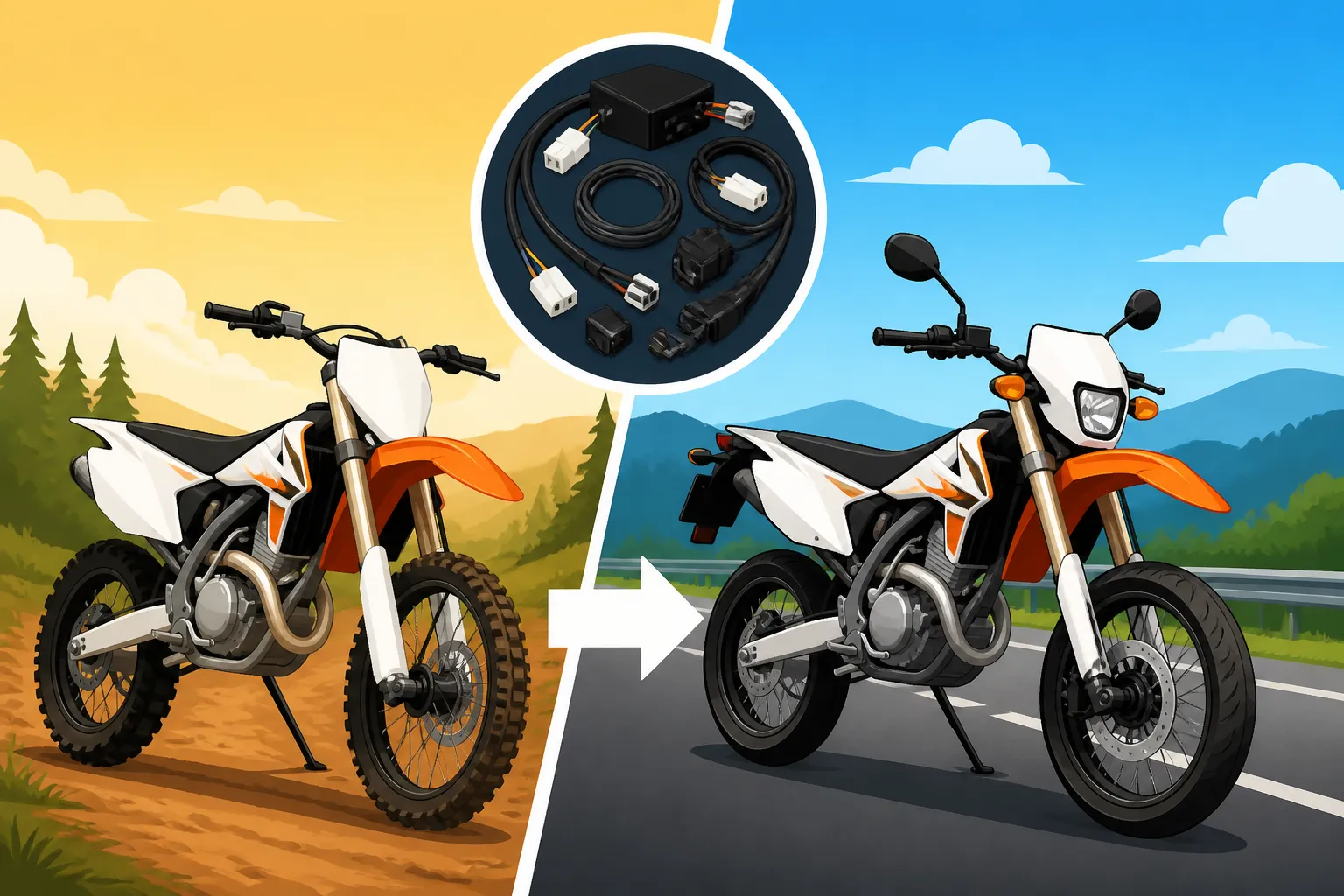
The moment you pull a brand-new dirt bike off the showroom floor, you’ll notice some key differences compared to a street motorcycle. Dirt bikes are designed for rugged, off-pavement performance, and that means certain features deemed essential for road safety are often absent or minimal. Think about it: a dirt bike's headlight might be dim, its taillight almost non-existent for visibility, and it almost certainly lacks turn signals, mirrors, or a horn. The tires, while fantastic for gripping loose earth, aren't typically rated for highway speeds or wet pavement conditions. Emissions controls and noise limits are also often different.
It's frustrating when you see riders in other states seemingly riding their dirt bikes everywhere, while in Virginia, you're constantly loading and unloading. This isn't just a matter of convenience; it's about fundamental design and regulatory compliance. A bike built for mud bogs in the George Washington National Forest simply isn't equipped to safely navigate I-81 or a busy street in Richmond without significant modifications.
Virginia's Strict Definition of a "Motorcycle" vs. "Off-Road Vehicle"
Virginia law is pretty clear when it comes to classifying vehicles. An All-Terrain Vehicle (ATV) or Utility Vehicle (UTV) is generally defined as an "off-road vehicle" and is explicitly not considered a "motor vehicle" for highway use purposes, which slams the door shut on any street-legal aspirations for those machines. This is why you'll often hear that [Can a Virginia ATV Be Made Street Legal at All?] is simply not an option. However, off-road motorcycles, commonly known as dirt bikes, occupy a slightly different legal space.
The Virginia code allows for an "off-road motorcycle" to be converted into a "motorcycle" for highway use, provided it meets specific equipment and inspection standards. This distinction is crucial. It means that while your Kawasaki KX250 isn't street legal in its factory form, it can be modified to meet the standards of a street-legal motorcycle. This requires more than just adding a headlight; it involves a comprehensive upgrade to align with state and federal safety regulations. Understanding these [Virginia Off-Road Motorcycle Definitions] is the first step in knowing what you're up against.
Understanding Form VSA 130: The Heart of Your Conversion
So, you're determined to make your dirt bike street legal. Great! The central piece of paperwork that makes this possible in Virginia is called Form VSA 130. This isn't just another form you fill out; it's a declaration of your commitment to safety and compliance.
What VSA 130 Actually Is and Why It Matters
VSA 130 is officially titled "Affidavit for Reconstructed and Specially Constructed Vehicles." For dirt bike conversions, it's the document you, as the owner, use to attest that your previously off-road-only machine has been modified to meet all the safety and equipment requirements of a street-legal motorcycle in Virginia. Essentially, you're telling the state, "I've done the work, and this bike is now safe for the road."
This form is critical because it's your sworn statement that your bike adheres to the Virginia Code. It's the mechanism the Virginia Department of Motor Vehicles (DMV) uses to legally reclassify your dirt bike. Without a properly completed and certified VSA 130, your dirt bike remains an off-road vehicle in the eyes of the law, no matter how many mirrors or turn signals you've bolted on. It transfers the burden of proof to you, the owner, to ensure every requirement is met. This form is the cornerstone of [Certifying a Converted Dirt Bike Meets Federal Safety Standards] for your newly street-legal dirt bike.
Essential Equipment Your Dirt Bike Needs to Pass Muster
Before you even think about filling out VSA 130, you need to ensure your dirt bike actually has the required equipment. This isn't a checklist you can fudge; it's what the Virginia State Police inspector will be scrutinizing with a keen eye. Missing even one item, or having a component that doesn't meet DOT (Department of Transportation) standards, will lead to failure.
Here's a breakdown of the typical requirements you'll need to add or upgrade:
- Headlight: Must have both high and low beams, securely mounted and properly aimed. Many dirt bikes have a weak headlight for trail use; you'll likely need a much brighter, DOT-compliant unit.
- Taillight and Brake Light: A single light assembly usually covers both, but it must be clearly visible from a specified distance and illuminate when the brakes are applied (both front and rear brakes should activate it).
- Turn Signals: Both front and rear, amber in color, and clearly visible. They must blink at a consistent rate.
- Mirrors: At least one mirror, but often two are recommended for better visibility, providing a clear view of the roadway behind you.
- Horn: A working horn, audible from at least 200 feet away, is essential for alerting others on the road.
- DOT-Approved Tires: Your knobby off-road tires, while great for gripping dirt, are typically not rated for highway speeds or wet asphalt. You'll need tires specifically designed and DOT-approved for street use.
- Muffler: While dirt bikes often have mufflers, they might not meet street-legal noise regulations. You'll need to ensure your exhaust system is compliant.
- Speedometer: A working speedometer to accurately display your speed.
- License Plate Bracket: A secure bracket to mount a standard-size motorcycle license plate, often with a light to illuminate the plate at night.
- Reflectors: Additional reflectors may be required in certain positions.
This list isn't exhaustive, and it's always best to consult the latest Virginia Code for specifics, but it gives you a solid foundation for the types of modifications you'll be making. You're essentially transforming the bike from a bare-bones trail machine into a fully functional, road-worthy motorcycle. These are the core [Virginia Dirt Bike Conversion Rules] that you must adhere to.
| Feature | Typical Dirt Bike Configuration | Required Street-Legal Configuration |
|---|---|---|
| Headlight | Often dim, single beam, minimal | High/low beam, DOT-compliant, properly aimed |
| Taillight | Small, sometimes only running light | Running light, brake light (front & rear activation) |
| Turn Signals | None | Front & rear, amber, clearly visible, flashing |
| Mirrors | None or single, small | At least one (two recommended), clear rear view |
| Horn | None or small button | Audible from 200 feet |
| Tires | Aggressive knobbies, off-road only | DOT-approved, street-rated |
| Muffler | Designed for performance, less emphasis on noise | Meets state noise regulations |
| Speedometer | Optional or basic | Functional and accurate |
| Plate Mount | None | Secure bracket with plate illumination |
The Steps to a Successful Conversion and Titling
Once you've poured your time, effort, and probably some hard-earned money into outfitting your dirt bike with all the necessary street-legal components, the real fun begins: the paperwork and inspection process. This part can feel a bit daunting, but breaking it down into manageable steps makes it much clearer.
Gathering Your Paperwork and Completing VSA 130
First things first, gather all your existing documentation for the dirt bike. This typically includes the original Manufacturer's Statement of Origin (MSO) if it was bought new and never titled, or the existing off-road title if it had one. If you purchased the bike in a private sale, you'll need a [Virginia Title Without a Bill of Sale] if it was very old or if you have an official Bill of Sale detailing the transaction. Having a clear chain of ownership is paramount.
Now, with your fully modified dirt bike ready, it's time to meticulously complete Form VSA 130. This form will ask for detailed information about your vehicle and the modifications made. You'll describe the components you've added or replaced to meet highway requirements. Be as thorough and accurate as possible. Sometimes, when dealing with private sales or unique situations, you might need additional legal forms, such as a bill of sale or an affidavit of ownership. For these types of general legal documents, resources like LawDepot can be incredibly helpful for generating legally sound templates to ensure you have all your bases covered when you initially acquired the machine, protecting you and the seller. While LawDepot doesn't specifically handle the VSA 130 form, it can be a valuable tool for ensuring the underlying transactional paperwork is solid.
The attention to detail here cannot be overstated. Any discrepancies or omissions could lead to delays or rejection. It's similar to the meticulousness required for other DMV forms, such as [Virginia Form VSA 17A Explained], which is used for titling other types of vehicles.
The State Police Inspection and Finalizing Your Title
This is perhaps the most unique and crucial step: the Virginia State Police inspection. Unlike a regular vehicle safety inspection that you might get at your local mechanic shop, converted dirt bikes must be inspected by a Virginia State Police officer. You cannot simply take your VSA 130 to your local DMV branch and expect them to process it. In fact, [Why a Virginia DMV Branch Cannot Title a Conversion] is a question many riders ask, and the answer lies with this specialized inspection requirement.
You'll need to contact your local Virginia State Police barrack to schedule this inspection. When the officer arrives, they will meticulously review your completed VSA 130 form and then conduct a thorough physical inspection of your dirt bike. They will verify that every single item listed on the VSA 130 and required by the Virginia Code for a street-legal motorcycle is present, functional, and meets DOT standards. This includes checking your lights, turn signals, mirrors, horn, speedometer, tire ratings, and VIN (Vehicle Identification Number). They’ll also ensure the modifications are safe and properly installed.
If your bike passes the inspection, the State Police officer will sign and certify your VSA 130 form. This signature is your golden ticket. Once you have the State Police certified VSA 130, along with your original title/MSO and any other required documentation (like proof of address for [Virginia Title and Proof of Address]), you will mail this package to a specific unit within the Virginia DMV in Richmond. This is another point of confusion for many; [Why Conversion Titles Go to Richmond, Not Your Local DMV] is because these specialized titles require review by a dedicated team that handles reconstructed and specially built vehicles. The DMV in Richmond will then process your application and issue you a new Virginia title that designates your dirt bike as a street-legal motorcycle. This title will allow you to register it, get a license plate, and legally ride it on Virginia roads. Remember, the [Who Signs Form VSA 130 for a Converted Dirt Bike] is always a Virginia State Police officer, not a regular mechanic or DMV clerk.
Important Considerations and What Comes After
Successfully converting your dirt bike is a significant achievement, but it's important to understand the broader implications and ongoing responsibilities that come with it. You're not just getting a new title; you're changing the entire legal classification of your machine.
Understanding the Costs and Ongoing Requirements
The journey to a street-legal dirt bike isn't just about labor; there are financial costs involved. First, there's the cost of the parts themselves – new lights, turn signals, mirrors, horn, DOT tires, and potentially an upgraded stator to power it all. These costs can add up quickly, especially if you opt for quality, durable components. Then there's the potential cost of professional installation if you're not doing the work yourself.
Once your dirt bike is titled as a street-legal motorcycle, your responsibilities change. Unlike off-road ATVs, which don't require yearly registration or standard safety inspections, your converted dirt bike will. It will need to pass an annual state safety inspection at an authorized inspection station, just like any other motorcycle. You'll also be subject to annual registration fees and property taxes (if applicable in your locality). Furthermore, while Virginia doesn't mandate liability insurance for ATVs, it does for street-legal motorcycles unless you pay an uninsured motorist fee. Many riders choose to carry comprehensive motorcycle insurance for peace of mind and protection against theft or accidents. For detailed information on what this might entail, you can look into topics like [Insurance Once a Virginia Dirt Bike Becomes Street Legal].
Why This Path Doesn't Work for ATVs or UTVs
It bears repeating: the VSA 130 conversion process is specifically for off-road motorcycles, i.e., dirt bikes. This path is not available for ATVs or UTVs, no matter how many modifications you make. This is a common point of confusion and frustration for owners of these machines, especially those who see side-by-sides with plates in other states.
The fundamental reason lies in Virginia law's definition of "motorcycle" and "off-road vehicle." ATVs and UTVs are classified differently and generally lack the necessary design features and safety characteristics to ever be reclassified as street-legal motor vehicles in Virginia. Things like seating position, stability, crash protection, and federal safety standards for highway use are vastly different for a four-wheeled ATV or UTV compared to a two-wheeled motorcycle. So, while you might fantasize about cruising a [Why a Side-by-Side Can Never Be Made Street Legal] through town, it's just not going to happen in the Commonwealth. Virginia simply [Virginia Has No Street-Legal UTV Path] for these types of machines, and attempting to force the issue could lead to serious legal consequences.
You've got a fantastic opportunity with a dirt bike to expand its utility, but always remember to stay within the bounds of the law for both your safety and your legal standing.
Disclaimer
This article is for general informational purposes only and does not constitute professional advice. Laws, prices and regulations vary by location and change over time. Consult a qualified professional for guidance on your specific situation.