ATVs Over 50cc Bought New Since 2006 Need Titles
Navigating the ins and outs of ATV and UTV ownership in Virginia can feel like trying to ride a rocky trail blindfolded, especially when it comes to official paperwork. One of the most common headaches new owners and those buying machines across state lines encounter is figuring out if their quad or side-by-side actually needs a title. This guide is here to untangle the specific Virginia rule that mandates titling for ATVs over 50cc bought new since July 1, 2006, helping you understand why this matters and how to stay on the right side of the law.
The Core Virginia ATV Titling Rule: Over 50cc and Post-2006
It’s easy to get lost in the jargon, but Virginia has a very clear line in the sand when it comes to titling most ATVs. If your machine is an all-terrain vehicle with an engine displacement over 50 cubic centimeters (cc) and it was purchased new on or after July 1, 2006, then it absolutely needs a Virginia title. This isn't just a suggestion; it's a requirement designed to track ownership and address potential liens. It's a rule that can often trip up folks who are used to less stringent requirements in other states or who are simply unaware of Virginia's specific timeline.
Why the 50cc Threshold Matters
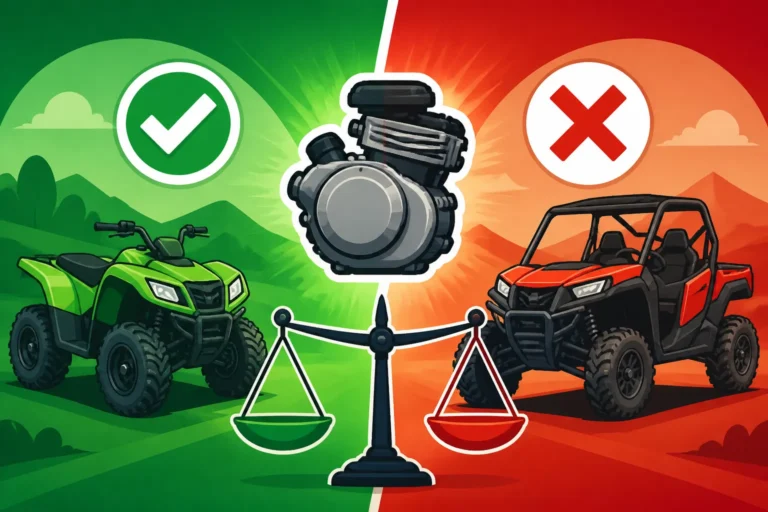
The 50cc threshold might seem arbitrary, but it’s a standard demarcation point in many states for various vehicle classifications. For ATVs in Virginia, it essentially separates smaller, often youth-oriented machines from larger, more powerful ones. Think of it this way: a tiny 49cc mini-quad, sometimes called a "pocket bike" or similar small recreational vehicle, is generally considered to have less power and, arguably, poses less of a public safety concern than a full-sized 400cc or 700cc utility or sport quad.
Machines under 50cc typically do not need a Virginia title, regardless of when they were purchased. This simplifies things for parents buying small starter quads for their kids or for those who might own a very small, older machine used only for light chores. However, once you cross that 50cc mark, the state views your ATV as a more substantial piece of equipment, one that requires official documentation of ownership. This distinction is crucial because it dictates whether you even need to step foot in a DMV office for titling purposes. It’s the first question to ask yourself when considering a new-to-you ATV.
Understanding the July 2006 Cutoff
The other critical component of this rule is the date: July 1, 2006. This isn't a random date; it marks when the specific Virginia law requiring ATV titling for new machines over 50cc came into effect. This means if you purchased your ATV new from a dealer on June 30, 2006, or any date prior to that, even if it's a powerful 700cc beast, Virginia law did not mandate you get a title for it. These machines are often referred to as "pre-2006" or "grandfathered" machines in casual conversation among riders.
This historical cutoff is vital for many long-time ATV enthusiasts or those buying older machines. It explains why some perfectly legitimate, older ATVs in Virginia might never have had a title issued. However, it’s important to remember that this exemption only applies to the initial purchase from a dealer. If that same pre-2006 ATV is later sold privately, while it might not need a title, having one can significantly streamline subsequent transfers of ownership and provide a clear paper trail. This particular detail is often a source of confusion, especially when buying from a private seller who might mistakenly tell you a title isn't needed because their machine is old. [Virginia's July 2006 Titling Cutoff] provides even more depth on this specific legislative change and its impact.
What "Bought New" Really Means
When the law talks about machines "bought new," it's referring to the original retail sale from a licensed dealer to the first consumer owner. This is where the Manufacturer's Statement of Origin (MSO) comes into play. The MSO is essentially the birth certificate of your ATV. It's issued by the manufacturer and sent to the dealer, and it's the document that proves the ATV has never been owned by a consumer before. When you buy a brand-new ATV, the dealer provides you with this MSO, and you then use it to apply for your first Virginia title.
The "bought new" clause is distinct from purchasing a used ATV. For machines bought used, Virginia's rules are actually much more flexible; titling is generally optional for used ATVs. This means if you're buying a used quad from a private seller, even one that was originally sold new after July 1, 2006, you aren't legally required to title it in your name. However, as we'll explore later, there are compelling reasons why you should title a used machine, even if it's not strictly mandatory. The distinction between new and used purchases is a cornerstone of Virginia's ATV titling framework. [Virginia Titles Machines Bought New Since 2006] covers this specific point in detail.
Navigating the Titling Process for Eligible ATVs
So, you've got an ATV that fits the criteria: over 50cc and bought new after July 1, 2006. Now what? The actual titling process in Virginia is fairly straightforward, though it does require attention to detail and gathering the right documents. It's not nearly as complicated as titling a road vehicle, largely because you're not dealing with registration, plates, or yearly inspections.
Gathering Your Essential Documents
The Virginia Department of Motor Vehicles (DMV) requires a few key pieces of paperwork to issue an ATV title. The most critical document for a new machine is the Manufacturer's Statement of Origin (MSO). This document proves the ATV is new and identifies its specific characteristics, such as the VIN, make, model, and engine size. Without a valid MSO, titling a new machine becomes a significant hurdle. Along with the MSO, you'll need:
- Application for Certificate of Title and Registration (Form VSA 17A): Even though ATVs don't get "registered" for road use in Virginia, this is the standard form used for titling. You'll fill out your personal information and the ATV's details on this form.
- Bill of Sale: This document confirms the purchase and the price paid. While the MSO is paramount for new machines, a clear bill of sale from the dealer to you reinforces the transaction details.
- Proof of Identity: A valid driver's license, state ID card, or other acceptable form of identification is necessary.
- Proof of Address: Documents like a utility bill or bank statement can serve as proof that you reside at the address you're providing for the title. [Virginia Proof of Address at Titling] is a great resource if you have questions about what's accepted.
- Payment for Fees and Taxes: You'll need to pay the titling fee and any applicable sales tax at the time of application.
Making sure all your documents are accurate and complete before you head to the DMV can save you a frustrating second trip. Double-check VINs, names, and addresses.
The Role of Sales Tax and Fees
When you title your ATV, you'll be responsible for paying Virginia sales tax on the purchase price. Unlike passenger vehicles, which have a specific motor vehicle sales and use tax rate, ATVs are typically subject to the general retail sales tax rate in Virginia. This rate can vary slightly by region; for instance, some areas like Northern Virginia and Hampton Roads have a slightly higher combined state and local sales tax rate. It's usually a percentage of the purchase price, and the DMV will calculate this based on your bill of sale or, in some cases, the machine's book value if the purchase price seems unusually low.
In addition to sales tax, there's a specific, usually quite modest, fee for the title itself. This is a one-time fee per title. [Virginia ATV Sales Tax Rate] offers a detailed breakdown of the applicable percentages. It's crucial to factor these costs into your overall budget when buying a new ATV. The total amount, while not astronomical, can be a surprise if you haven't accounted for it, especially the sales tax on a higher-priced new machine.
Options for Submitting Your Application
Once you have all your ducks in a row with the paperwork and payment, you have a couple of options for submitting your titling application:
- In-Person at a DMV Customer Service Center: This is often the quickest way to get your title processed, assuming you have all your documents in order. A DMV clerk can review your forms on the spot, collect payment, and answer any immediate questions. You might even walk out with a temporary title or confirmation that your official title is on its way. [Titling an ATV in Person at a DMV Office] offers practical tips for this approach.
- Mailing Your Application: If you prefer not to visit a DMV office, or if one isn't conveniently located, you can mail your completed forms, MSO, and payment to the Virginia DMV headquarters in Richmond. Be sure to send copies of important documents and keep originals until your title arrives. While convenient, mailing can take longer for processing and you won't have immediate confirmation if there are any issues with your application. It's always a good idea to send valuable documents via certified mail to ensure they are received.
Whether in person or by mail, the goal is to get that official Virginia title in your name. This document establishes your legal ownership and provides a critical record for the state.
Common Scenarios and What Happens Next
Getting your new ATV titled in Virginia sets you up for smooth ownership, but what about those curveballs life sometimes throws? Or how does this title fit into the bigger picture of ATV ownership?
What if Your MSO is Missing?
This is a scenario that can cause a lot of stress. What if you bought a new ATV, but for some reason, the dealer didn't give you the MSO, or it got lost? Without the MSO, directly titling a new machine in Virginia becomes exceptionally difficult, as it's the primary proof of original ownership. Your first step should always be to contact the selling dealer to request a duplicate MSO. If the dealer is no longer in business or uncooperative, you might need to pursue alternative routes.
In some specific cases, particularly for older machines where an MSO might genuinely be unavailable, Virginia's DMV might accept a notarized affidavit in lieu of a title. This is typically done using Form VSA 12M, which is a sworn statement of ownership. However, for a new machine that legally should have an MSO, this route is usually a last resort and often requires additional investigation by the DMV to verify the vehicle's origin and your claim of ownership. If you find yourself needing to create a formal affidavit or a comprehensive bill of sale for an unusual situation, resources like LawDepot can provide customizable templates that ensure your documents meet legal standards and contain all necessary information, which can be invaluable when dealing with the DMV's strict requirements. [The Notarized Affidavit That Replaces a Missing ATV Title] explains this process in more detail.
The Difference Between Titling and Registering
One of the most important distinctions for Virginia ATV owners is understanding that titling an ATV is not the same as registering it for road use. Virginia titles ATVs for proof of ownership, just like it titles a car. However, Virginia law explicitly prohibits ATVs from being operated on public highways, roads, and streets. Because of this, the state does not issue license plates or registration decals for ATVs. [Virginia Issues No Plates for ATVs] and [Virginia Issues No Decals for ATVs] both clarify this critical point.
This means you won't pay annual registration fees, and you won't need to worry about yearly inspections. Your title simply serves as evidence that you legally own the machine. It’s a common misconception, especially for those new to off-road vehicles, to think that a title implies some form of street legality or registration. It absolutely does not. The title is purely an ownership document, essential for buying, selling, and proving legitimate possession of your ATV.
Implications for Insurance and Financing
While Virginia does not require you to carry insurance on your ATV, having a title can still be crucial if you plan on financing your purchase or want to ensure proper insurance coverage.
- Financing: If you take out a loan to buy your ATV, the lender will almost certainly require that the machine be titled in your name, with their lien recorded on the title. This protects their interest in the vehicle. Without a title, most financial institutions won't provide a loan for an ATV because they can't secure their investment. A title provides the necessary legal framework for a lender to officially hold a lien against your property. [Why a Lender Makes You Title a Used Quad] even notes how optional titling becomes mandatory when financing.
- Insurance: Even though it's not legally mandated, comprehensive ATV insurance is a smart investment. If your ATV is stolen, damaged in an accident, or you cause injury or property damage, insurance can protect you financially. While many insurers will cover an untitled ATV, having an official title makes the claims process smoother. It provides unequivocal proof of ownership to the insurance company, which can expedite payouts and reduce disputes in the event of theft or a total loss. When you’re looking at policies, you’ll typically find options for collision, comprehensive (theft, fire, vandalism), and liability coverage.
Special Considerations and Avoiding Pitfalls
The basic rules cover most situations, but there are always nuances and common mistakes that can lead to headaches. Being aware of these special considerations can save you time, money, and frustration down the trail.
Utility Vehicles and Side-by-Sides
Often, people get confused about how utility vehicles (UTVs) and side-by-sides (SxS) fit into Virginia's titling regulations. Despite their larger size, multiple seats, and often car-like controls, Virginia generally classifies UTVs and side-by-sides under the broad umbrella of "all-terrain vehicles" for titling purposes. This means if your UTV or SxS has an engine over 50cc and was purchased new on or after July 1, 2006, it must be titled in Virginia, just like a traditional quad.
It's critical to understand that this titling does not make them street-legal in Virginia any more than it does a regular ATV. Virginia law is very clear: ATVs and UTVs are primarily off-road vehicles. The titling simply provides official ownership documentation. Don't fall into the trap of thinking a title for your side-by-side means you can cruise it down Main Street. [Virginia ATV and Utility Vehicle Definitions] clarifies the state's legal definitions, which are essential for understanding these rules.
Dealer Responsibilities vs. Your Own
When you buy a brand-new ATV from a dealer, they often handle a significant portion of the paperwork, making the process relatively seamless. A reputable dealer will provide you with the MSO, collect sales tax, and may even submit your title application to the DMV on your behalf. This is a common practice and can be a huge convenience for the buyer. However, it's ultimately your responsibility as the buyer to ensure the machine is properly titled.
Always confirm with the dealer exactly what paperwork they are handling and what you need to do yourself. Get copies of everything. If they are sending in your application, ask for confirmation or tracking information. If they only provide you with the MSO and instruct you to title it yourself, make sure you understand the steps involved and complete them promptly. Never leave a dealership without the MSO for a new ATV, as this is your key to getting a title. [Virginia Dealer Paperwork at Delivery] offers a good overview of what to expect from a dealership transaction.
Why Titling Matters Even When Not Required
While titling a used ATV (or one bought new before July 2006) might be optional in Virginia, it's almost always a good idea. There are several compelling reasons why you should choose to title your machine, even if the law doesn't strictly demand it:
- Proof of Ownership: A title is the strongest legal proof that you own your ATV. In cases of theft, disputes, or even just needing to show legitimate ownership, a state-issued title is invaluable. Trying to prove ownership with only a handwritten bill of sale can be challenging and open to interpretation.
- Deters Theft and Aids Recovery: An ATV with a recorded title history is less appealing to thieves, as it's harder for them to resell or re-title legitimately. If your titled ATV is stolen, law enforcement has a clear record of its rightful owner, which can significantly aid in its recovery.
- Smoother Resale: When you go to sell your ATV, having a clean Virginia title makes the transaction much easier for both you and the buyer. Buyers are often wary of untitled machines, and a title builds trust and ensures the transfer of ownership is legally sound. For machines that don't qualify for mandatory titling, having a robust bill of sale (perhaps one drafted using a reliable template from LawDepot) is the next best thing, but a title is king. [Titling an Old Quad to Prove You Own It] highlights the practical benefits of optional titling.
- Lien Management: If you ever use your ATV as collateral for a loan, a title allows the lender to formally record their lien, which is a necessary step for most financial institutions.
Here's a quick reference table to help clarify Virginia's ATV titling requirements:
| ATV Type / Purchase Date | Engine Size (CC) | Mandatory Virginia Title? | Primary Document Needed | Notes |
|---|---|---|---|---|
| Bought NEW (On or After July 1, 2006) | Over 50cc | YES | MSO | Standard rule for most new purchases. |
| Bought NEW (On or After July 1, 2006) | Under 50cc | NO | Bill of Sale | Small youth machines or mini-quads. |
| Bought NEW (Before July 1, 2006) | Any Size | NO | Bill of Sale | "Grandfathered" machines; titling is optional. |
| Bought USED (Any Date) | Any Size | NO (Optional) | Bill of Sale / Old Title | Recommended to title for proof of ownership & resale, especially if financed. |
| Utility Vehicles (UTVs) / Side-by-Sides (On or After July 1, 2006) | Over 50cc | YES | MSO | Classified as ATVs for titling; NOT street legal. |
Understanding the specific rules for titling ATVs over 50cc bought new since 2006 in Virginia is essential for any owner. While the DMV paperwork might not be the most exciting part of owning an off-road machine, getting it right ensures you have clear proof of ownership, can secure financing if needed, and are prepared for a smooth resale down the line. Don't let uncertainty hold you back; take the necessary steps to title your eligible ATV and enjoy the trails with peace of mind.
Disclaimer
This article is for general informational purposes only and does not constitute professional advice. Laws, prices and regulations vary by location and change over time. Consult a qualified professional for guidance on your specific situation.