Virginia Titles Machines Bought New Since 2006
It can feel like navigating a maze when you're trying to figure out the rules for your off-road machine in Virginia, especially when it comes to official paperwork. Many folks are left scratching their heads, wondering why their brand-new quad or side-by-side needs this piece of paper but not that one. This guide will walk you through the specifics of titling ATVs and utility vehicles in Virginia that were bought new since that crucial July 1, 2006, cutoff, helping you avoid headaches and get your machine ready for the trails.
Understanding Virginia's ATV Titling Rules: The 2006 Cutoff
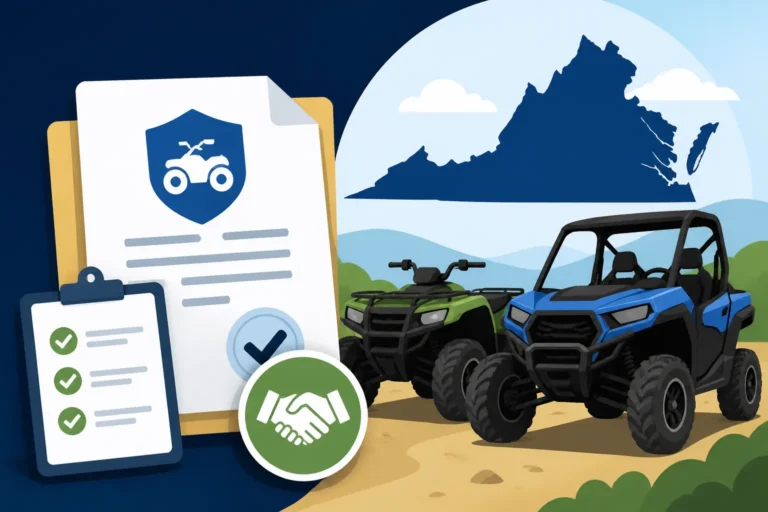
Virginia's approach to titling off-road vehicles like ATVs and UTVs isn't quite like how it handles cars or trucks. For many years, these machines floated in a sort of bureaucratic limbo, not really needing much more than a bill of sale to prove ownership. However, a significant change came on July 1, 2006, which completely shifted the landscape for anyone buying a new machine after that date.
This particular date isn't just an arbitrary line in the sand; it marks the point when the Commonwealth of Virginia decided that new ATVs and UTVs would require a title, much like a car, even if they aren't registered for road use. The logic behind this was to better track ownership, prevent theft, and provide a clearer chain of custody for these increasingly popular vehicles. Before this, proving ownership for a new machine was often a patchwork of receipts and handwritten notes, which, as you can imagine, could lead to a lot of confusion and potential disputes.
Why This Date Matters for Your Machine
The July 1, 2006, cutoff creates a clear division in how ATVs and UTVs are treated by the Department of Motor Vehicles (DMV). If your machine was purchased brand new before this date, it generally falls under the older rules, meaning a title was likely not required and often not issued. For these older machines, ownership is usually established through a bill of sale, the original manufacturer's documentation, or other proof of purchase. Many riders with older quads will tell you they never even thought about a title until they tried to sell it or finance it. You can learn more about these specifics in [Virginia's July 2006 Titling Cutoff].
However, if you bought your ATV or UTV new on or after July 1, 2006, the requirement to title it kicks in. This means that from day one, your machine should have a Virginia title issued by the DMV. This title serves as the official record of ownership, just like a car title, even though the machine won't receive license plates or annual registration stickers. This distinction is really important for first-time buyers or those upgrading from an older machine, as the paperwork process will be significantly different.
The Legislative Intent Behind the Titling Law
The decision to title new off-road machines over a certain engine size, specifically those 50cc and above, wasn't made lightly. The General Assembly recognized the growing popularity of ATVs and UTVs, not just for recreation but also for work on farms and large properties. With this increased presence came a need for better consumer protection and a more robust way to handle ownership disputes or theft. Before the law, a stolen ATV might be harder to track or prove ownership without a centralized title record. [Virginia Titles Required on Machines Over 50cc] clarifies some of these engine size requirements.
The titling requirement also helps legitimate dealers and private sellers by providing a clear process for transferring ownership, which minimizes fraud. Think about it: without a title, it's easier for someone to sell a machine they don't truly own. While it adds a step to the initial purchase, the title ultimately protects you as the owner by giving you indisputable proof of your legal claim to the machine. It’s about bringing a level of order to a segment of vehicle ownership that was previously a bit wild west.
What "Bought New" Really Means for Your Machine
When we talk about Virginia requiring a title for machines "bought new" since 2006, it's important to be super clear on what "new" actually entails. It might seem obvious, but there are nuances that can trip people up, especially when considering dealer inventory, demonstrator models, or situations where a machine has technically been "owned" but never titled. This distinction is the bedrock of whether you need to get that initial title from the DMV.
A machine truly "bought new" means it's coming straight from the manufacturer, through a dealer, to its very first owner. It hasn't been titled by anyone else, and it still possesses its original Manufacturer's Statement of Origin (MSO). This MSO is the critical document for a new machine, acting as its birth certificate, and it's what you'll use to apply for that first Virginia title.
Distinguishing New From Used Purchases
The easiest way to tell if your machine counts as "new" for titling purposes is if you're the first person to ever take ownership from a dealership or direct from the manufacturer. If the machine has never been titled in any state, then it's considered new. This typically involves purchasing from an authorized ATV or UTV dealer. They will handle much of the initial paperwork and provide you with the necessary MSO. The sales agreement will clearly indicate it's a new vehicle purchase.
On the other hand, a "used" machine is one that has already had an owner, even if that owner barely rode it. If someone else bought it, took possession, and perhaps even titled it (or was eligible to title it), then it's no longer considered "new." Even if the previous owner never got around to titling it, if it was sold to them and then sold to you, it falls into the "used" category for the purpose of your purchase. The rules for titling a used machine in Virginia are actually quite different and, in many cases, optional for the buyer. [Virginia Titles Are Optional on Used Machines] delves into this.
The Role of Original Ownership and the MSO
The Manufacturer's Statement of Origin (MSO), sometimes called a Manufacturer's Certificate of Origin (MCO), is paramount when titling a new machine. This document confirms that the vehicle was manufactured and destined for sale to a consumer. It lists the manufacturer, the vehicle identification number (VIN), engine size, model, year, and often includes the dealer's information. For a machine bought new since 2006, the MSO is the document you absolutely must have. Without it, titling a new machine becomes a bureaucratic nightmare, if not impossible. [Virginia Requires an MSO for a New Machine] emphasizes this.
When you purchase a new ATV or UTV, the dealer is responsible for providing you with the MSO. They will often fill out their portion, sign it, and assign it to you, the first retail owner. This signed MSO, along with your bill of sale, becomes the foundation of your title application. If you buy a new machine and the dealer doesn't immediately provide an MSO or a clear plan to get it to you, that's a huge red flag and something you need to address before you sign anything or hand over your money. This document effectively proves your "original ownership" and allows the DMV to issue that initial Virginia title in your name.
The Paperwork Puzzle: What You Need for a New Machine Title
Getting a title for your newly acquired ATV or UTV in Virginia involves a specific set of documents. It's not a mountain of paperwork, but missing even one piece can send you back home from the DMV without your title. Knowing exactly what to bring can save you a ton of frustration and a second trip. Think of it like a checklist – each item is essential to complete the picture.
The DMV needs to verify three main things: that the machine is indeed new, that you are the legitimate owner, and that you are who you say you are. Each document you provide serves to confirm one of these points. Having everything organized and ready when you go in will make the process much smoother, especially when dealing with specific forms like the VSA 17A.
Manufacturer's Statement of Origin (MSO)
As mentioned, the MSO is the undisputed "birth certificate" for your new ATV or UTV. When you buy a new machine, the dealer will provide you with this document. It will be original, not a copy, and will have been properly assigned to you by the dealer. This assignment involves the dealer signing off on it, often listing your name as the first purchaser. Double-check that all the information on the MSO, including the VIN, matches your machine exactly.
Without an original MSO, the Virginia DMV simply cannot issue a title for a new machine. This document is their primary proof that the vehicle has never been titled before and is now being titled for the first time in your name. If you've financed your machine, sometimes the lender will want to hold onto the MSO until the loan is paid off, or they might require the title to be mailed directly to them after it's issued. Make sure you understand this arrangement with your lender before you leave the dealership.
Bill of Sale or Purchase Agreement
While the MSO proves the machine's origin, the bill of sale or purchase agreement proves the transaction between you and the dealer. This document will show the purchase price, any trade-in value, taxes paid, and any dealer fees. It should clearly identify the ATV or UTV by its VIN, year, make, and model, aligning perfectly with the MSO. This document is also crucial for calculating the sales tax you owe, if it hasn't already been collected by the dealer and remitted to the state.
A well-detailed bill of sale helps avoid any ambiguities about the terms of the sale. Even if your dealer uses their own standard sales contract, ensure it includes all the essential details. If for some reason you needed to create one (though dealers typically provide one), services like LawDepot offer templates that can help structure such a document, ensuring all necessary fields are covered. Keep this document safe, as it's not just for titling but also for your personal records and potential future sales.
Valid Identification and Proof of Address
Just like with any other official transaction, you'll need to prove your identity and residency to the DMV. For identification, a valid Virginia driver's license or state-issued ID card is usually sufficient. Make sure it's current and clearly shows your name and photo. If you're a new resident, you might need additional documentation to prove your Virginia residency. [Virginia Title for a New Resident] provides more information on those specifics.
For proof of address, if your ID doesn't show your current Virginia address, you might need to bring additional documents. Acceptable proofs of address can include a utility bill, a lease agreement, a mortgage statement, or a recent bank statement, all showing your name and current physical address in Virginia. The DMV wants to ensure that the title is being issued to a legitimate resident at a verifiable address. These steps are standard procedure to prevent fraud and ensure accurate record-keeping.
Navigating the Titling Process at the DMV
Once you've gathered all your required paperwork, the next step is actually getting that title issued. For many, this means a trip to a Virginia DMV Customer Service Center. While the idea of a DMV visit can sometimes feel daunting, going in prepared makes a world of difference. Understanding the typical flow of the process, whether in person or by mail, can save you time and stress.
Remember, the goal is to get that official Virginia title that proves you own your new ATV or UTV. While the process is fairly straightforward for a new machine with all the correct documents, it's always wise to be ready for potential questions or requests for clarification.
Titling in Person at a DMV Customer Service Center
Visiting a DMV Customer Service Center is often the quickest and most straightforward way to title a new ATV or UTV. You can speak directly with a clerk who can guide you through the process and immediately spot any missing information. When you arrive, you'll typically take a number and wait your turn. When called, present your MSO, bill of sale, and identification. The clerk will usually ask you to fill out Virginia Form VSA 17A, the "Application for Certificate of Title and Registration." Even though ATVs don't get registered, this is the standard form used for titling. [Virginia Form VSA 17A Explained] covers this form in detail.
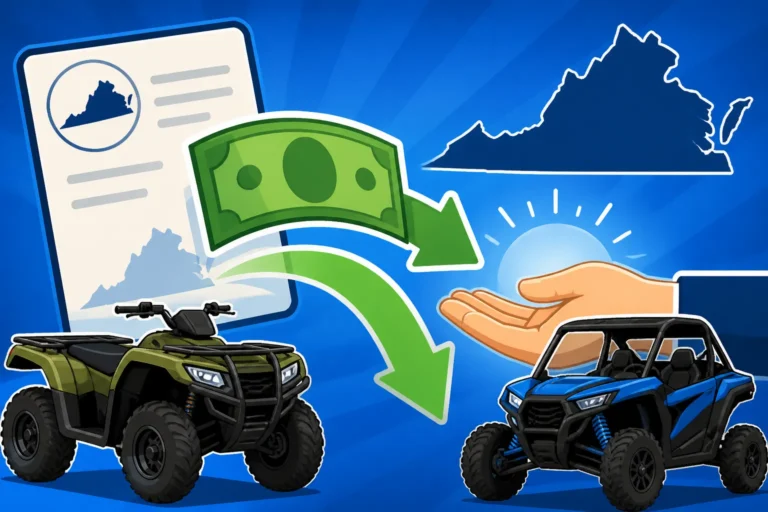
The clerk will review your documents, verify your identity, and enter the machine's details into the system. You will also pay the titling fee, which is a flat rate. [Virginia Title Fee of $15] is the standard cost. You'll also pay any applicable sales tax if the dealer didn't collect and remit it already. Once everything is processed, you'll usually receive a temporary receipt, and your official title will be mailed to you within a few weeks. Make sure the mailing address on file is correct before you leave.
Submitting Your Application by Mail
While in-person is generally recommended for new titles due to the complexity of the initial application and MSO verification, it is possible to submit your application by mail. This option might be more convenient if you live far from a DMV office or have limited mobility. However, it requires absolute precision in your paperwork, as any error will result in your application being returned, causing significant delays.
To title by mail, you'll need to complete Virginia Form VSA 17A in its entirety, making sure every field is accurate. You'll also need to include the original MSO, a copy of your bill of sale, and a copy of your valid photo identification. Never send original identification by mail! Include a check or money order for the titling fee and sales tax. It's highly recommended to send all documents via certified mail with a return receipt requested, so you have proof that your application was received. Expect a longer processing time for mailed applications compared to in-person visits. [Mailing an ATV Title Application to the DMV] provides a deeper dive into this process.
Common Pitfalls and How to Avoid Them
Even with all the right intentions and paperwork, little mistakes can derail your titling process. It’s frustrating to go through the effort of gathering everything, only to find out you missed a signature or filled in the wrong box. Awareness of these common pitfalls can help you sidestep them, making your experience smoother and quicker.
From incomplete forms to misunderstanding sales tax, these issues often stem from simple oversights rather than deliberate errors. A little extra attention to detail before you head to the DMV can save you a world of hassle.
Missing or Incomplete Documentation
One of the most frequent reasons for a rejected title application is missing or incomplete documentation. This often includes:
- Missing MSO: As emphasized, no original MSO, no title for a new machine. Period. Make sure your dealer provides it and that it's correctly assigned to you.
- Incomplete Form VSA 17A: Every single relevant blank on this form needs to be filled out. Don't leave sections empty if they apply to your transaction. Double-check for signatures in all required spots, especially if there's a lienholder.
- Lack of Proof of Identity or Address: Ensure your ID is valid, and if your address isn't current on it, bring a secondary document. [Virginia Title and Proof of Address] goes into more detail.
Before you leave for the DMV, create a checklist and go through each document. Is it original where required? Is it fully completed? Does the information on each document match the others (e.g., VIN, names)? A quick review can prevent a wasted trip.
Errors or Discrepancies on Forms
Beyond missing documents, errors within the paperwork itself can cause problems. This could be anything from a misspelled name to an incorrect VIN. The VIN is especially critical; it needs to be identical across the MSO, bill of sale, and your application form. Any discrepancy will trigger a red flag, as it suggests the documents might not all pertain to the same vehicle.
Another common error involves sales tax calculations. If the dealer collected sales tax, make sure it's clearly noted on your bill of sale. If you're responsible for paying it at the DMV, ensure your calculation is correct. Virginia charges sales tax on the actual sales price of the machine. [Virginia Sales Tax at Titling] outlines the rates and requirements. If the numbers don't add up or aren't clearly documented, the DMV clerk will stop the process until it's rectified. Using a general legal document service like LawDepot for custom bill of sale templates can help ensure all the necessary financial and identifying information is present and accurate if you're dealing with an unusual sale.
Sales Tax Considerations at Titling
Sales tax is often a point of confusion for ATV and UTV buyers. In Virginia, you're generally required to pay sales tax on the purchase price of your new machine. Most reputable dealers will collect this tax at the time of sale and remit it to the state on your behalf. In such cases, your bill of sale will show that sales tax has been paid. When you go to title the machine, you simply present this proof, and you won't pay it again.
However, if you purchased the machine from a dealer who is not authorized to collect Virginia sales tax (e.g., an out-of-state dealer who doesn't do business in Virginia), or in some specific scenarios, you may be responsible for paying the sales tax directly to the DMV when you apply for the title. The sales tax rate will typically be the general retail sales and use tax rate, which applies to most goods in Virginia, rather than the lower motor vehicle sales and use tax rate. It's crucial to confirm with your dealer whether they are collecting the sales tax or if you will need to pay it at the DMV. This way, you can budget accordingly and avoid any surprises.
Beyond the Title: What Virginia Doesn't Require (But You Might Want)
Once you've successfully navigated the titling process for your new ATV or UTV in Virginia, you might find yourself wondering what else is required. This is where off-road vehicles significantly differ from passenger cars. While the title is a crucial document for ownership, many other standard vehicle requirements simply don't apply to ATVs and UTVs in Virginia. Understanding these differences is key to not overcomplicating things, and also knowing what protections you might still want to pursue on your own.
The lack of certain mandates often leads to questions about insurance, registration stickers, or even license plates. Let's clear up these common misconceptions and discuss what to consider beyond the bare legal minimum.
No Registration, No Plates, No Decals
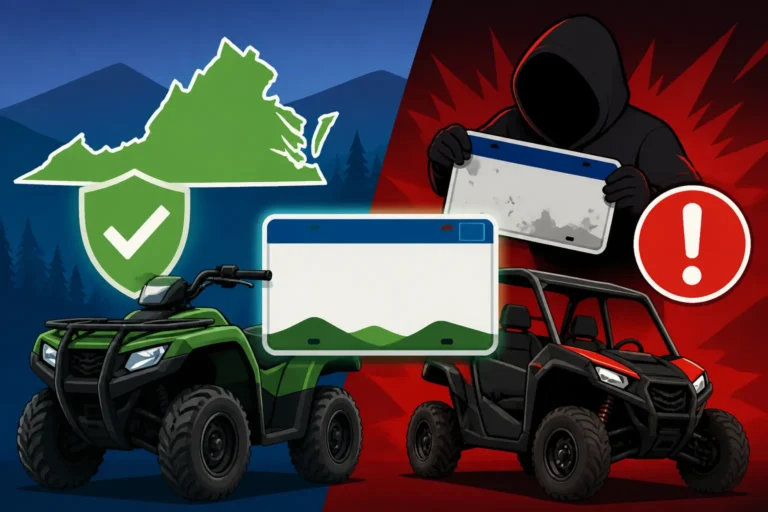
This is a big one and often surprises new ATV owners. In Virginia, unlike cars, trucks, or even motorcycles, ATVs and UTVs are not required to be registered with the DMV. This means you will not receive an annual registration card, nor will you be issued license plates or yearly registration decals for your machine. When you get your title, that's pretty much it for the official DMV paperwork cycle, unless you need a duplicate title or plan to sell it later. [Virginia Titles ATVs but Never Registers Them] covers this in detail, as does [Virginia Issues No Plates for ATVs] and [Virginia Issues No Decals for ATVs].
The absence of registration reflects the state's classification of these machines primarily as off-road vehicles. They are generally prohibited from being operated on public highways and streets, which is why the typical road-going registration requirements don't apply. This can be a relief to many riders who appreciate one less annual fee or sticker to worry about. However, it also underscores the importance of having your title readily available to prove ownership, especially if you ever need to transport your machine or if a law enforcement officer has questions while you're on a trail or private property.
Insurance Considerations for Your Untitled Machine
Since your ATV or UTV isn't registered for road use in Virginia, the state does not legally require you to carry liability insurance on it. This is a significant difference from cars and trucks, where minimum liability coverage is mandatory. So, while you technically don't have to buy a policy, this doesn't mean it's a wise choice to go without it. [Virginia Requires No ATV Insurance] explains the legal situation.
However, choosing not to insure your machine leaves you financially vulnerable. If you're involved in an accident, whether on a trail, private land, or even just moving it around your property, and you cause damage or injury to someone else, you would be personally responsible for those costs. These expenses can quickly add up, easily reaching tens or even hundreds of thousands of dollars. Many riders opt for off-road vehicle insurance anyway, covering things like liability, collision, comprehensive (for theft or fire), and even uninsured motorist coverage. If you financed your machine, your lender will almost certainly require you to carry full coverage insurance to protect their investment, even if the state doesn't mandate it. It's always a good idea to speak with an insurance agent about your options to protect yourself and your investment.
Riding Areas and Your Title
While the Virginia DMV doesn't issue plates or registration, your title can still be an important document when accessing certain riding areas or dealing with law enforcement. Many organized trail systems, like the Spearhead Trails, or private parks, may require proof of ownership before allowing you to ride, especially if you're involved in an incident. Carrying a copy of your title, or at least being able to access its information, can be helpful in these situations.
Furthermore, if you're ever stopped by law enforcement while legally transporting your ATV or UTV, or if there's any question of ownership (for instance, if the VIN needs to be verified), having your title readily available or knowing where to quickly find its details will make the interaction much smoother. While Virginia may not require constant display of registration, the underlying proof of ownership remains critical for peace of mind and compliance with broader legal principles.
Disclaimer
This article is for general informational purposes only and does not constitute professional advice. Laws, prices and regulations vary by location and change over time. Consult a qualified professional for guidance on your specific situation.